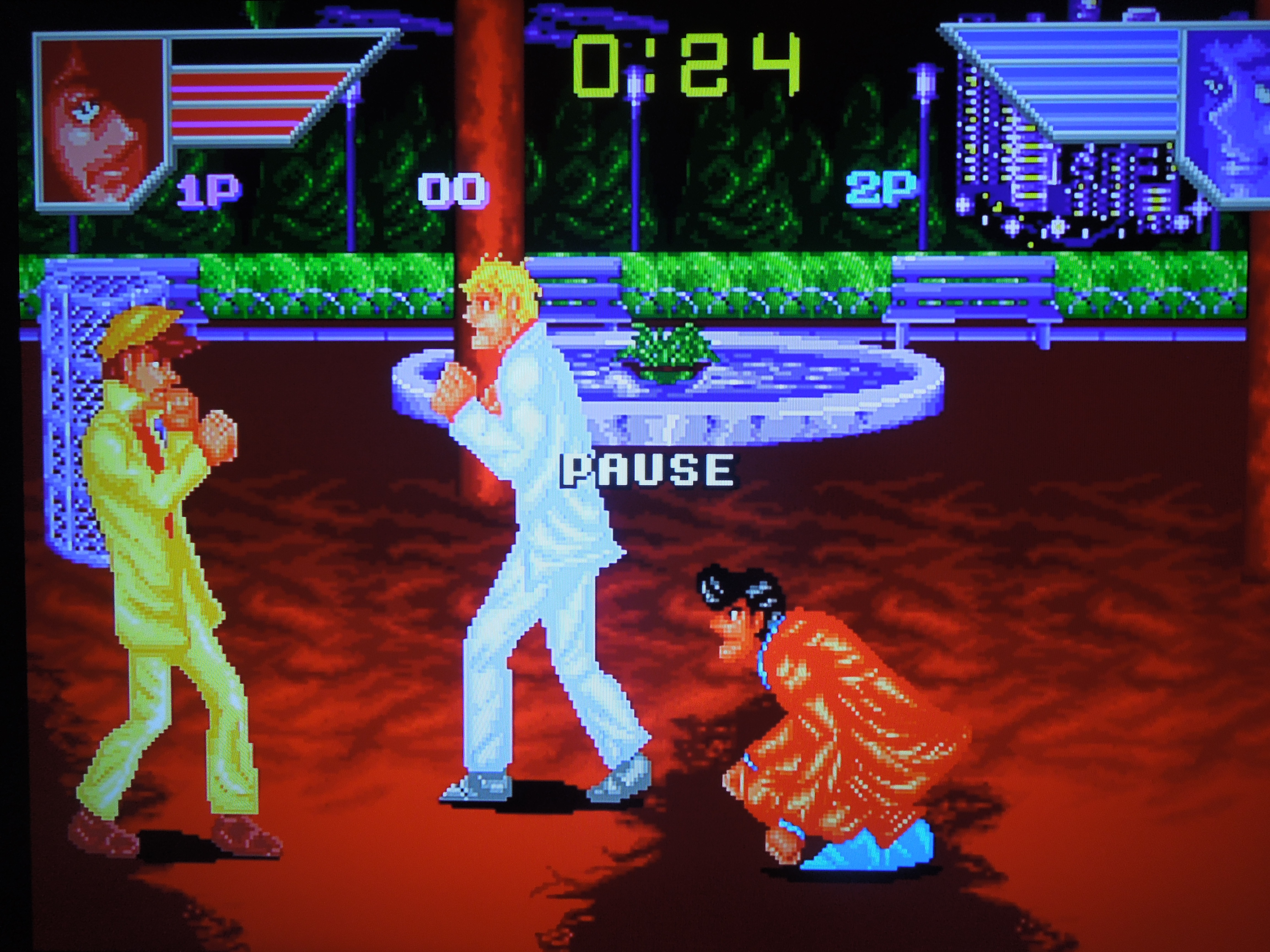
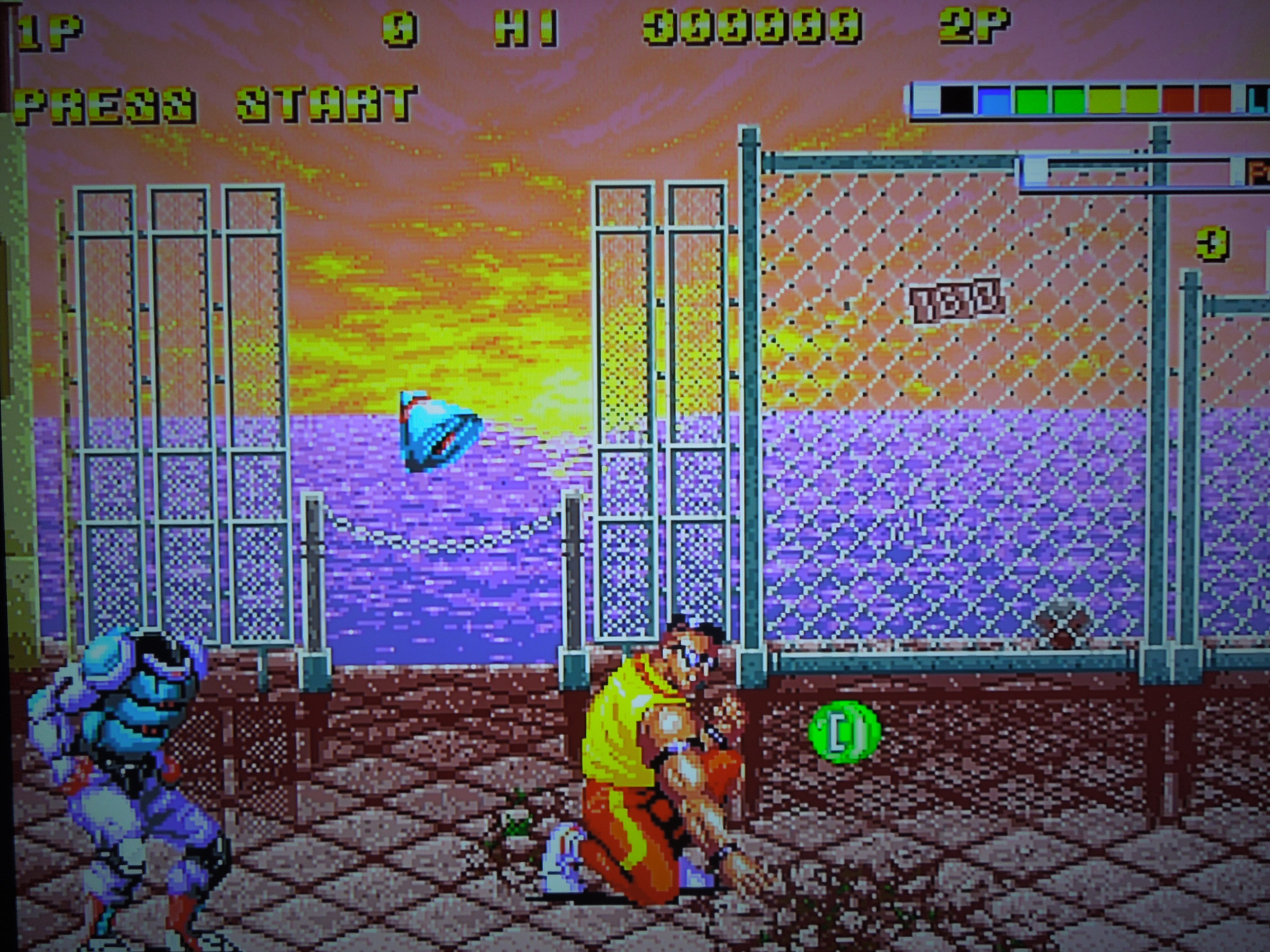
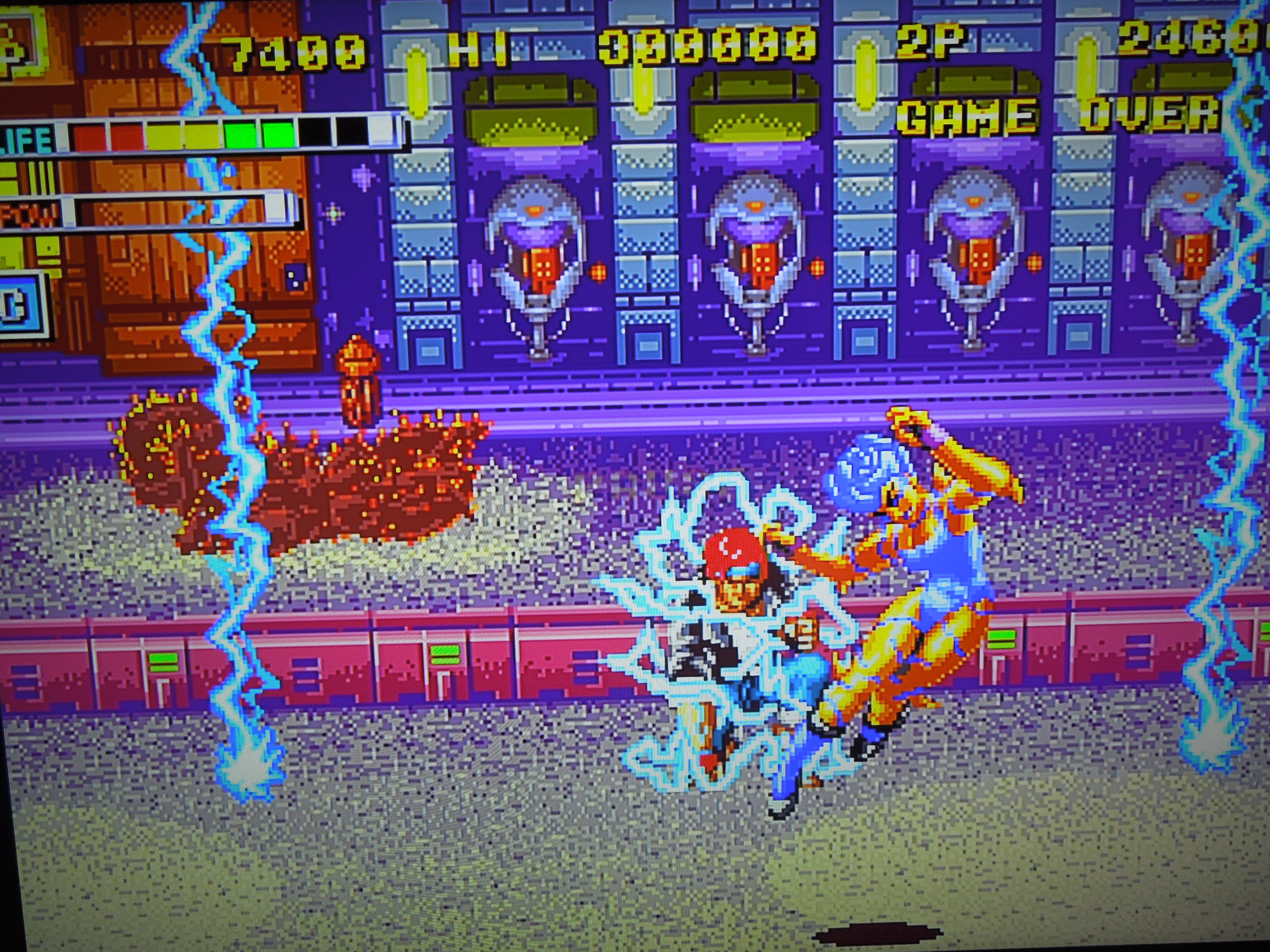
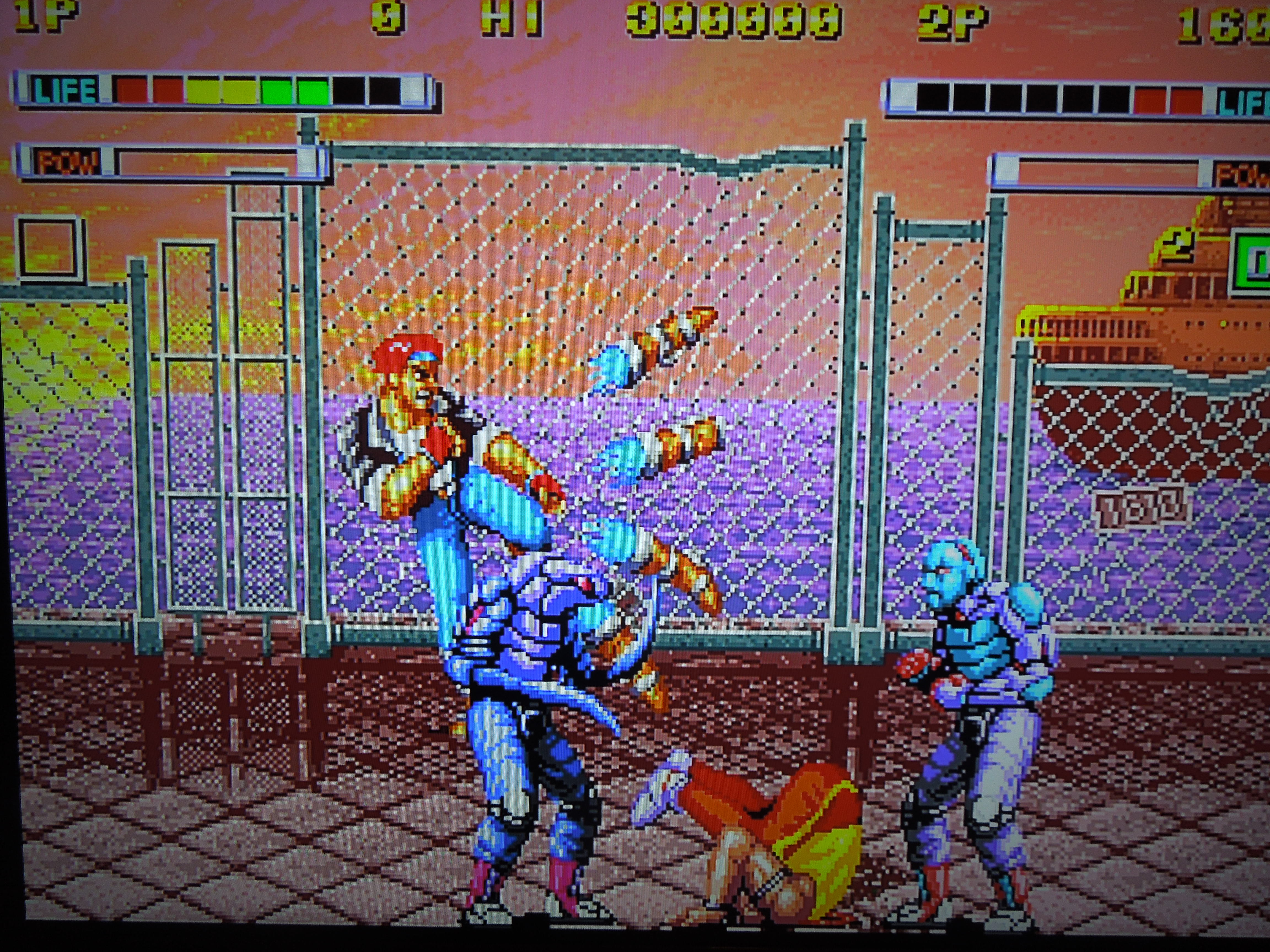
SNES – BS Super Mario USA: Week 4

Note: This reproduction cartridge was played in an Analogue Super NT console that was connected to a 65-inch HD-tv.

Quick History: BS Super Mario USA: Week 4 was originally a downloadable/broadcast game released only in Japan in 1996. It is effectively an official sequel to Super Mario Bros. 2. It was available for the Broadcast Satellaview, an attachment that plugged into the owner’s Super Famicom system. There were four ‘parts/episodes/weeks’ to the BS Super Mario USA game, with one being released over four consecutive weeks. This review is specifically for the fourth episode.

Mods to original broadcast game: This reproduction cartridge of BS Super Mario USA: Week 4 has been modded from its original broadcast version. The music from Super Mario Bros. 2 (USA) that was used in the release of Super Mario All-Stars has been added, as well as some English-translated text on a few screens. Originally, there were Japanese voice actors who voiced the different characters in the game, and these are not present on this cartridge.

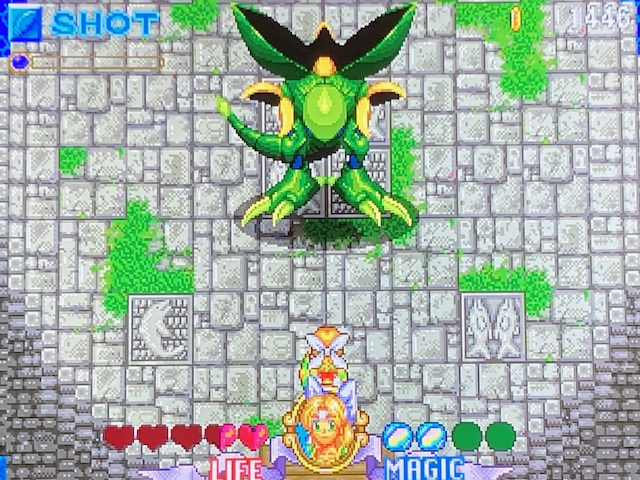
Story: The evil Wart has returned to the land of Subcon, and one of his minions, Mouser, has stolen the numerous golden Mario statues that were a tribute to the plumber who liberated the land on his first visit. This time, Mario and his companions must track down all the missing statues and take out Wart and his minions once and for all.

Check the result’s screen often to see what goals you still need to accomplish.

Clock and Timed Events: Originally, BS Super Mario USA was meant to be played in a 50-minute window of time, and that remains the case on this reproduction cartridge. A running clock (that you cannot stop by pausing) is onscreen at all times; it begins at 4:06 and ends at 4:56. When you reach 4:56, the game’s ending will play and all of your points will be tallied for your final score. As you play, different ‘events’ will occur at specific minutes. At some minutes, a giant bomb might be flung onto the screen for you to dodge, or you may get a temporary increase in your jumping ability; there are many of these events, and they add elements of originality and surprise to the game. Additionally, your character will change among Mario, Luigi, Princess Toadstool, and Toad at specific minutes – you cannot select who to play as like in the original game.

Gameplay Objectives: In BS Super Mario USA: Week 4, your goal is to recover all 10 of the missing golden Mario statues, collect all of the mushroom powerups, collect as many coins as you can*, and defeat the two Birdos, Clawgrip, and finally, Wart himself. The more of these goals you accomplish, the higher your score will be at the end of the game. Different point totals are awarded for completing the game’s objectives, making this very much a ‘high score’ game. *Coins are used to play a mini game near the end of your session (when the clock hits 4:50) which can add points to your total.

Levels: There are only three levels in BS Super Mario USA: Week 4 5-1, 5-2, and 5-3. These are the same levels as they appeared in Super Mario Bros. 2, albeit with the addition of the golden Mario statues. After completing a level by beating a boss, you can return to it at anytime, or exit it mid-level. This effectively means you don’t have to find every statue or mushroom on your first visit, as you can return as much as you like.

Finding Wart: To find and fight Wart, you must grab a potion and drop it near a tall jar. When the magic door appears, enter it, then jump on the tall jar and press down; you’ll be taken straight to Wart’s lair. Note that Wart is the one boss where losing the fight means you’ll have to replay the stage and go back through the process of getting to him again – with the other bosses, you’re allowed to lose and start back in their immediate area. If you beat Wart, the game is not immediately over as in the original version of the game – you have to wait until the clock hits 4:56 for it to end. Once beaten, if time remains, you’ll simply re-select one of the three levels to accumulate more coins or complete anything else you need to.

Differences between Week 4 and the other 3 weeks: Each of the four versions of the game contain three different levels each. Week 1 = World 1, Week 2 = World 2, Week 3 = World 4, and Week 4 = World 5. Worlds 3, 6, and 7 were never used.

The Southern Gentleman’s Opinion and Letter Grade: A BS Super Mario USA: Week 4 is a phenomenal and abbreviated romp through a portion of the world of Subcon. Great for a short playthrough of the original, larger game. There’s enough here to distinguish it from the game it’s based on, Super Mario 2 (which itself was based on the Japanese game Doki Doki Panic). The constantly switching characters, the random timed events, and the objectives to locate items in a specific allotment of time all combine well to make this a unique (and official) Super Mario experience, while still remaining familiar, comfortable, and as fun as the original game on which it’s based.

God Bless! Proverbs 3:6

Famicom – Toukon Club

Toukon Club for the Famicom

Note 1: This cartridge was played on a retroUSB AVS console, outputting in 720p. The console was connected to a 65-inch HD-tv.

Game: Toukon Club (‘Toukon’ approximates to ‘Fighting Spirit’ in Japanese).

Genre: Wrestling

Company: Jaleco

Players: 1 or 2 players VS.

Release Year: 1992 (Japan only)

Saving: A password system saves your stats and how many wrestlers you’ve defeated*. However, this is only on the first round of matches. After beating the game, you’ll receive a final password to defend your title against each competitor – this time, it’s do or die – lose even once, and it’s Game Over! You’ll retain all the stats you obtained previously, but you won’t be able to raise them further. No passwords or rematches on the 2nd go-around! Do you have what it takes to win seven in a row and be a true fighting champion?!

Language barrier? No. The wrestlers’ names and the short opening menu are in Japanese, but the Options and numerous other things are in English. There is an English-translated romhack out there on the internet as well.

Toukon Club will slap a bulldog on all other NES and Famicom wrestling games.

Story: In Toukon Club, the JWA (Jaleco Pro-Wrestling Association) is holding a tournament to determine who’s the toughest in the business! The winner will be awarded the JWA Championship Trophy!

Your Goal: To become the JWA Champion.

Gameplay: Choose from among 8 different pro-wrestlers, and participate in a series of one-on-one matches on your way to the JWA Championship Trophy! Upon defeating the last opponent, you’ll need to wrestle each opponent once more to defend your title!

Options: You can select the time limit from 5 minutes, 10 minutes, or ‘Free,’ which means no limit.

Training Mode: If you enter the code 3708-4871, you can enter a ‘Training Mode’ to practice with your chosen wrestler.

2 Player Mode: In 2 player mode, after picking your wrestler, you and a friend will customize him by adding a certain number of points to his Power, Stamina, and Speed stats. Then, the fight is on!

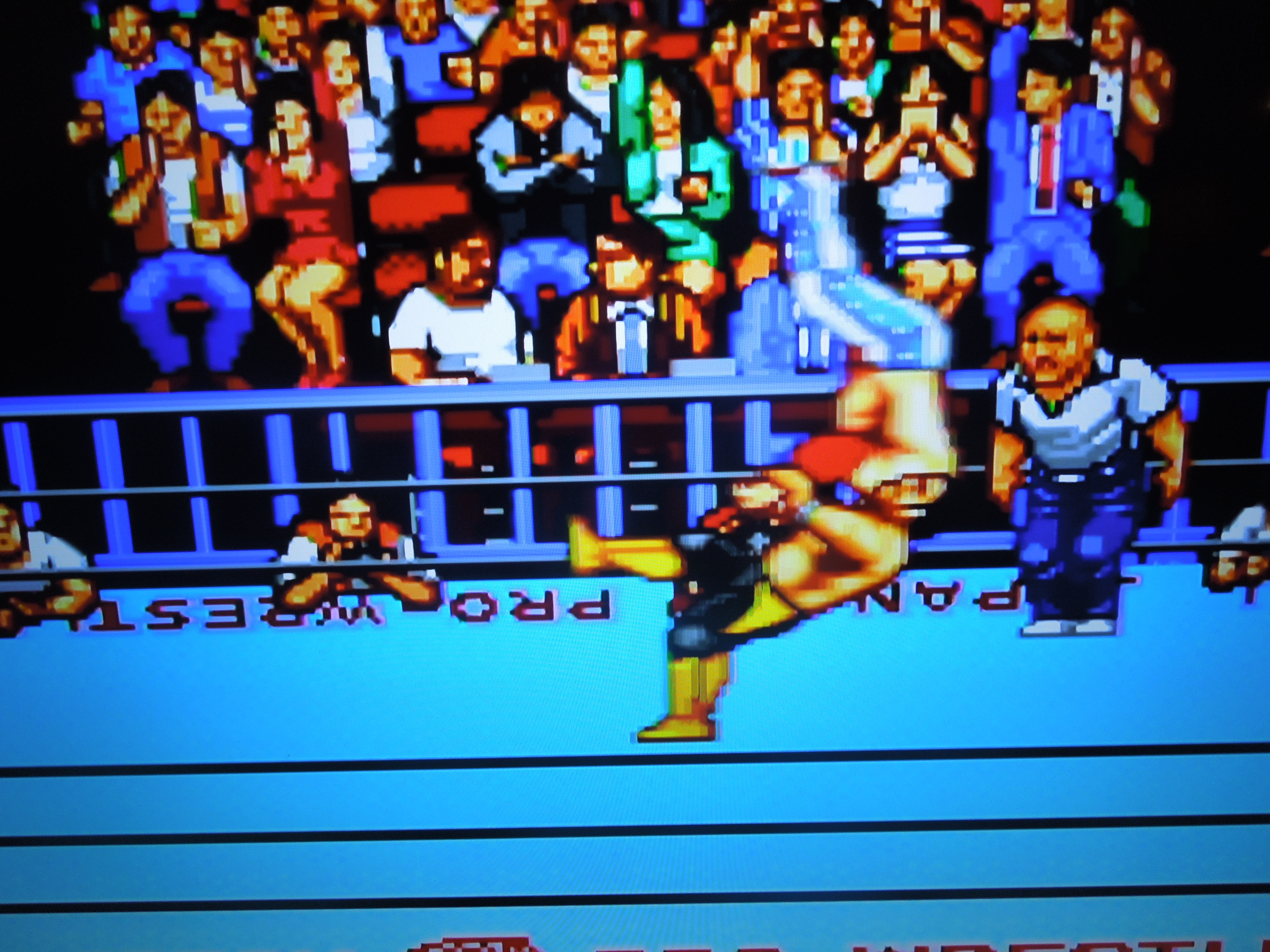
Big boot to the face from Iron Lips! What could be next…

Control: B punches. A kicks. The type of punch or kick thrown is often dependent on how close you are to your opponent. Getting in close to your opponent and pressing a button will result in a grapple. From the grapple position, you can do several things. You can whip (send running) your opponent (left or right + B), or issue several wrestling moves like piledrivers, hip tosses, body slams, etc. by pressing up or down plus either A or B. When your ‘Anger Meter is full and you are in a a grapple, pressing A + B + Down executes your wrestler’s finishing move, which is unique to each wrestler. Tapping Toward, Toward makes your wrestler run, and you can press A or B while running to execute a clothesline, knee lift, etc. Also, if your opponent is on the mat outside the ring, you can perform a dive, plancha, etc. to hit them on the outside by pressing down + A or B. You climb back in the ring by pressing Up + B. Pressing A while your opponent is down will execute a ground attack, like an elbow drop or leg drop. Pressing B covers him for the pin. Pressing A + B and wriggling the control pad will help you kickout of pin attempts.

Write down the password and prepare to strategically ‘level up’ your wrestler’s stats after each match!

RPG elements in a wrestling game? Yes! One of the best features of Toukon Club is the ability to ‘level up’ your wrestler after each successful bout. Each wrestler begins the game with a specific amount of Power (how much their moves hurt the opponent), Stamina (how long they can hold out in a match before getting pinned), and Speed (how quickly they move). You’ll get ‘extra points’ after each match that you get to apply to your wrestler’s stats, however you like!

Meters: You have a ‘Strength Meter’ and an ‘Anger Meter’ in Toukon Club. Your Strength Meter depletes as you receive attacks from your opponent, although it gradually replenishes if you manage to avoid taking damage. When it’s depleted, you can’t perform certain moves temporarily, so it’s best to avoid your opponent during this time! Your Anger Meter’ increases as you take damage. When it is full, your character will move faster and have ‘anger clouds’ above his head. If you grapple with your opponent during this time, you can execute your finisher! *Note – both you and your opponent can kick out of pin attempts, even if your Strength Meter is completely empty – it may take several attempts before you get the 3-count! Also, how quickly you kick out of a pin (or your opponent kicks out of your pin) gives you a clue as to how well you’re doing. Quick kick out? You’ve got plenty of damage left to take. Long two count? You’re nearly finished, so take the offensive!

Dive from the ring onto your opponent on the outside for massive damage!

Winning matches: In order to win a match, you need to first try to pepper your opponent with running attacks to deplete his Strength Meter. Doing this will better help you win grapples later on. Using ground attacks (pressing A when he’s down) is great for depleting his meter as well! It’s harder to win grapples at the beginning of matches, so remember this and try to use strike attacks first!

Quirks: (1) You and your opponent begin the match outside of the ring. If you’re quick, you can run and attack your opponent before he climbs in the ring! (2) You can continue attacking your opponent (for about 5 seconds) even after either of you gets the pinfall! Use this time to take out some needed frustration if he beats you in a close match!

Wrestlers: These are the English-translated names of each wrestler (from the manual), as well as their nicknames/monikers.

The Flame Fighter – Anton Inoue (looks like Antonio Inoki)

The Wooden Statue – Great Shohei (looks like Giant Baba)

The Superman of Steal – Iron Lips (looks like Hulk Hogan)

The Brown Devil – Abraham the Bloody (looks like Abdullah The Butcher)

The Dark Warrior – Black Barbarian (looks like Road Warrior Animal)

The Ring Artist – General Gegeben (looks like…Guile from Street Fighter II?)

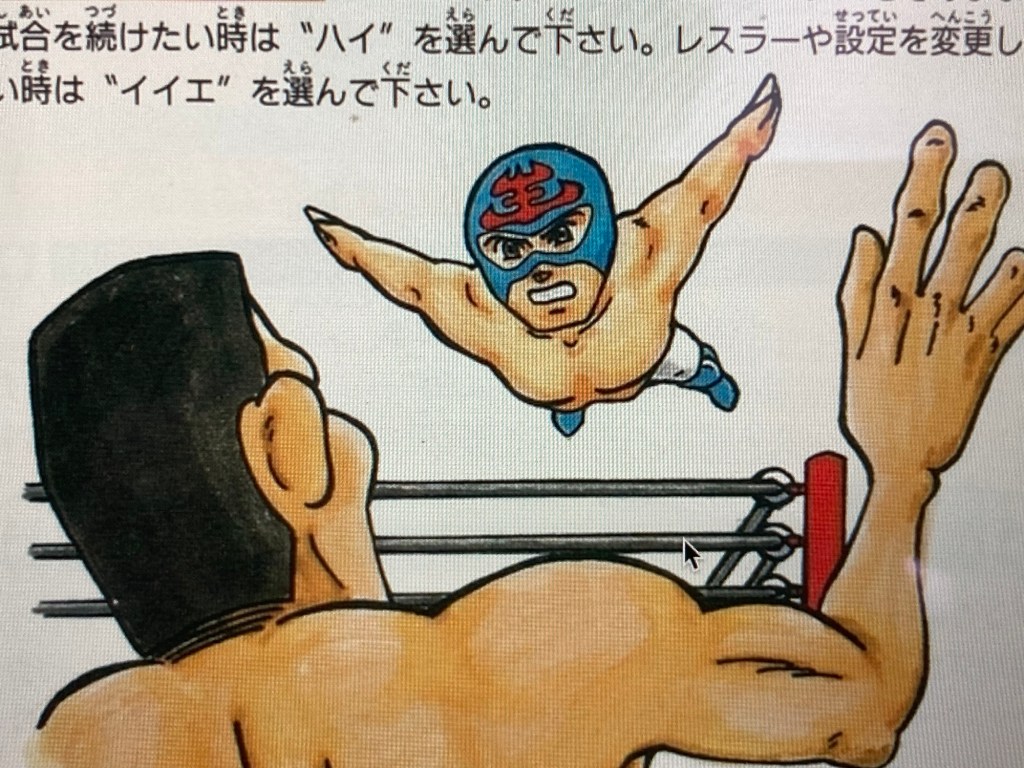
The Mat’s Eagle – Dollar Mascarado (looks like Mil Mascaras)

The History of Fighting – Lee Hantao (looks like Killer Kahn)

Finish him with Dollar’s Flying Head-butt! (picture from the manual)

The Southern Gentleman’s Opinion and Letter Grade: A+ The music, sound effects, graphics, gameplay, and overall fun factor on this Famicom wrestling game make for a phenomenal experience! It took me a few matches to get the hang of things, but once I did, I couldn’t put it down!

The game has an interesting feature where the ring ‘rotates’ from time to time when you throw your opponent across the ring; it’s generally well-executed and adds to the uniqueness of the game.

The wrestler’s themselves have a ton of personality, and while they do share some of the same moves, each one is different enough to warrant playthroughs with each and will require different strategies for victory.

Toukon Club definitely qualifies as a ‘hidden gem’ for the Famicom!

God Bless! Proverbs 3:6
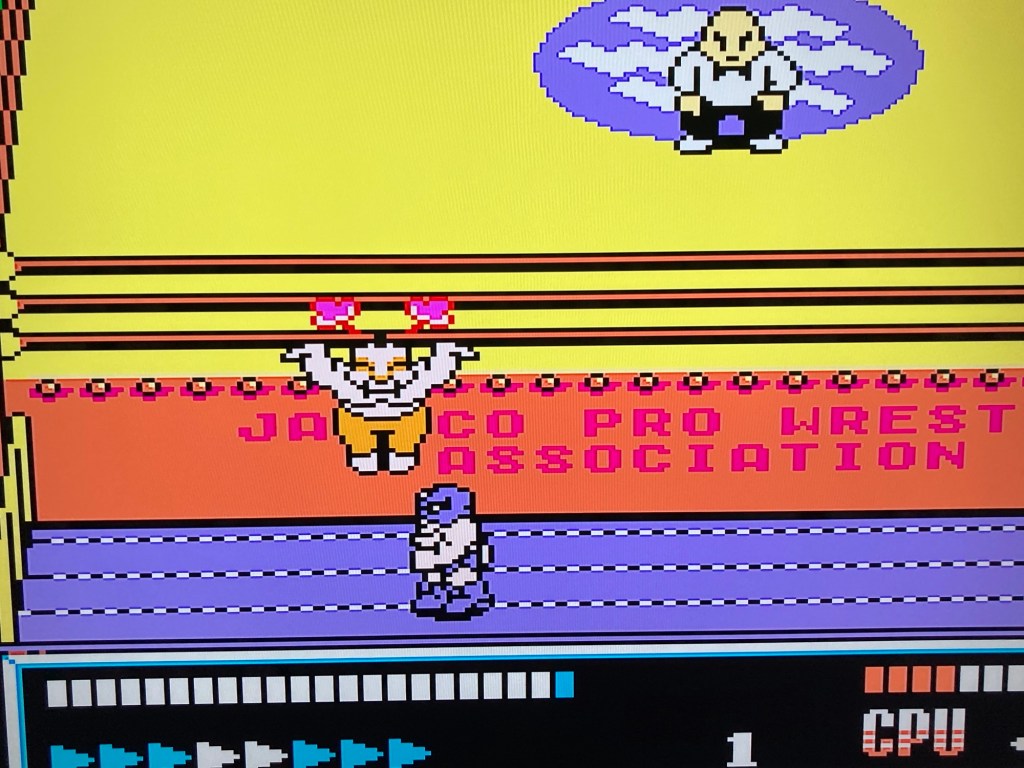
Abraham the Bloody with the foreign object right to the forehead!
Your victory is short-loved after winning the title, as you immediately get hip-tossed during your celebration. Time to defend it!
Do you have what it takes to make it to this screen? Beat 7 straight opponents without losing on the 2nd go-around to earn the game’s true ending!

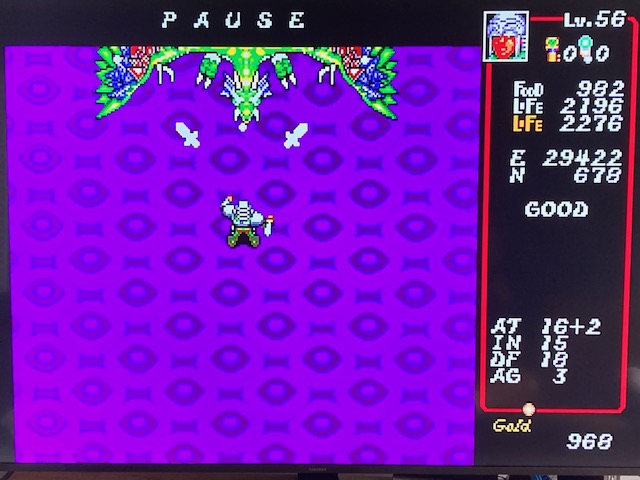
Sega CD – Dungeon Explorer

Note 1: This game was played on a JVC X’Eye (hybrid Genesis and Sega CD console). It was connected to a 40-inch HD-tv using the Pound RGB to HDMI cable.

Note 2: There are other versions of Dungeon Explorer for other consoles. This review will only focus on the one for the Sega CD, and not make any comparisons.

Awesome cover art for Dungeon Explorer, although it’s missing two of the playable characters!

Genre: Dungeon Crawler/Action RPG

Players: 1-4 (more than two requires a multi-tap)

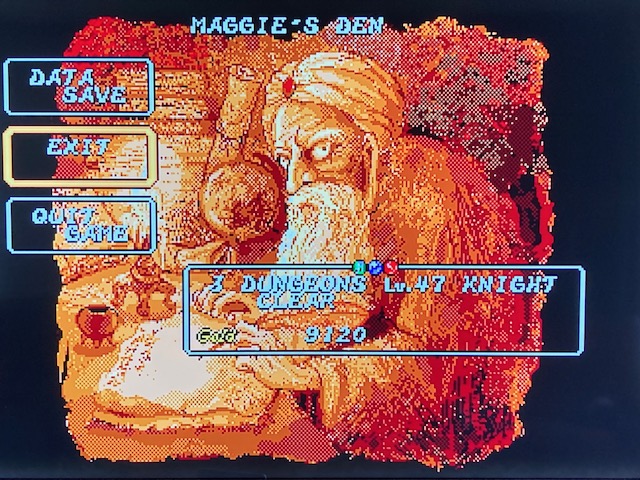
Saving: You save your game in ‘Maggie’s Den,’ a hut in the game’s central hub, the ‘Gardens of Destiny.’

Stop into Maggie’s Den to save often – the save records all your stats, levels, armor, gold, and how many dungeons you’ve cleared.

Story: (paraphrased from the manual) “The Darkling was an evil creature who killed any humans who dared near his tower, which was located deep in the forest. He had one enemy who was his equal in power, the Goddess of Ambition. The Goddess possessed the power to grant any individual’s deepest wish, and fearing for his own existence, the Darkling captured and imprisoned the Goddess. Now, numerous adventurers, or Dungeon Explorers, are seeking to challenge the endless hordes of creatures that comprise the army of the Darkling, rescue the Goddess of Ambition, and have their wishes granted…

Gameplay: Dungeon Explorer sees you choosing an Explorer (from six classes, with varying stats), and challenging the seven dungeons that hold the hordes of the Darkling. At the end of each quasi-maze type dungeon, you’ll be confronted with a boss. You must defeat the smaller six dungeons before confronting the Darkling in his tower, which is the seventh and final one.

Control: A pulls up your menu, from which you can view your stats and items, as well as use certain items you’ve found. B uses your ‘Body Force,’ or Magic Power, of which you collect orbs during gameplay to use (up to 9). C fires your weapon (holding creates rapid fire). Start pauses the game.

Hordes of enemies await in the dungeons!

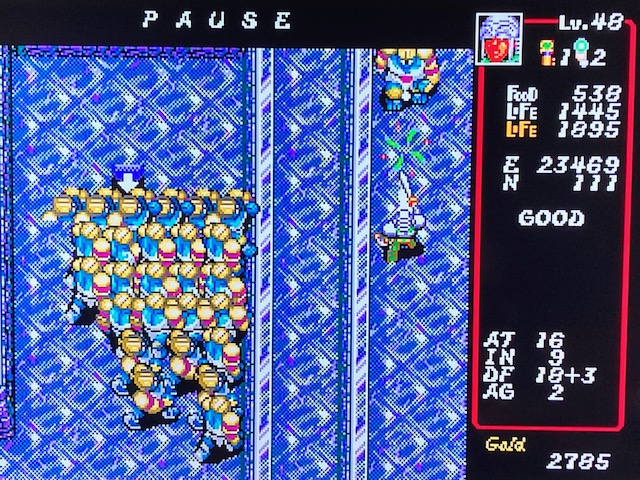
Leveling Up: Your Explorer starts at Level 1, but he or she will quickly gain experience through combat and increase his or her level. Increasing your level increases the maximum amount of Life (Hit Points) that your character has. Destroying regular enemies achieves 1 EXP (Experience Point) each, and destroying the Generators that produce the regular enemies achieves 5 EXP. It’s important to spend a lot of time grinding to level up your character significantly.

Gold and Armor: You’ll find gold after defeating Generators in the game’s dungeons. Save gold toward buying Armor in the Weapons Shop back in the game’s central hub. Armor and Weapons upgrades increase your attack power, defense ability, and how powerful and long-lasting your magic attacks are. It’s important to spend time acquiring gold to buy the best armor. *The manual actually describes a somewhat faster way to get gold by exploiting the area near the central hub that has a few gold mounds on it: “Run to Freedom Hill and take the gold. Now save data and quit the game. Restart and head back to the hill for more gold. Repeat as needed or until extreme boredom sets in.”

Weapons are expensive, but they’ll provide much-needed boosts to your stats, so make grinding for gold and visiting the Weapons Shop a priority!

Food and Life Points: You have a ‘Food Meter’ that slowly ticks down from 1,000. Once it hits zero, your Life Meter will slowly tick down. Your life meter is also decreased by getting hit by enemies. You can find items to increase your Food and Life Points (see below).

Items (found and used only in individual dungeons): As you explore each dungeon and fight enemies, you’ll often uncover certain items that will help you. The feather serves as a Warp to take you out of a dungeon if you realize you’re going to die before beating it (it can even be used in boss fights). Food and Life potions (available in small or large pots) increase the points for those stats. The larger pots you store in your inventory to be used at your discretion; the smaller pots are applied instantly. You can also find gloves or amulets that can be equipped from your inventory – these are generally very helpful items that raise your attack or defense stats (only while in each dungeon), or, in the case of the particularly useful Fast Amulet, stop the ticking down of your Life Points altogether! The Camp Pot is a great item that you’ll find for your character to hop into to completely refill both Life and Food points (not useable in boss fights). Finally, you’ll uncover magic orbs that increase the stock of your magic attacks (up to 9). Dungeons are typically littered with these items, waiting to be uncovered by defeating the enemy Generators!

Thoroughly explore each dungeon, taking particular note to destroy the enemy Generators – these often provide much needed items that will help you survive the boss fights!

The Dungeons: While some of the dungeons have maze-like qualities or light puzzles to solve, none are overly-complicated or should require any consulting of outside sources. You’ll often have to find keys to unlock the next part of a dungeon. Your biggest challenge with the dungeons comes in the form of the swarms of enemies that you’ll face – if your Armor is too weak or your Maximum HP is too low when you start, you’re toast! You’ll also have to determine which dungeons are easiest at first (start with the lower left one, the ‘Desert’) based on how much life the enemies in the area take off of your Explorer when you first enter.

Prepare, Prepare, Prepare for each dungeon, by grinding levels and gold!

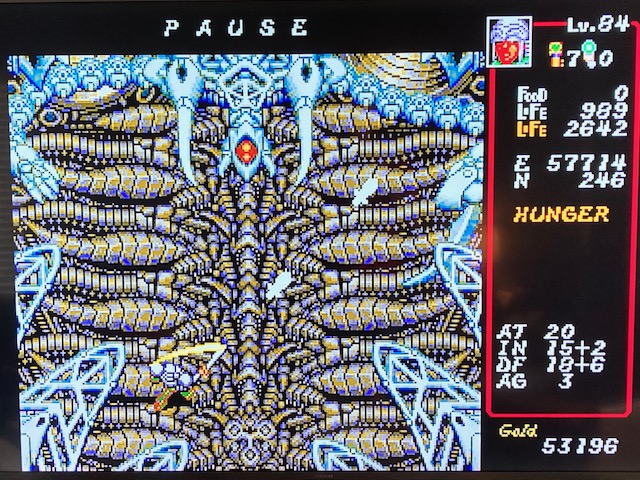
Characters: Five males and one female comprise the selectable characters: The Knight, Ninja, Monk, She-Elf, Mage, and Beast. Some are quicker and weaker, others slower and stronger, to start with, at least. For my playthrough, I used the Knight, and had him at Level 84 by the time I beat the game! Each character has a unique magic attack, adding some variety to your choice. The Knight, for example, fires a spread shot for his magic attack, the She-Elf creates a force field around herself, and the Mage uses a fire that attacks all enemies on screen.

When you finally reach the game’s final boss, the Darkling, attack and destroy the arms first!

The Southern Gentleman’s Opinion and Letter Grade: B: Before purchasing and playing through this game, I didn’t read much that was very positive about it. I’m glad I didn’t let those reviews sway me, because I would have really missed out on a game that I enjoyed a great deal!

I don’t think a game like Dungeon Explorers is for everyone, so I can understand the more negative reviews that are out there. This game takes A LOT of grinding, be it for gold to buy better amor or for EXP to level up your character. Failing at a dungeon means you lose the experience you’d gained to that point (unless you use the feather to warp out, which is wise!), and during my run, I would say I probably was defeated or had to escape one of the seven dungeons around 10 times, with three of those being on the last one. While this was demoralizing, it simply reinvigorated me to grind more, level up more, and buy the best possible weapons and armor, and go at it again!

The game didn’t record how many hours I spent, but I would guess it was between 15 and 20 for me (I way over-leveled my Knight to be on the safe-side). Is the game repetitive? Absolutely. Is the story barebones? You betcha. Was it addictive if you like simple Action RPGS? Man oh man, was it! I played little else and couldn’t wait to get back to it each time; I like the simplicity of it all. I plan to run through it again with another character.

Finally, although I didn’t have the chance to do so, the fact that this is an up-to-four-player Action RPG is an awesome addition – I can’t imagine how much fun this would be with a buddy or two or three (assuming they knew what kind of game it was and were up for it!).

God Bless! Proverbs 3:6
The Goddess of Ambition will grant your most fervent wish,
but be careful what you wish for…

Playstation One – The Adventure of Valkyrie

The Adventure of Valkyrie: The Key of Time for the PSOne

Note 1: This Japanese PSOne game was played on a U.S. region-modded console. It was played with a PSOne HD-Retrovision component cable, which was hooked up to an XRGB-mini Framemeister, which then output through HDMI.

Note 2: There is not a lot of great information that I could find on the internet about this awesome game, so that is why I decided to make a ‘review’ (really more like some general information) for it. One day, someone will write a far, far better and more extensive review, but for now, this may be the best there is. I will not be writing about any other games in this series or making comparisons. This is simply one man’s review and thoughts after playing the game!

Valkyrie descends from on high to save Marvel Land from the Faceless god!

Game: The Adventure of Valkyrie: The Key of Time (Valkyrie no Bouken)

Genre: Action-RPG

Players: 1

Saving: Save your game to a memory card/stick at certain locations in the game. The amount of time you’ve spent on the game is also recorded.

Language Barrier: No. Although this is a game with written Japanese dialogue and narration, it is a relatively linear Action-RPG. I encountered nothing that prevented me from enjoying this game, nor anything that kept me from understanding (generally) what was going on. Also, there is English here and there, which can be helpful.

Knowledge of Japanese is not required to play The Adventure of Valkyrie – cutscenes and physical character interactions tell the story well.

Background: The Namco Anthology 2 was released exclusively for the PSOne in Japan in September 1998. On that disc were a compilation of games, including The Adventure of Valkyrie: The Key of Time.

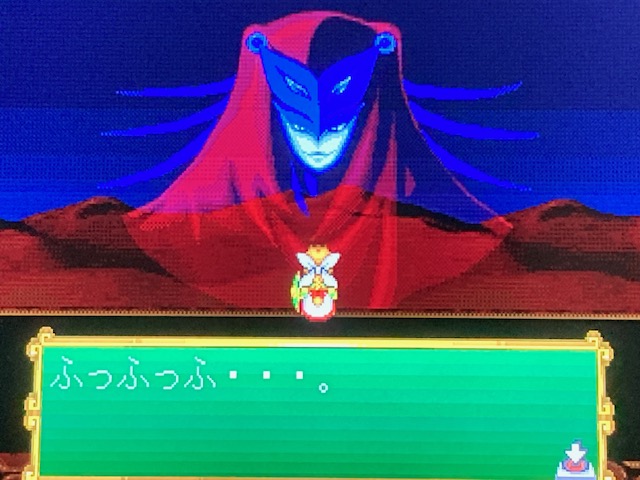
Story: (As far as I can tell from rough translations I found) The Faceless god appeared in Marvel Land one day to torment its citizens. The ‘Laughing Clock’ was installed in a southern village, and from that clock the Faceless god unleashed these evil beings. Hearing the cries of Marvel Land’s people, Valkyrie descended from the heavens with the Key of Time to confront the Faceless god and restore peace to Marvel Land.

Valkyrie confronts the Faceless god

Control: Box = Attack or Magic (Attack when tapped, Magic when held – press right or left to cycle spells then release to use), X = Jump, O = Dash (when held), Triangle, R1, or L2 = Block with your shield (when held, you cannot move while blocking – you can block many projectile attacks), Start = Menu (O when in Menu equips a weapon or uses a potion, X cancels)

Attack, Defend, Run, and use your Magic to defeat massive bosses!

Magic: You’ll encounter Spirits in the game who will bestow Magic upon Valkyrie. You will seek them out in caves and other locations. The first two Spirits are the Wind Spirit (Wind Attack) and the Flower Spirit (Healing). Using magic consumes your magic meter, although you can restore this by using red potions or finding magic replenishment orbs from defeated enemies.

Seek out the Spirits to learn Magic (particularly the Flower Spirit, who teaches the Healing Spell – you’ll find her in the cave in Area 2)

Weapons: Valkyrie attacks with her magic rod (standard projectile attack), but she can also buy or find other weapons, including a ‘wide’ shot and a ‘four-way’ shot, among others. These must be equipped from the Menu, and each one has a finite number of uses, although they are far more powerful and effective than your standard attack. Later on in the game, you will receive an updated, permanent standard weapon that deals more damage to enemies.

Level Up: Throughout your journey, you must seek out Heart Containers and Magic Orb Containers. These will permanently increase your Life Bar or Magic Meter!

Treasure: Treasure chests are littered throughout Marvel Land. Healing items, weapons, or gold can be found in these chests, so leave no area unexplored!

You’ll navigate the whole of Marvel Land, area by area, until it is liberated from the evil of the Faceless god!

Gold: Most enemies drop gold when defeated; sometimes it’s good to spend time in an area gathering as much as you can in order to purchase weapons and healing items from a merchant you’ll frequently encounter.

Potions: Red potions restore your Magic Meter, and Blue Potions restore your health. You can buy these or find them in chests, and you can hold several, so stock up!

Stock up one Life Potions and Magic Potions to make the game easier!

Gameplay: In The Adventure of Valkyrie, you must traverse the different regions of Marvel Land and free the towns and villages that are under attack due to the Faceless god’s assault. Along the way, you will encounter villagers, Spirits, and other friends who will aid you in your quest, and you in turn will liberate them from the forces of evil that have laid siege to their homes. This typically ends in a boss fight or two. The game is split into ‘chapters,’ and after completing each chapter, you move (via a map) to a different area of Marvel Land.

Fight your way through tons of areas, like the Haunted Forest!

The Southern Gentleman’s Opinion and Letter Grade: The Adventure of Valkyrie is an INCREDIBLE action-RPG for the PSOne, and it’s a shame that it seems that few people know about it or have played it. The game itself looks absolutely beautiful, as the locations (villages, deserts, haunted forests, and more) really add a different feel to each area and a sense of scope to Marvel Land. The bosses are particularly memorable as well, and much of the music is captivating.

The balance in the game is near-perfect – not too easy, not too difficult. You’ll need to ‘gold grind’ a few times to buy a good stock of potions and weapons, and there are some challenging ‘platforming’ sections here and there, but nothing impossible. Also, you’ll need to take time to really explore each area so you don’t miss a Heart Container or Spirit (missing the Healing Magic in world 2 would make the game quite tough).

I found the game largely reminiscent, in some ways at least, to other action-RPGs like The Legend of Zelda: A Link to the Past or Secret of Mana. Very addictive, although it’s not a terribly long game, coming in at about 6 hours (although that’s not really a bad thing in my book). The language barrier should not daunt you at all, as you need absolutely zero Japanese language education to understand that evil is tormenting good people, and you need to save them. A+

God Bless! Proverbs 3:6

PRO TIP 1: In the Haunted Forest, go Up, Right, Right, Up, Left, Up in the ‘Maze’ part. This should save you a little time!

PRO TIP 2: After you meet the whale, return to the flooded village. See the man in the house in the northeast part of the town to receive a tonic that will revive the whale.

PRO TIP 3: When you return to the Haunted Forest later in the game, seek out the four orbs that are scattered in the forest. Also, look for treasure chests again and the 7th Heart Container, which is in the cave. Then head north to the shrine!

Get the tonic from the flooded town to revive the whale!
Meet friends along the way who will aid you in your quest!
Save the barbarian chief!
Find Heart Containers to level up!
Save your money to buy needed items!
Use your shield to defend against foes!
Beautiful art images help tell the story!

Sega Genesis – TMNT: Shredder’s Re-Revenge

Note 1: This game is a mod/reproduction cartridge that was played on a JVC X-eye console. It was connected to a 40-inch HD-tv using the Level Hike RGB to HDMI cable.

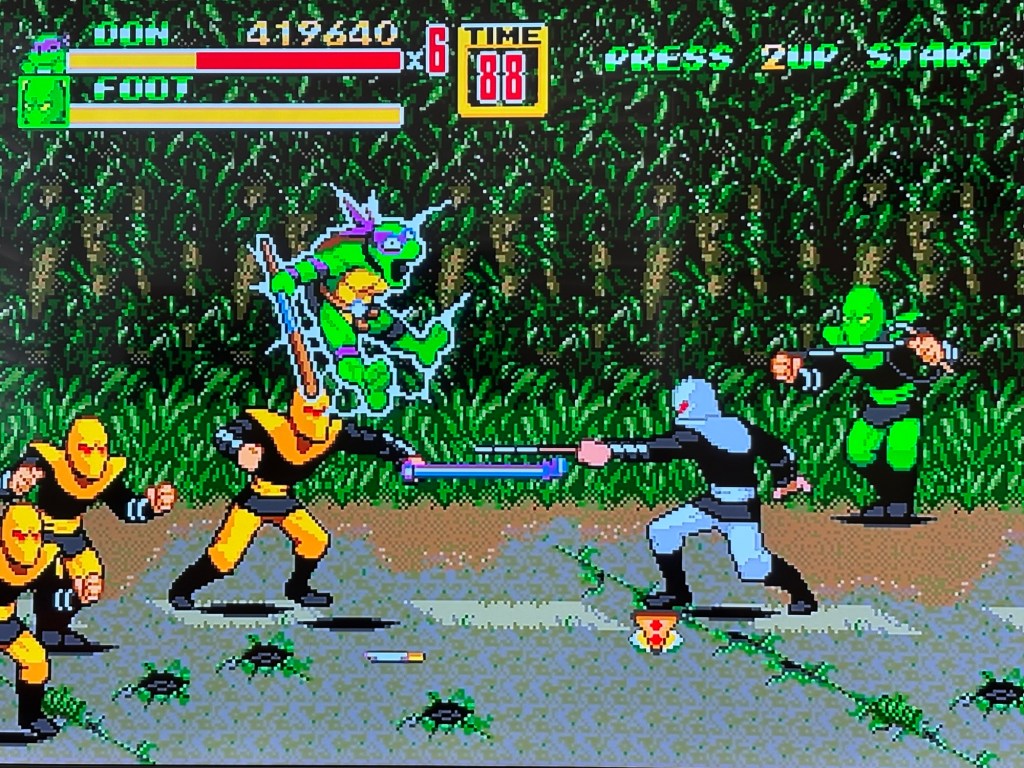
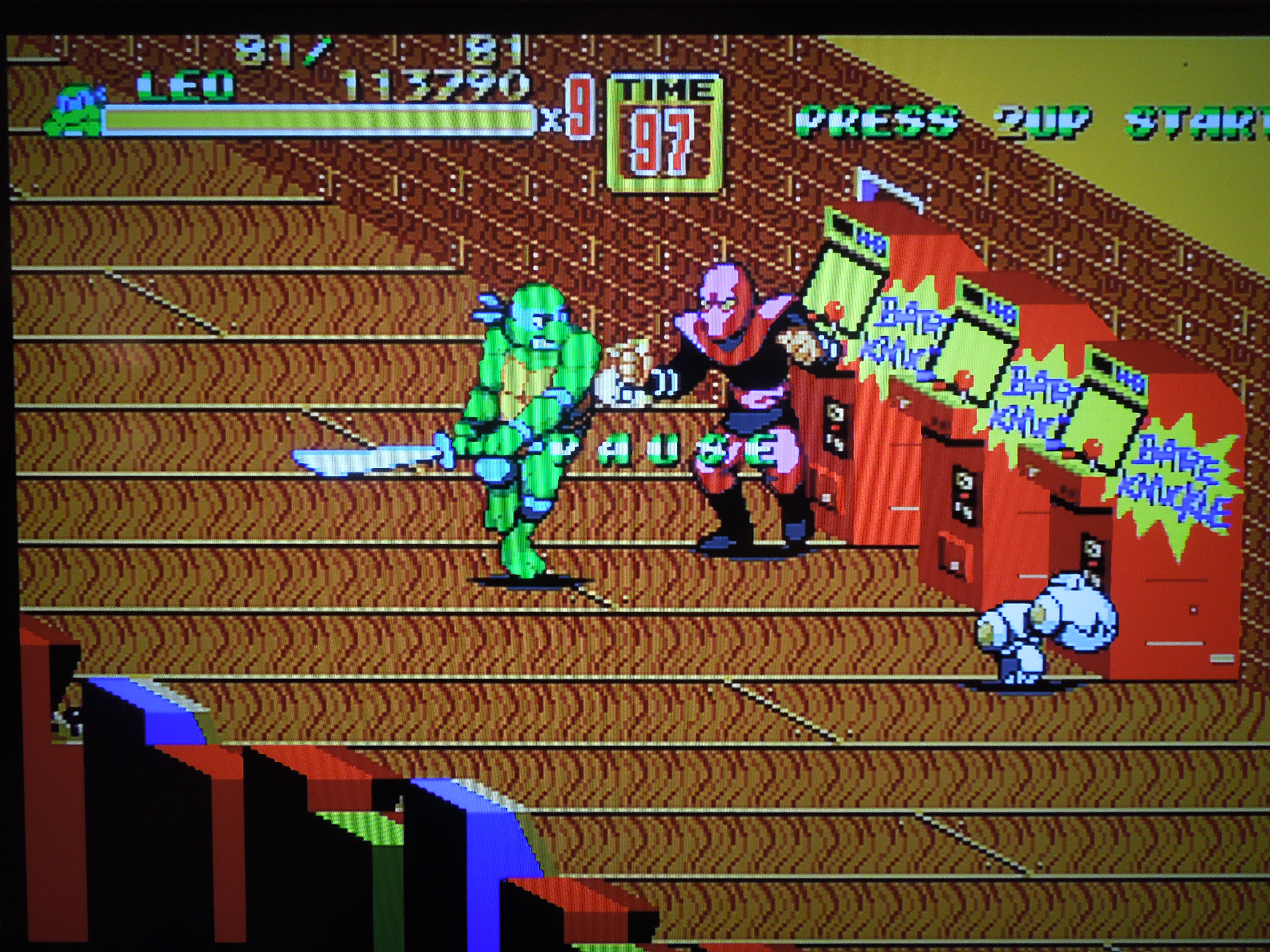
Note 2: Teenage Mutant Ninja Turtles: Shredder’s Re-Revenge is a mod of Streets of Rage 2 that replaces the characters with the sprites from Teenage Mutant Ninja Turtles: Shredder’s Revenge, which was released for modern consoles in 2022. The story in the game is also changed to suit the world of TMNT. The original game is an incredible game, and a great love-letter to all TMNT fans. For the purpose of this overview and review, with the exception of a short comparison at the end, the focus will remain on how the game works as a Sega Genesis title.

Note 3: Thanks to those who were able to make this game happen! Both the original and the mod!

8 stages of Beat’ Em Up action await in Shredder’s Re-Revenge!

Genre: Beat ‘Em Up

Players: 1 or 2

Length of Game: Approximately 40 minutes

Stages: 8

Story: Shredder and Krang have taken over the city after the fall of Mr. X. They issue a challenge to the Teenage Mutant Ninja Turtles to try to stop them!

Characters: Leonardo, Michelangelo, Donatello, Raphael, Splinter, April O’Neal, and Casey Jones are all selectable characters in Shredder’s Re-Revenge. Each character has his or her own unique moves and statistics. Some are speedier and weaker, some stronger and slower, and some more balanced (Leo fits the ‘balanced’ description perfectly). Players can also select the same character!

Evaluate your stats and form the perfect team to take down Shredder!

Options: You can set the number of lives up to 9, and you can select the difficulty from Easiest to Mania (6 total difficulty selections). There is also a ‘Turbo’ option that can be turned on or off in the Options menu; this seems to impact the speed in which your attacks connect with the enemy.

Gameplay: In Shredder’s Re-Revenge, you must fight your way through 8 stages of Beat ‘Em Up action on your way to confronting Shredder and Krang. Each stage ends with a boss fight.

Take down the Foot or get shell-shocked!

Control: A executes your Special Move, which drains a bit of your health if it connects with enemies. B is your standard weapon attack; hit it successively to execute a combo. C jumps. Pressing B+C (Y if using a 6-button controller) executes a ‘rising’ attack. Pressing Toward, Toward makes your character run. While running, Pressing B executes a dash attack. If you get in close to an enemy, you’ll automatically grab him. Pressing Left or Right + B will toss him away; pressing Up or Down + B will execute a ground slam.

Each character has a unique special move to put the hurt on the enemy!

Items: Money Bags, Gold Bars, Pizza Slices, and Weapons all are uncovered by punching barrels in the game. Money Bags and Gold Bars add to your high score; extra lives are acquired at certain point totals. Pizza Slices come in two variations, small (little health restored) and large (major health restored). Weapons, which include knives and pipes, cannot be carried; however, you can pick them up momentarily, but they will spin out of your hands back to the ground (presumably the Turtles don’t find these as good as there own weapons!)

Enemies: Foot Soldiers of different colors and abilities will attack you throughout the game! Be ready to fight off the knives, whips, and even motorcycles of the Foot Clan! You’ll also fight Stone Warriors, Mousers, Roadkill Rodneys, and others from Shredder and Krang’s army!

Familiar faces will show themselves at the end of each stage!

Bosses: Rocksteady, Bebop, Wingnut, Slash, Leatherhead, Rat King, Shredder, and Krang all await you in Shredder’s Re-Revenge. There is a gauntlet of the once-beaten bad guys in the last two stages.

The original game is considered by many to be a TMNT masterpiece.
How does the Sega Genesis version compare?

Short Comparison to the Nintendo Switch version: The Switch version is obviously superior in terms of graphical capability, sound, number of players, and every other metric used to score video games. The Switch version is longer, has more bosses, options, stages, moves, etc. The Switch version is wide screen (16:9), while the Sega Genesis version is standard (4:3). The Genesis version has larger on-screen characters than the Switch version. The Genesis version does use some of the sound bites from the Switch version, along with the music and other sound effects from Streets of Rage 2.

2 player co-op at its finest in Shredder’s Re-Revenge!

The Southern Gentleman’s Opinion and Letter Grade: Teenage Mutant Ninja Turtles: Shredder’s Re-Revenge is an incredible mod of an already amazing game. Personally, and this perhaps speaks more to my age and gaming experience, I prefer this Sega Genesis game to the Nintendo Switch version; I have absolutely no doubt that I will play it more often than its superior counterpart. Is the Genesis version quantifiably better than the Switch version? Of course not! It’s not even close.

And yet…There’s something about playing Shredder’s Re-Revenge (on a cartridge, not an emulator) that may hold an appeal to certain players over modern consoles like the Nintendo Switch. The game itself controls perfectly, is close to the perfect length (not too long or too short), and can easily be beaten by lowering the difficulty (while challenging you on the higher difficulties if you so choose). The characters in the game are beautiful to look at (thanks to the hard work of those who designed the original game).

So what is it that makes the difference? I think, for me, it boils down to this: I prefer the Genesis version because it’s not too busy, and that is a good thing. No unlockables. No game saving. No updates. Only two players max keeps things simple. Online is not an option. 4:3 as opposed to wide screen keeps the action more confined and tight. Sometimes, I think less is more (for some of us, at least). For these reasons, I would give the original game an A+, but also the Sega Genesis mod, Shredder’s Re-Revenge, an A+ as well. If you want to play one heck of a Genesis game, check it out.

God Bless! Proverbs 3:6

TWO Splinters?! Why the heck not?

Neo Geo – Legend of Success Joe

Legend of Success Joe for the Neo Geo MVS (played on the Omega Entertainment Machine, a consolized MVS)

Note: This is an original copy of Legend of Success Joe that was played on an Omega Entertainment Machine (consolized Neo Geo MVS) through component video cables. It was connect to an HD-tv.

Genre: Beat ‘Em Up/Boxing hybrid

Players: 1

Play Time: 25-30 minutes

From young punk to World Champion – climb the ladder of success in Legend of Success Joe!

Quick History: Legend of Success Joe is based on a Japanese manga that was released in the 1970s. The game was not released in the United States, but did come out for the MVS (Neo Geo Arcade) and the AES (Neo Geo home console) in 1991 in Japan. The game does play in English if played on a U.S. region console, or if a Unibios is installed and set to the U.S. region.

Quick Story: Joe Yabuki is an up-and-coming young boxer who is looking to climb the ranks, beat his rivals, and become World Champion. Between stages, a text description advances the story and lets you know what Joe is up to and who he’s going after next.

High Score Table: Ten slots. You’ll need to get over 100,000 to make the table, which takes some practice! If you have a Neo Geo console with a Unibios installed (3.2 or higher, I believe), your high scores can be saved.

Getting on the High Score Table in Legend of Success Joe will take some practice!

Gameplay: In Legend of Success Joe, you’ll battle through tough streets, parking lots, and gyms on your way to the ring, where you’ll face off against your rivals in traditional boxing matches. There are a total of 10 ‘stages’ that are a combination of brief side-scrolling segments against multiple thugs and one-on-one boxing matches against your boxing rivals. You have three ‘health bars.’ Each time you take a punch, you lose some health, and each time a bar is depleted, you hit the mat (or ground). Get knocked down three times, and it’s Game Over. You can continue at the opponent or scene you last left off on, or choose not to continue and save your progress on a memory card.

Learning your opponents’ movements and responding appopriately are the keys to victory in Legend of Success Joe.

Control: Legend of Success Joe only utilizes the A and B buttons, and pressing them with a combination of a direction on the control stick unleashes a different punch or other boxing move. Joe can dodge back (sway), block, throw jabs, uppercuts, crosses, and body blows using these different combinations. Different opponents are susceptible to different types of attacks, so learning what their vulnerabilities are is the key to winning. A handy ‘How to Play’ screen plays before you start that shows the different types of punches and defense maneuvers.

The Southern Gentleman’s Opinion and Letter Grade: I had never read anything particularly good about Legend of Success Joe, so I wasn’t expecting to enjoy the game as much as I ended up enjoying it. There are two primary criticisms that I’ve read about the game, and I’ve found that only one of them, after spending a lot of time actually playing the game, is truly warranted. The graphics, it’s true, are not great – but that’s in comparison to other Neo Geo games. Unto itself, not compared to anything else, I like the big, colorful boxers and backgrounds. But ultimately, yes, the graphics not quite what you expect from a Neo Geo game, and the frames of animation are somewhat clunky looking.

“The body! The body! They body!” (I can almost hear Mickey yelling at The Italian Stallion.)

The second criticism I’ve read about the game is that it has a convoluted, broken control scheme. This is false. On my first or second playthrough, I would have agreed with this assessment, but once I learned how to control Joe, I found the control scheme both intuitive, easy to master, and fun. I could easily see a person getting frustrated and giving up on the game before learning this system, but once you learn it, it’s easy to enjoy, and not as complicated as you originally thought. A lot of the game depends on learning the timing of your opponents’ moves, and reacting appropriately both with Joe’s defense moves and what type of punches work best on individual opponents. A big hint – learn the SWAY maneuver and utilize it often, as it’s key to beating many opponents.

Close-up cutscenes replay the knockout punch of your bouts.

I’m a huge fan of the Rocky movies, and this game has a very ‘Rocky’ vibe to it. You even have a manager who accompanies you throughout the game who seems reminiscent of Mickey from the movie series. If you happen to be a Rocky fan, you may get some enjoyment out of this game for that reason.

With a bit of practice, you can learn to power through the first several stages and boxers without having to continue, or even getting knocked down once. The later opponents will require a bit more patience and practice to beat. Learn your opponents’ moves, know when to dodge or how to block, know whether to counter with a body blow or an uppercut, and you’ll become a master of the game.

Legend of Success Joe has a very ‘old school’ feel to it. Practice, patience, frustration. Practice, patience, mastery, fun. If you have the temperament for this type of game, it’s quite fun. B+

God Bless! Proverbs 3:6
Legend of Success Joe is a fun Neo Geo game that is not as bad as you’ve been told all these years.

Neo Geo – Mutation Nation

Mutation Nation for the Neo Geo (played on a consolized MVS – the Omega Entertainment Machine)

Note: This is an original copy of the Neo Geo MVS version of Mutation Nation. It was played on a Neo Geo Entertainment Machine (consolized MVS) and attached with component cables to an HD-tv.

Genre: Beat ‘Em Up

Players: 1 or 2 (co-op)

Memory Card Support? Yes, if you choose not to continue (or lose all four of your continues if you’re playing in AES mode), you can save your progress and pick up next time at the stage you left off on.

Levels: 6

Play Time: About 30 minutes

The mad scientist has nearly destroyed the city. Can you save it?

Quick History: Mutation Nation was released for the Neo Geo MVS (arcade) AES (home console) in 1992. It is one of only a handful of Beat ‘Em Ups made for the Neo Geo.

Quick Story: In Mutation Nation, you play as either one or two heroes, Johnny Hart (P1) or Ricky Jones (P2). It’s the year 20XX, and a mad scientist’s experiments have exposed the city’s residents to a virus, turning many of them into mutants bent on destroying humanity. It’s your job to pummel them into slimy globs of goop and put down the scientist!

Control: Mutation Nation uses a simple control system, with only buttons A and B being used. A punches. B jumps. A+B executes a jumping uppercut for Johnny and a jumping forearm smash for Ricky. Holding A+B and charging your power meter for a few seconds, then releasing it when the bar is full, unleashes your Super Attack, which varies depending upon which ‘power up’ you have equipped. Hitting A repeatedly when near an enemy unleashes a multi-hit combo. Also, moving in close causes your character to automatically grab an enemy, and then pressing A executes a ‘hold’ move, like a knee bash, which ends in the enemy being tossed across the screen.

Hold A + B to Power Up for a Super Attack that clears out the mutants fast!

Power Ups: Scattered in each Area (stage) are small, circular power-up icons labeled A, B, C, or D. Whichever one you pick up is the one you equip, and you can use up to three times. *Note – if you use your charge attack after running out of Power-Ups, you’ll do a separate Super Attack (example: a Windmill Punch for Ricky) that will drain a bit of your health. You can also pick up separate single orange power-ups that replenish your stock (and a bit of your energy bar) of whichever letter you have equipped. Each of the four attacks unleashes a screen clearing animation, and it’s fun to experiment to see which one you find the most effective!

Snag the Power Up icons to unleash your Super Attack! Each letter utilizes a different way to attack!

The Southern Gentleman’s Opinion and Letter Grade: Mutation Nation is probably the best Beat ‘Em Up game for the Neo Geo. I’ve played the rest – Ninja Combat, Sengoku, Sengoku 2, Sengoku 3, Burning Fight, Robo Army – none of them offer as much entertainment as this one (although Sengoku 2 and 3 are quite good in my opinion). Mutation Nation, to me, feels the most like the best of all Beat ‘Em Ups, Final Fight. Of course, in this game, you’re battling disgusting mutants, and that makes it stand out quite a bit from Final Fight.

Enemies that seem to be human won’t stay that way for long – they’ll show their true form soon enough!

I love the simplified, two-button control scheme in Mutation Nation. There’s not too many moves – there’s just enough that you don’t feel overwhelmed by the control, and the power up attacks add in variety so you can mix it up every now and then. Also, the two players aren’t carbon copies of each other, each having different animations on their moves.

The length of the game is nearly perfect – not too long, not too short. You’re able to beat it before growing tired of it, which doesn’t always happen with this genre of video games.

The characters are huge and in-your-face, and the soundtrack typically rocks, and it adds some great atmosphere to this dystopian nightmare.

All manner of mutants are coming after our heroes!

One criticism I’d have of the game, as compared to other Beat ‘Em Ups, is the lack of weapons. No knives, pipes, barrels…no weapons at all in this one. You come to expect that staple in this genre, but it’s simply absent here. Other than that, however, this is an A+ Beat ‘Em Up in terms of presentation, control, and fun. Check it out!

God Bless! Proverbs 3:6

Mutation Nation is the best Beat ‘Em Up on the Neo Geo, and it’s right up their with some of the best Beat ‘Em Ups out there!

Super Famicom – Zen Nippon Pro Wrestling 2: 3-4 Budokan

Zen-Nippon Pro Wrestling 2: 3-4 Buduokan might be the best kept secret for the Super Famicom/SNES!

Notes: This game was played on a Retron 2 HD console, outputting through HDMI. It was connected to a 65-inch HD-tv. This will be a hybrid gameplay description and review, rather than a look at the history of this game.

Brief History: Zen Nippon Pro Wrestling 2: 3-4 Budokan was the third and final game released in the Zen Nippon Pro Wrestling series. It came out for the Super Famicom in 1995, and it was exclusive to Japan. ‘Budokan’ refers to the Budokan Arena, one of All-Japan’s famous venues.

Players: 1-4, both co-op and competitive

Four-Player Action at it’s finest, either in Tag-Team mode or a Fatal Fourway!

Language barrier? Not really, no. The wrestlers names are in Japanese, as are their winning quotes. Some of the menus have Japanese; however, the Start screen, difficulty, and time limit screens are in English. Plus, there is a selection screen with a set of pictures that clearly depict which mode you’re selecting.

Difficulty: Most modes have a selection from Beginner, Normal, and Hard. Once you understand the mechanics of winning grapples, it’s a cinch to win almost every grapple on Beginner.

Controls:

Y punches (when in close). B kicks (when in close). X runs. L makes a pin attempt, or tags in tag-team mode. R (or down + R) taunts.

When grappling, Y (or Y plus a directional input) executes a light wrestling maneuver, like a body slam.

When grappling, B (or B plus a directional input) executes a medium wrestling maneuver, like a pile driver.

When grappling, A (or A plus a directional input) executes a strong wrestling maneuver (or your character’s finishing move), like a chokeslam or an enziguri.

When grappling, X whips the opponents into the ropes. If you stand still and they run back toward you, pressing Y, B, or A executes a wrestling move, like a back body drop or clothesline. If you run at a whipped wrestler then press Y, B, or A, you’ll execute a wrestling move, like a shoulder block or flying kick.

When a wrestler is down, pressing B or A near his head executes a stomp, knee drop, leg drop, etc. If you press A near his legs, you’ll put on a submission hold, like a one-legged Boston crab. Pressing Y near the downed wrestler’s head will pick him up.

To climb the turnbuckle with some wrestlers, pressing a direction plus Y or B will climb up, and pressing Y or B will jump off with his particular move.

To exit or enter the ring, pressing Y and the direction toward the nearest ropes enters or exits. If you execute a move near the ropes, you’ll dump your opponent outside the ring. You’ll have a slow-10 count to pile drive him on the mats or whip him into the steel railing. There are no weapons to use, unfortuantely.

Once you master the simple & intuitive grappling system, you’ll be dominating in no time!

So, how do you win? This game has a rather simple way to win grapples, once you understand it. You don’t need to press anything to start a grapple – simply press toward the opposing wrestler. You’ll lock up, and both wrestlers will step back then step forward as they initiate the lock up. As your wrestler steps down onto the ring from the lock-up position, simply press Y (weak wrestling maneuver) or Y + a directional button to win the grapple and hit your move. Once you soften him up with Y moves for a bit, you’ll be ready for B (medium) moves, and finally A (strong or finishing moves), all executed from the grapple position. If you try to execute a medium or strong move before wearing down your opponent, it USUALLY won’t work, and you’ll be countered. However, you’ll sometimes find that you CAN hit a big move at the very start of a match.

The wrestlers:

There are 16 wrestlers to choose from, all of whom were a part of the All-Japan roster at the time of the game’s release.

Giant Baba

The Patriot

The Eagle

Stan Hansen

Terry Gordy

Dr. Death Steve Williams

Dan Spivey

Johnny Ace

Danny Kroffat

Doug Furnas

Joel Deaton

Jumbo Tsuruta

Mitsuharu Misawa

Toshiaka Kawada

Akira Taue

Kenta Kobashi

Masa Fuchi

Jun Akiyama

Takao Omori

U.S. players may not be as familiar with all of the wrestlers, but these guys are incredible, and you’ll find a favorite quickly!

The modes:

The primary mode, accessible by simply pressing Start, is in essence a ‘Booking Mode.’ You schedule matches and try to put on a good show for the audience. The Budokan Arena slowly fills if your matches are good. This mode, unfortunately, has the most Japanese, and I found it to generally be the least interesting mode, at least as compared to the other selections.

By pressing Y on the main screen, you’ll pull up the ‘Options’ menu, where you can then select from six additional modes, each accompanied by a picture that generally corresponds to each selection. The options are:

World Championship – Choose your wrestler, and wrestle singles matches against the other 15 wrestlers to become the champion

Tag Team Championship – Choose your (pre-determined) tag team, and battle in eight matches to become the tag-team champs

Open League Tag Team – Wrestle a sort of ‘Round Robin’ against multiple other tag teams, who will do the same. Whoever has the most amount of wins at the end of the Round Robin are the champions

Open League Singles Division – Round Robin for a single wrestler. The wrestler with the most wins at the completion of the Open League schedule wins

Versus – One-on-one or Tag-Team vs Tag-Team for 1 or 2 players seeking to battle it out against one another

Battle Royale – A Fatal Fourway. Four wrestlers start, and elimination occurs following a pinfall or submission. Once a wrestler is eliminated, he exits the ring. Last wrestler left wins. Battles can still take place outside the ring!

*All Tag-Team matches and the Battle Royale are up to four players (with a multi-tap)

Absolutely devastating wrestling moves!

The Southern Gentleman’s Opinion and Letter Grade: A++ Wow. What a wrestling game! Once I figured out the (simple) grappling mechanic, I started having the time of my life with this game! While I was a big wrestling fan in my teenage years, and occasionally still check in on things today, I never knew much about All-Japan Wrestling, and I still don’t know much, although I did watch a couple of short documentaries. Boy, did I miss out on some great wrestling!

The graphics in this game are OUTSTANDING, both when this was released in 1995, and even by today’s standards, in my opinion. The suplexes, lariats, back drops, and power bombs all look fantastic. Some of them are absolutely brutal, like the brain-buster and choke slam, which is exactly what you want in a wrestling game. The sound effects of kicks, punches, chops, and slams are all extremely satisfying. What truly makes this game top-tier are these incredible looking moves. Additionally, the MUSIC in this game is phenomenal, from the opening screen through the ring entrances and into the matches themselves.

The mode selection presents a nice array of options, with the Battle Royale (Fatal Fourway) being the best of the bunch, particularly if you have four human players fighting it out for some old school fun. Easy to perform double-team moves (just be in close with another wrestler against an opponent and press a button) look awesome, too.

Two features I particularly love are the (1) lack of a health bar and (2) dramatic kick-outs at 2.5 or 2.9 seconds. The former keeps the tension of the match up, as you’ll not be quite sure when your opponent is ripe for a pin, and you’ll have to rely on his body language to let you know how weak he is. The last second kick-outs bring the crowd alive with awesome sound effects, adding drama to the matches themselves.

The ONLY knock I could give this game are (1) there are no weapons/gimmick matches, like a cage match. However, I read that this simply wasn’t the style of All-Japan at the time, hence there are no such matches. And (2), I wish there was an option for a ‘Tornado’ Tag-style match, where you and a friend could battle through as a Tag-Team against other Tag-Teams while being in the ring at the same time. While you do have the option of playing four-in-the-ring in the Battle Royale, and sure, you can form temporary alliances there, it’s not quite the same as a Tornado Tag, as in say, Saturday Night Slam Masters.

Zen-Nippon Pro Wrestling 2: 3-4 Budoukan is quite possibly the best wrestling game I’ve ever played, old-school or otherwise. While the language barrier is NOT a major barrier to playing, I do hope someday, someone with the know-how will make an English-translated version of this masterpiece. If you love or even have ever enjoyed wrestling video games, check this one out!

God Bless! Proverbs 3:6
Excellent options and near-perfect gameplay keep the replayability high for this one!

Sega Saturn – Kaitei Daisensou (In the Hunt)

Kaitei Daisensou for the Sega Saturn

Players: 1 or 2

Genre: Horizontal shooter (no ‘forced’ scrolling)

Stages: 6

Saving: No saving of any kind, including no saving of high scores

Game Completion Time: Approximately 40 minutes

Credits: Unlimited continues in the Japanese version, up to 5 continues in the U.S. version

Lives: Adjustable, up to 5 per credit

Difficulty: Adjustable on 4 levels – beginning with stage 4, the difficulty spikes regardless of setting

Many Saturn arcade ports save your high score. Sadly, this game isn’t one of them.

Brief History: Kaitei Daisensou (In the Hunt in the U.S.) was released by Irem in arcades in 1993. It was ported to the Sega Saturn (and Sony Playstation) in 1995. It was digitally released on the PS4 and Nintendo Switch in 2019. The creators of the game later formed Nazca Corporation, who then made Metal Slug; hence players may get a very ‘Metal Slug‘ feel from the gaming experience.

Japanese or U.S. release? Well, the Japanese version gives you unlimited continues, and the U.S. release only five…and this game is tough.

Story: The ‘Dark Anarchy Society (D.A.S.)’ has created a ‘doomsday device,’ and the Granvia submarine(s) have been deployed to foil their plans in the Antarctic Circle.

Controls: Basic 3-button setup. Button A fires torpedoes straight ahead. Button B launches an upwards projectile or downwards land mine. Button C is auto-fire, and fires all weapons simuletaneously (forwards, upwards, and downwards). Button C is the one you’ll use the most.

Items: Various power-ups can be picked up by destroying ‘helper’ subs. ‘Treasure balls’ (stars) can be picked up in increments of 1 or 10; collecting 100 gains you an extra life. Variations on your missiles and torpedoes can also be acquired, some of which are more powerful and some that have a greater ‘damage’ range when you attack enemies.

There are explosions galore, particularly in the second half of the game.

Enemies: Planes, helicopters, ships, exploding mines, missile launchers, and sometimes undersea creatures will assault you mercilessly as you seek to take down the D.A.S. Your sub can rise to the surface to launch missiles at the enemies above the water’s surface (when applicable), or you can dive to take out the submerged enemies.

Bosses: The 6 bosses in Kaitei Daisensou range from giant machines of war to bizarre creatures bent on your destruction.

The games’ bosses are the unquestioned highlight of Kaitei Daisensou – particularly the non-mech, ‘creature’ bosses.

The Southern Gentleman’s Opinion and Letter Grade: B+ Kaitei Daisensou is an average shooter overall, but it has several features that make it quite enjoyable nonetheless. The underwater aspect is something that is almost unique in its approach, and the enemies, bosses, and constant explosions are visually engaging. The control is good, although your sub isn’t particularly speedy, and evading enemy attacks, especially in later stages, can be frustrating. In this Sega Saturn version of the game, slowdown occurs often with so much happening on screen; I did not find this at all frustrating, and even helpful at times, but others might not care for it.

The difficulty of the game is something to consider in terms of its enjoyability. The first three stages aren’t particularly daunting, but the second half of the game puts you in numerous scenarios that make staying alive nearly impossible. This is where the Japanese version trumps the U.S. version. The Japanese version gives you unlimited continues, whereas the U.S. version only gives you 5. Even on Easy, beating the game with 5 continues or less (or even 10 or less) would take A LOT of practice.

The game has a few different endings depending on the difficulty and whether or not you play with one player or two. The difficulties, in my experience, didn’t seem too different from one another, as ‘Easy’ wasn’t much easier than ‘Madness.’

Overall, Kaitei Daisensou IS a good game, if you don’t mind the slowdown and the screen-filling onslaught of enemies on screen trying to take you out. It’s not necessarily a game that someone would want to master perhaps, but rather a good stress-relieving shooter-romp when you want to unleash some mindless aggression on the denizens of the deep.

God Bless! Proverbs 3:6
Beat the game with a friend? Congratulations, now fight each other to the DEATH!

Virtual Boy – Red Square

Red Square for the Virtual Boy

Note 1: This game was played on a consolized Virtual Boy that outputs through an HD-retrovision component cable. It was connected to a 40-inch HDsmart-tv that has component inputs (and accepts the 240p signal).

Note 2: This consolized Virtual Boy console has a button that allows you to switch between multiple different colors (red is the default). Hence, the pictures are different colors because I pressed the buttons when I entered different environments (some colors simply look better than others in some areas, and it mixes things up a bit nicely by changing colors).

Red Square was played on a consolized Virtual Boy that was connected to an HD-tv with a pair of HD-retrovision component cables.

Note 3: This is a really different game, so forgive me if this not my best review. I’ve played through this game multiple times, and I’m trying to keep this review simple. Also, I don’t want to totally spoil this game for those who may want to play it, so I want to be careful about what I include.

Game: Red Square

Players: 1

Genre: Horror/Adventure/RPG (it’s tough to categorize this one)

Brief History: Red Square is a game that was created and developed for the Virtual Boy in just 6 weeks by only two people, Kresna and Nyrator. The game is a Yume Nikki game created for something called the 2019 Dream Diary Jam. Now, I had never heard of any of those things, I just wanted to play something that looked extraordinarily different from anything else – and this is certainly that! Thank you, game creators!!! If you want to read more about Yume Nikki, I included the wiki link.

Yume Nikki:

https://en.wikipedia.org/wiki/Yume_Nikki

Nina’s room is your central hub – climb into bed to enter the chambers to the six Dream Worlds.

Story: Nina, the game’s protagonist, is on a mission to get just one thing out of life: Red Square. What is that, exactly? The game seems to use this term interchangeably with Pizza, which she is constantly on the hunt for. Is the ‘Red Square’ the box the Pizza comes in? Or is it a metaphor for something more sinister? Nina falls asleep in her bedroom, and she can enter six ‘Dream Worlds’ where she must collect four items. Do so, and she can awaken ready to fulfill her life’s mission – to pursue the Red Square.

Each Dream World is unique – four of the six contain items you must find in order to complete the game.

Control: There’s a handy ‘what buttons do what’ screen at start – up, but basically, you move Nina with the left control pad. Start pulls up your simple Menu (when in the Dream Worlds). Button A interacts with objects (you can ‘talk’ to the different items that you find, as well as a few other things in the game). Button A also is what enables you to crawl into bed, which allows you access to the Dream Worlds. Button R is your ‘action’ button. You can equip any of the four items that you find by pulling up the Menu, scrolling to the item, and pressing A. Once you’re equipped it, you can ‘use’ the item by pressing R. Using the items doesn’t actually serve any purpose, but it does provide a different animation for Nina. Button L ‘awakens’ Nina from a Dream World (returns her to her bedroom).

Scour the Desert Dream World for the bicycle.

Items: The Bicycle, 3D Glasses, Pizza Server, and Bishounen Magazine are the four objects you must seek. *Others may know what it meant, but I had no idea what ‘Bishounen’ actually meant, although I could guess from the game. It means ‘a young man of androgynous beauty, or an effeminate yet handsome man.’ The Magazine in the game seems to be a Celebrity-type magazine. You must collect the items by searching the six Dream Worlds (four are dead ends). Once you have, you return to Nina’s room, then head down to her balcony for the ending.

Does the Pizza Boy Pocket Dream World contain an item, or just a dead end?

Life Bar? Experience? NPCs? No, no, and no. While you do collect the four items and explore the small but unique Dream Worlds, you will not encounter another person, fight any bad guys, or do any of the other traditional RPG type-stuff.

Where’s the music? No music! Evidently, there wasn’t time for the developers to include it. However, I didn’t miss it at all, and I think the game almost worked better without it because of it’s extremely bizarre and eerie nature. Silence is just as effective as sound in this one.

How long does it take to beat? No time at all, once you learn the locations of the four items.

You can interact with certain objects, even the ones unrelated to your quest – the results are often humorous and bizarre.

The Southern Gentleman’s Opinion and Letter Grade: Wow, Red Square drew me in. There’s a warning at the beginning of the game that it includes ‘mature content’; however, I wonder about that. There is some vague innuendo, but no foul language. The ending, which I will not spoil here, and it’s events, seem to be the cause of this warning. Yet, to me, the ending was ambiguous enough to be open to interpretation. Is it a joke (I seem to recall reading elsewhere that this game is a ‘parody’ game)? Is it serious? Half-serious? Not knowing exactly what I was looking at at the end was part of the game’s enticement and intrigue. The game seems simple and lighthearted enough, and yet, disquieting. I remember playing a bizarre game called Limbo a few years ago, and this was about as close to that experience as I can recall. But overall? I loved Red Square – it is simply unsettlingly, and very slightly humorously, different. A+

God Bless! Proverbs 3:6

Return to Nina’s balcony after collecting the four items to see the game’s ending. It’s either quite simple or brilliantly deep. Maybe both.