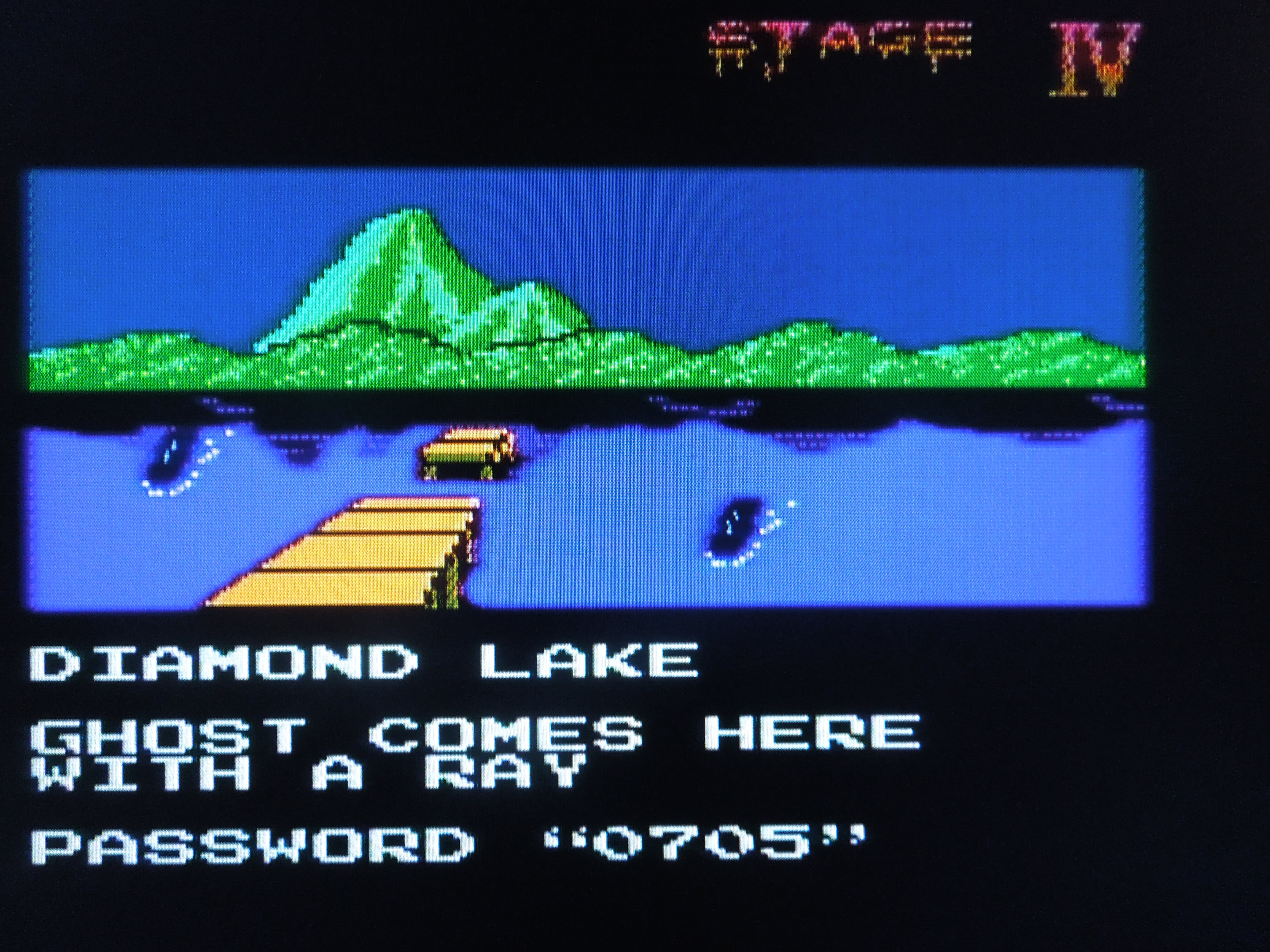
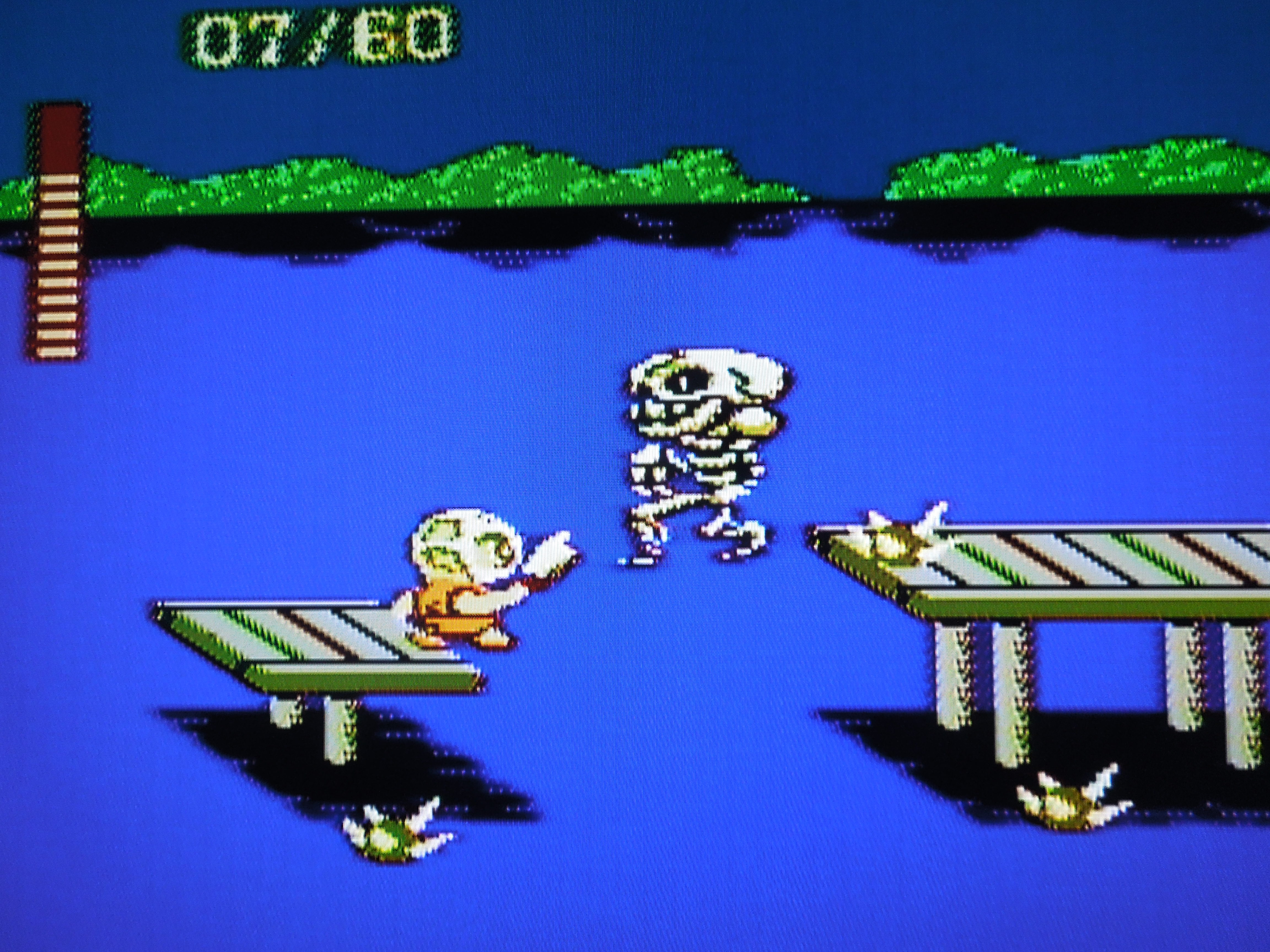
PC Engine – Batman

Check out my review of Batman on youtube! Just type ‘ORO video games’ into the search engine to pull up my channel!

Batman for PC Engine Batman for PC Engine

Note 1:  Like PC Engine games?  Check out my reviews of Operation Wolf, Nekketsu Soccer Hen, and Double Dragon II!

Note 2:  This game was played on a PC Engine Core Grafx home console with AV (red, yellow, white) cables connected to a 32-inch HD tv.

Batman was only released in Japan. Batman was only released in Japan.

Quick History:  This version of Batman was released for the PC Engine in Japan in 1990; it was not released in the U.S. for the Turbografx 16, the United States’ version of the PC Engine.  The game is based on the 1989 Batman film starring Michael Keaton and Jack Nicholson.  While other home consoles released their own versions of Batman (NES, Sega Genesis), this PC Engine version was designed quite differently from other games based on the film.  Because it was not released in the United States, many fans of the film or of Batman games in general are unaware of its existence.

Controls:  Very simple.  The game is from an overhead perspective, and you use the control pad to walk in all directions.  Both Button I and Button II perform the same function – throwing you bat-a-rang (projectile).  Run pauses the game.  That’s it!

Gameplay:  In Batman, you control the Caped Crusader on a mission to stop the Joker from poisoning the city of Gotham.  The game’s levels are based on the movie.  In each of the game’s 4 Levels, there are 12 short stages you must beat.  In each stage, Batman has 3 minutes (clock in top right corner of the screen) to complete certain tasks:

Cutscenes from the movie occur between levels. Cutscenes from the movie occur between levels.

Level 1 – Gotham City:  Batman must collect 9 of the Joker’s harmful products in each stage.

Level 2 – Fluegelheim Museum:  Batman must clean 9 paintings the Joker defaced in each stage.

Level 3 – Axis Chemical Factory:  Batman must set 9 explosives in each stage to destroy Joker’s factory.

Level 4 – Gotham City 2:  Batman must cut the cords on 9 of the Joker’s poison-gas filled balloons in each stage.

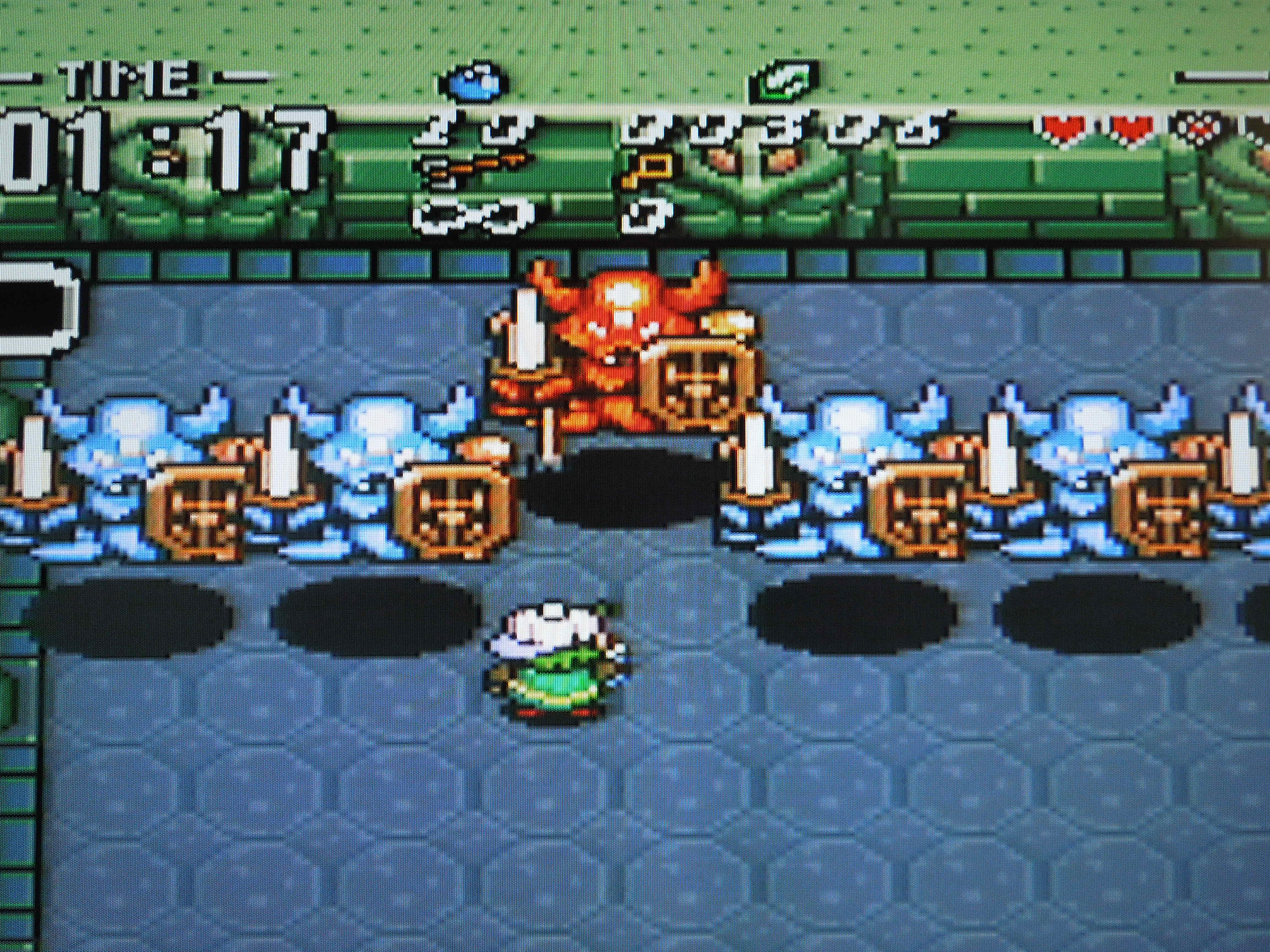
Final Stage – Cathedral:  Batman must defeat 2 of Joker’s henchmen before taking down the Joker himself.

As you play through each level’s individual stages, the Joker’s henchmen will try to stop you from achieving your objectives.  By throwing the bat-a-rang at these henchmen, you’ll stun them, and by simply walking into them once they’re stunned, you will knock them off the screen.  Keep in mind, however, that they will re-spawn in about 5 seconds from the spot where you knocked them off.  Some henchman walk back and forth in a predictable pattern, some dash around the maze-like levels, some dash towards you when you get close, and some stand in a fixed position and fire a gun at you when you get too close.  The only bosses in the game appear in the final stage.

A password system is more than welcome in Batman. A password system is more than welcome in Batman.

Items:  As you play through the stages, you’ll come across various items to help Batman accomplish his objectives.  The items appear as small icons, similar to what you’d see in Bomberman.  Boot icons make Batman move faster (up to around 4 speed levels).  Bat icons allow Batman to throw multiple projectiles (up to 3).  Multiple-Bat icons allow Batman to throw his bat-a-rangs for longer distances.  Clock icons add an extra minute onto the stage’s timer.  Bomb icons clear all enemies on the screen (until they re-spawn).  Star icons make Batman invincible for approximately 5 seconds.  Joker icons cause Batman to loose any power-ups he has gained.  L power ups…I have absolutely no idea what these do.  *Note: if you loose all 3 of your lives and have to continue, you’ll lose all your power-ups, and you’ll be back to being slow, weak Batman until you collect more icons.

Extra Lives:  For every enemy you kill or objective you accomplish, you’ll gain points.  At 10,000 points you’ll gain an extra life.  Beyond that, the game seems to vary when it gives you extra lives.  I’ve gotten extra lives at 25,000 points, 30,000 points, and 40,000 points, but there is not always consistency with gaining extra lives except for the one you get for your first 10,000 points.

Language Barrier?  No, none at all.  This is one of the few Japan-exclusive games I’ve played that has only English, with absolutely no Japanese to be found.

So, where can I find this game?  EBay, or you can play the rom on a computer emulator.
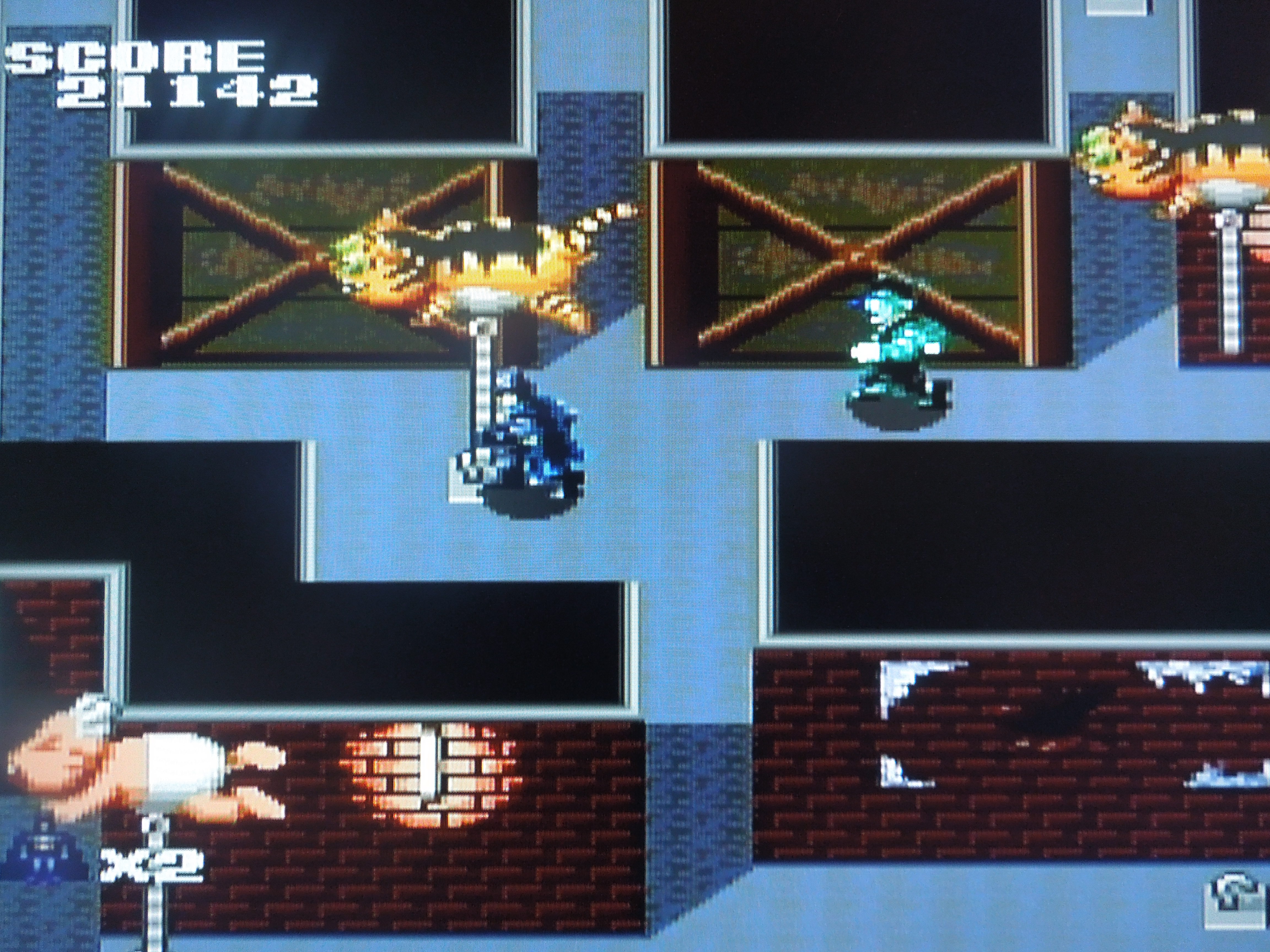
Each stage requires Batman to accomplish certain objectives. Each stage requires Batman to accomplish certain objectives.

Conclusion:  Batman for the PC Engine is an unusual game, at least for a Batman game.  It is very, very simple to play, and that is a good thing.  The layouts for each of the game’s 48 short stages range from simple to challenging.  In some of the tougher stages, you will get frustrated by cheap deaths that can occur from running into some of the Joker’s quick-moving henchmen.  There isn’t a whole lot to this game, with no variety to speak of, but it is strangely addictive.  There is a password system, fortunately, which means you don’t have to beat the game in one sitting.

The Southern Gentleman’s Opinion and Letter Grade:  B, For a game based on a movie, Batman is not bad.  If you’re a Batman fan, I recommend this obscure game as it presents something different compared to any other Batman game.  It also has the ‘one more go’ feel to it, and that’s not always a common thing in video games.  

God Bless! Proverbs 3:6

You'll face 3 straight bosses at the end of the game, with the Joker being last. You’ll face 3 straight bosses at the end of the game, with the Joker being last.

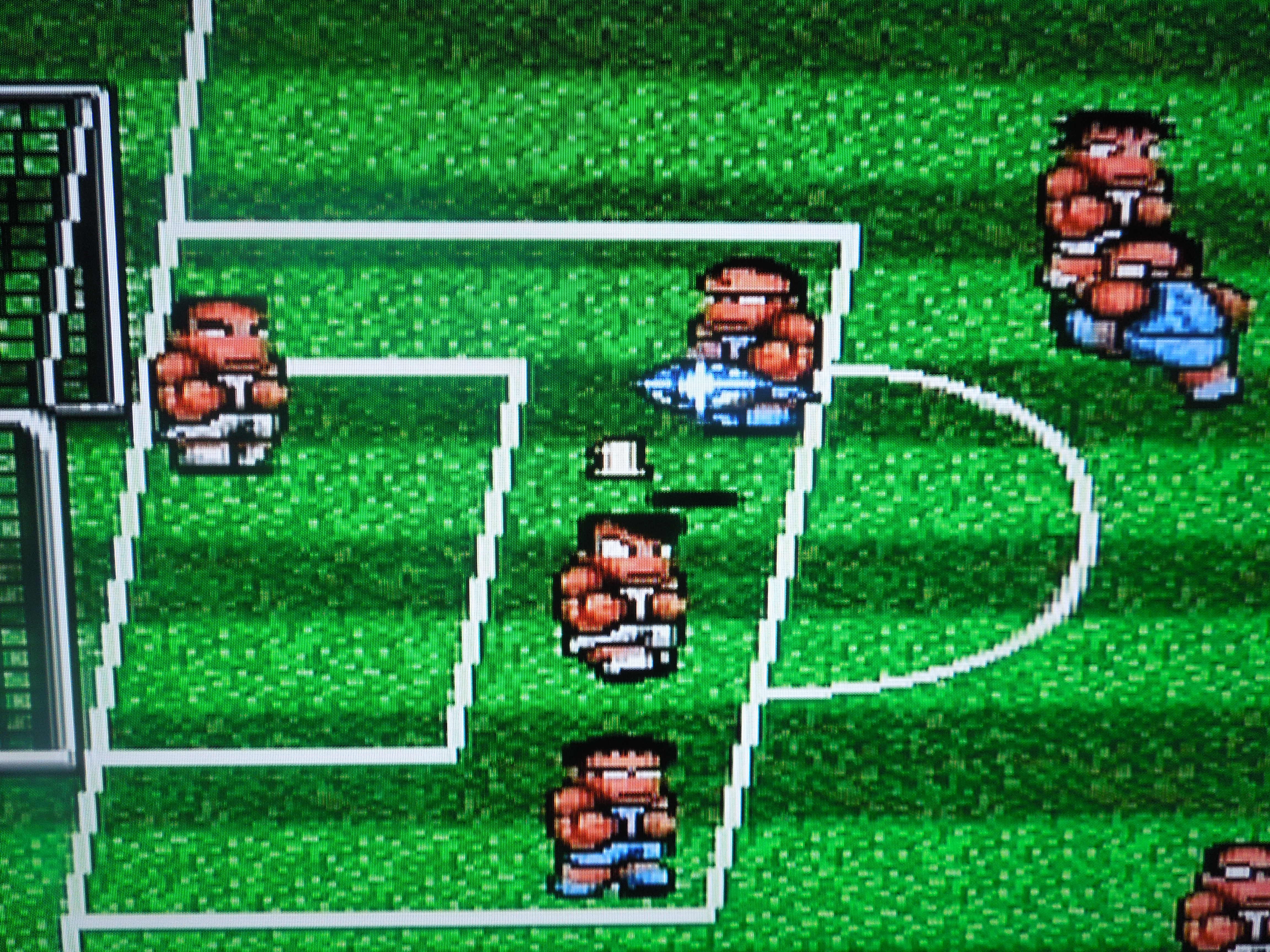
PC Engine – Nekketsu Soccer Hen

PC Soccer Hen for the PC Engine. PC Soccer Hen for the PC Engine.
The PC Engine Hu-card version. The PC Engine Hu-card version.

Note 1:  Like PC Engine games?  Check out my reviews of Double Dragon II, Operation Wolf, and Batman!

Note 2:  This game was played on a PC Engine Core Grafx Console.  It was connected to a 32-inch HD tv using AV (red, white, yellow) cables.

Quick History: Nekketsu Koko Dodgeball Bu: PC Soccer Hen was released in Japan only in 1992 for the PC Engine home console.  The game had already been released in Japan for the Famicom (Japanese NES), Sega Mega Drive, and PC Engine Super CD-ROM.  *The PC Engine Super CD-ROM version was the same as this regular PC Engine version, but it added 5 national teams in Tournament mode, added animated cutscenes and voice acting, and added some enhanced audio.  PC Soccer Hen was re-worked a bit and released for the NES in the United States under the title ‘Nintendo World Cup,’ a game that is well-known by many U.S. Nintendo enthusiasts.  The story of Nekketsu High School Soccer, which is part of the Japanese Kunio-kun series, has Kunio and the Dodge Ball team helping Misako, the manager of the school’s soccer team, beat neighboring regional schools in soccer matches.

Control:  On offense, button II shoots the ball.  Button I passes the ball.  You’ll typically pass the ball to the player you’re closest to – if they’re close, it will be a ground pass, if they’re far away, it will be an air pass.  Pressing I + II while standing still makes your character jump for a bicycle kick.  Pressing I + II while holding left or right makes your player attempt a diving header.  On defense, button II slide tackles and button I executes a shoulder tackle.  While you can’t ‘control’ your other teammates, you can ‘tell them what to do.’  For example, if your defender is chasing the opponent with the ball, even if your character is on the other end of the field, you can press button I to make your defender shoulder tackle the opponent character.  Or, if you pass to your computer teammate near the goal, pressing button II when the ball reaches him will make him shoot.  You have full range of the field even though you’re a forward, and can run back to help the defense if they get in a jam.

You can change your team's position before each match. You can change your team’s position before each match.
You'll get passwords when you lose matches. You’ll get passwords when you lose matches.

Gameplay:  In Tournament Mode, you can only play as Nekketsu High School (for 1 player or 2 player co-op).  You guide the team through 13 matches against the other schools, each of which has a “theme.”  I can’t read Japanese, so I can’t tell you the official names of these schools.  However, based on the graphic that is displayed before each match, here are my best guesses at team names, in the order of which you play the teams: the Nekketsu High Juniors, the Monks, the Bikers, the Hunters, the Announcers, the Firemen, the Fishermen, the Psychics, the Mob, the Miners, the Samurais, the Fighters, and the Scientists.  Each team gets progressively tougher, of course, as you advance in the tournament.  To balance this, new selectable players are added to your squad at certain points in the game – they have a higher speed or power or defense than your current players.  As you play through the various teams, you’ll notice that the playing surface will vary based on the team you play, and you have no control over the field you play on (ice, concrete, and rocky terrain are some examples).  There is a handy 4 digit password system to let you pick up where you left off if you don’t want to try to beat the game in one sitting.  To get the password, however, you have to lose a match, and then select “No,” to a re-match in order to get the password.  This soccer game is 6 on 6, and before each game, you can select which player you want in which position: a goalie, 2 defenders, 1 mid-fielder, and 2 forwards  Each player has their own unique “Super Shot” that is executed by doing a bicycle kick or by running a certain number of steps with the ball before shooting it.

Player Differences:  Some players on your team move really fast, some run at an average speed, and some are really slow.  Some shoot powerful, fast-moving shots, while some shoot weakly.  Another difference in your selectable players is ‘Defense/Toughness.’  A ‘tough’ player will be able to shoulder tackle/knock over most CPU players, while a ‘non-tough player’ will fall down if they try to shoulder tackle a CPU player.

2, 3 or 4 player VS:   PC Soccer Hen is for up to 4 players in VS mode (2 human players per team).  Keep in mind, you’ll need a multi-tap and 4 controllers to accommodate everyone.  Only 5 teams are selectable in VS, and one team must be Nekketsu High School.  Also, in VS, you can choose from among 6 field terrains, with surfaces including grass, rocky (you can trip over rocks on the field), concrete (not smart for soccer – the ball hardly rolls), and ice (if you slide tackle, you’ll go zooming across the field).  For some reason, in VS, you don’t play two halves like in tournament mode – just one.  No overtime mode here, just like in Tournament mode.

Play on a variety of fields. Play on a variety of fields.

Sound & Music:  The music in PC Soccer Hen is good – different themes play during different matches.  The game’s best song is reserved for the VS mode.  The sound effects are great, from the whistle that blows when you score a goal, to the smash of a well-delivered shoulder tackle.

Language Barrier:  No and Yes.  If you just want to play an arcade-style soccer game, no.  However, when you select which player you want to control before each match, you only see the player’s names, which are in Japanese, making it impossible to know who you’re playing as unless you play enough and memorize the letters.  The game’s default player is Kunio.  This can be frustrating as you play through the Tournament, because you gain new players after certain matches that you’ll want to play as, but you won’t know who you’re selecting once they’re added to your roster.  My suggestion is to find your favorite player or two and memorize their symbols/Japanese letters.  There is also a ‘strategy’ screen before each match where you can change things that you want your team to do, like ‘Always shoot/Never shoot,” “Goalie comes out/Goalie stays in goal.”  These, too, are in Japanese.  Fortunately, these strategies seem to be defaulted well, and you can play the game just fine even without knowing which player you’ll play as or changing around the strategy menus.

So, where can I find this game?  You can find copies on eBay, or you can play the rom on a computer emulator.

The final team in the Tournament, The Scientists, are tough to beat. The final team in the Tournament, The Scientists, are tough to beat.

Differences between Soccer Hen for Sega Mega Drive and Soccer Hen for PC Engine:

Mega Drive:                                         PC Engine:

1, 2, or 3 min halves in Tourn         1m, 30 sec halves in Tourn

1, 2, or 3 min games in VS                2m, 30 sec game in VS

2 players max in VS                           4 players max in VS

13 selectable teams in VS                  5 selectable teams in VS

Each side can be any team in VS     1 side must be Japan in VS

No clock stop when ball goes out     Clock stops when ball out

CPU players can’t get KO’ed               CPU players can get KO’ed

12 teams in Tourn                                13 teams in Tourn

See selectable players for Tourn       See only names for Tourn

‘Fire’ Shots and Defensive Moves      No ‘Fire’ Moves

So, which is the better game?   Tough one – the PC Engine version allows 4 players in versus mode, plus has one additional team to play against in Tournament Mode, The Scientists.  The PC Engine version seems to be a bit easier also.  The Mega Drive version, on the other hand, allows you to choose between 13 teams in VS, instead of only 5; the Mega Drive also has the ‘Fire’ Moves.  In the end, I’d say the edge, for American gamers, should go to the Mega Drive version for this reason – in the Mega Drive version, you can see which player you pick before each match.  But both games are terrific.

You can bicycle kick the ball right out of the Goalie's hands! You can bicycle kick the ball right out of the Goalie’s hands!

Conclusion:  PC Soccer Hen for the PC Engine is one terrific soccer game.  It looks great (no flickering) with its Kunio characters, and the matches are relatively short affairs, which is a good thing.  The challenge ramps up around the 3rd team, and you’ll find yourself having to replay some teams multiple times trying to get the win.  Having a 4 player VS mode is a great addition, too, and the 2 player co-op Tournament mode is a blast.
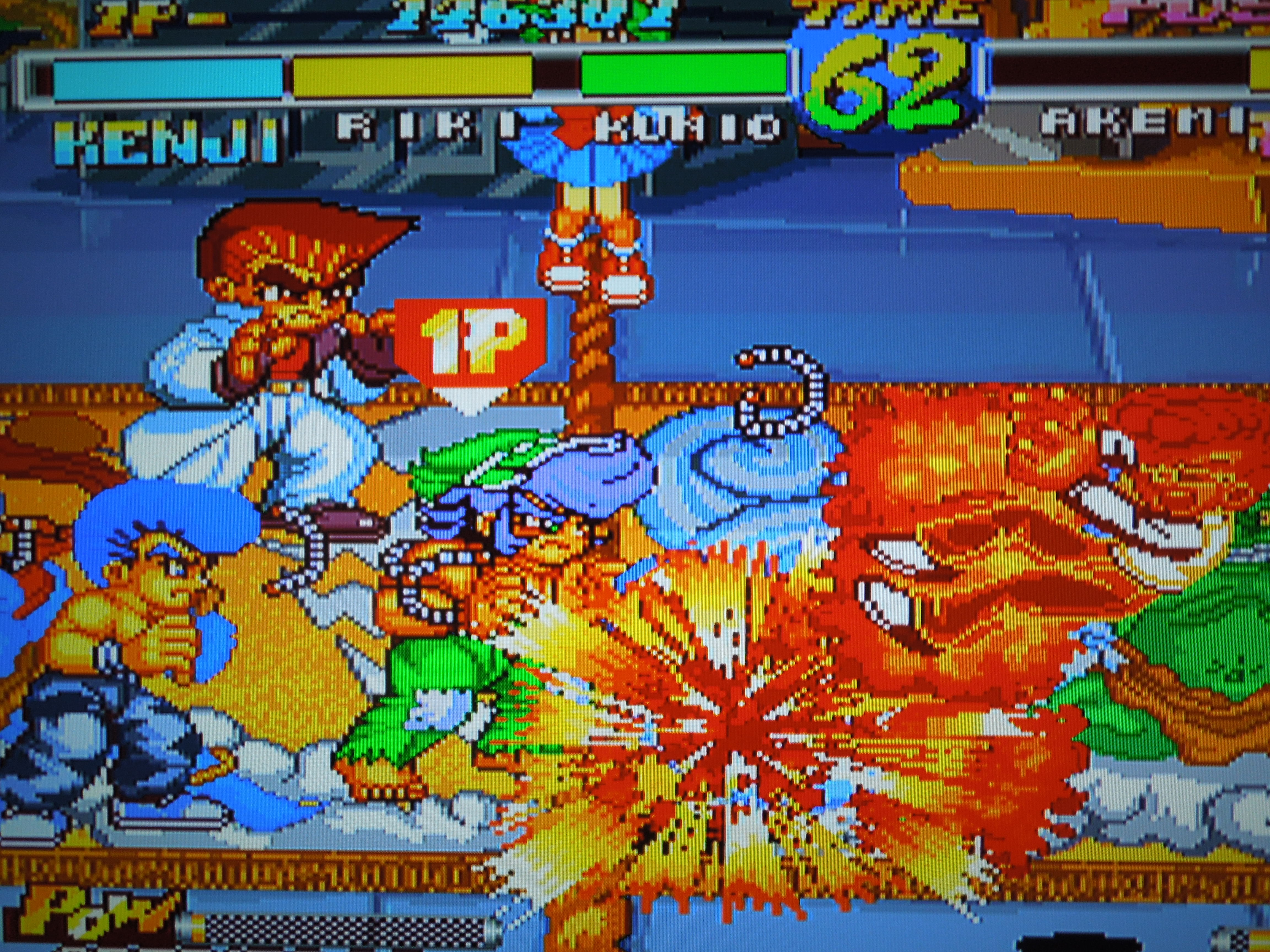
UPDATE:  Here are the passwords for PC Soccer Hen for anyone interested:  Match 1 vs. Juniors: 0000, Match 2 vs. Monks: 7676, Match 3 vs. Bikers: 4649, Match 4 vs. Hunters: 3614, Match 5 vs. Announcers: 7280, Match 6 vs. Firemen: 4154, Match 7 vs. Fishermen: 0141, Match 8 vs. Psychics: 5656, Match 9 vs. Mob: 5814, Match 10 vs. Miners: 3939, Match 11 vs. Samurais: 2414, Match 12 vs. Fighters: 0784, Match 13 vs. Scientists: 6210

The Southern Gentleman’s Opinion and Letter Grade:  Better than the U.S. version, Nintendo World Cup, which is a good game.  If you need a soccer fix, it doesn’t get much better than PC Soccer Hen.  B+

God Bless! Proverbs 3:6

Arcade – WWF WrestleFest

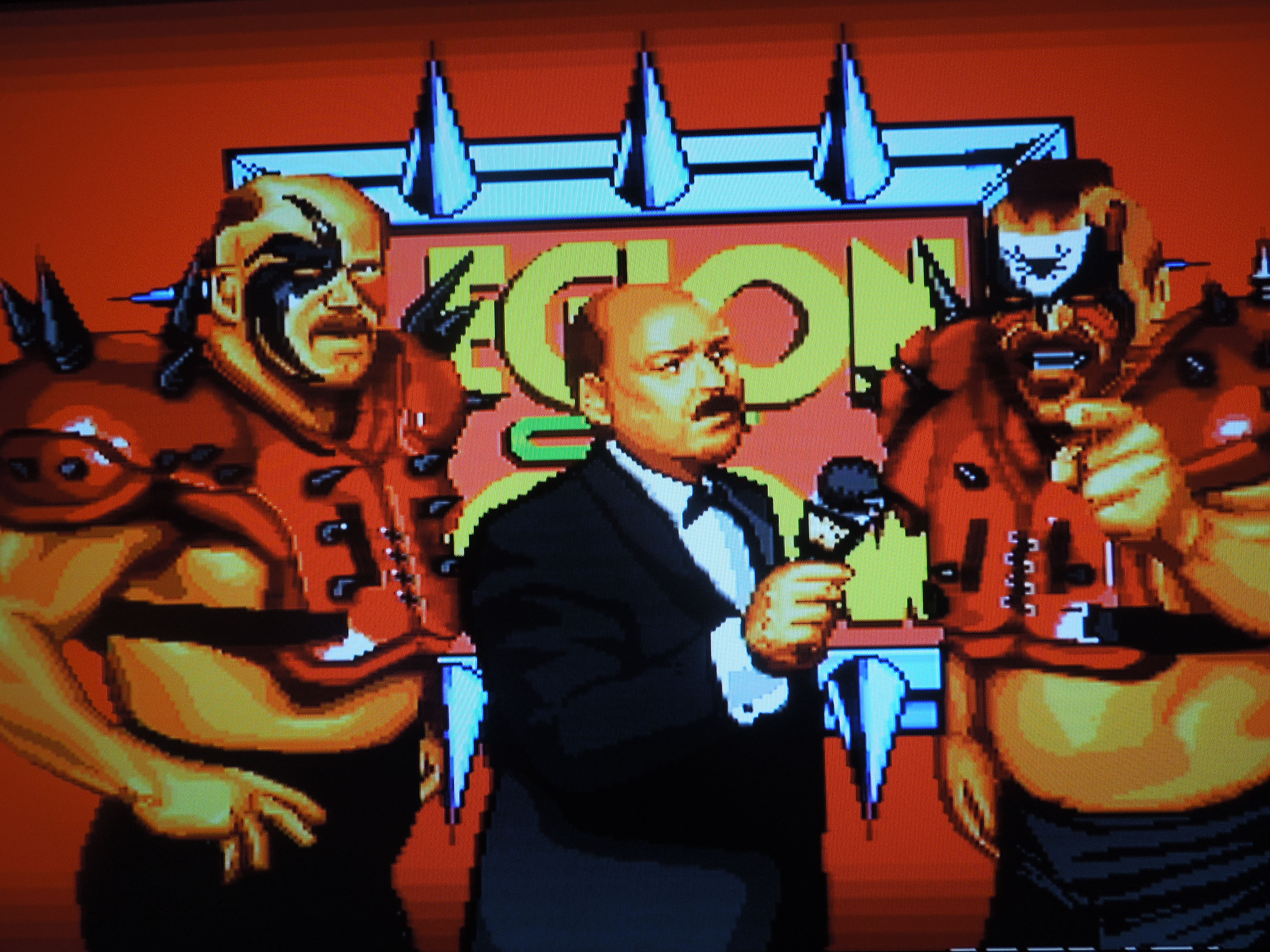
WWF WrestleFest for the Arcade WWF WrestleFest for the Arcade
WWF WrestleFest arcade board, ATX power supply, supergun, and Neo Geo controllers. WWF WrestleFest arcade board, ATX power supply, supergun, and Neo Geo controllers.

Note 1:  Like wrestling games?  Check out my reviews of Saturday Night Slam Masters, Muscle Bomber, and 3 Count Bout!

Note 2:  This game (arcade board) was played on a home-made supergun (a device used for playing original arcade boards on a tv) using S-Video cables.  The supergun was connected to a 32-inch HD tv.

*Ok, so WWF WrestleFest is probably the least ‘obscure’ game I’ve reviewed so far.  Chances are pretty good that if you like video games, you’ve either played or heard about WrestleFest.  However, because the game was only released for arcades and has never received a home console port, I’m putting it in the ‘obscure’ category.  Plus, it’s just so awesome I had to put it on here.  Enjoy!

Quick History:  WWF Wrestlefest was released for arcades in 1991.  It starred some of the biggest names in wrestling for its time, like Hulk Hogan, the Ultimate Warrior, and Mr. Perfect.  The arcade board/pcb of WrestleFest is a standard ‘jamma’ board (Japan Amusement and Marketing Machine), basically meaning it could be plugged into and played in most arcade cabinets then and today.  The game supported up to 4 players if connected to a 4-player arcade cabinet, but often times arcade boards were placed in the more common 2-player only arcade cabinets.  The supergun that WrestleFest was connected to for this review supports 2 players, and thus the game board/pcb has been set for 2 players.  As popular as the game was with arcade-goers, it never received a port to any home console, such as the Sega Genesis or Super Nintendo.

Modes:  WrestleFest has two modes of play to select from:  Saturday Night’s Main Event (Tag Team Mode) and Royal Rumble (Battle Royale).

Tag Team Mode:  You select 2 wrestlers (or you select 1 and a friend selects the other), and you fight 4 or 5 tag matches, depending on what the game board is set to.  The final tag match is against the WWF Tag Team Champions, the Legion of Doom.  If you beat the LOD, you must once again play 4 or 5 matches, again culminating with a title defense against the LOD before you beat the game.  There is some strategy involved in Tag Matches – it’s smart to tag often, as a damaged wrestler will regain energy while on the outside of the ring.  Also, whenever a pin attempt is made or a submission hold is put on a wrestler, the two partners on the ring apron will hop in the ring to try to break up the hold or pin/keep the other partner from breaking up the hold or pin.  Special tag team moves can be executed if you tag your partner while you have your opponent in a head lock or lying prone on the mat near your tag-corner.  You can play 2 player co-op tag matches against the computer, or you can go head to head with your tag team vs your friend’s tag team.  The winner of the 2 player VS match will continue on against the computer, unless the loser elects a re-match.

Choose from 10 WWF wrestlers from the 1990s. Choose from 10 WWF wrestlers from the 1990s.

Royal Rumble: The Royal Rumble is a 12 man Battle Royale.  You start (or you and another human player, as this mode supports 2 players too) with 6 wrestlers in the ring.  It’s every man for himself, and the goal is to throw the other wrestlers over the top rope, pin them, or make them submit, all while trying not to get yourself eliminated.  Every time a wrestler is eliminated, another comes to take his place until all 12 wrestlers have been in the match.  The last man standing wins.

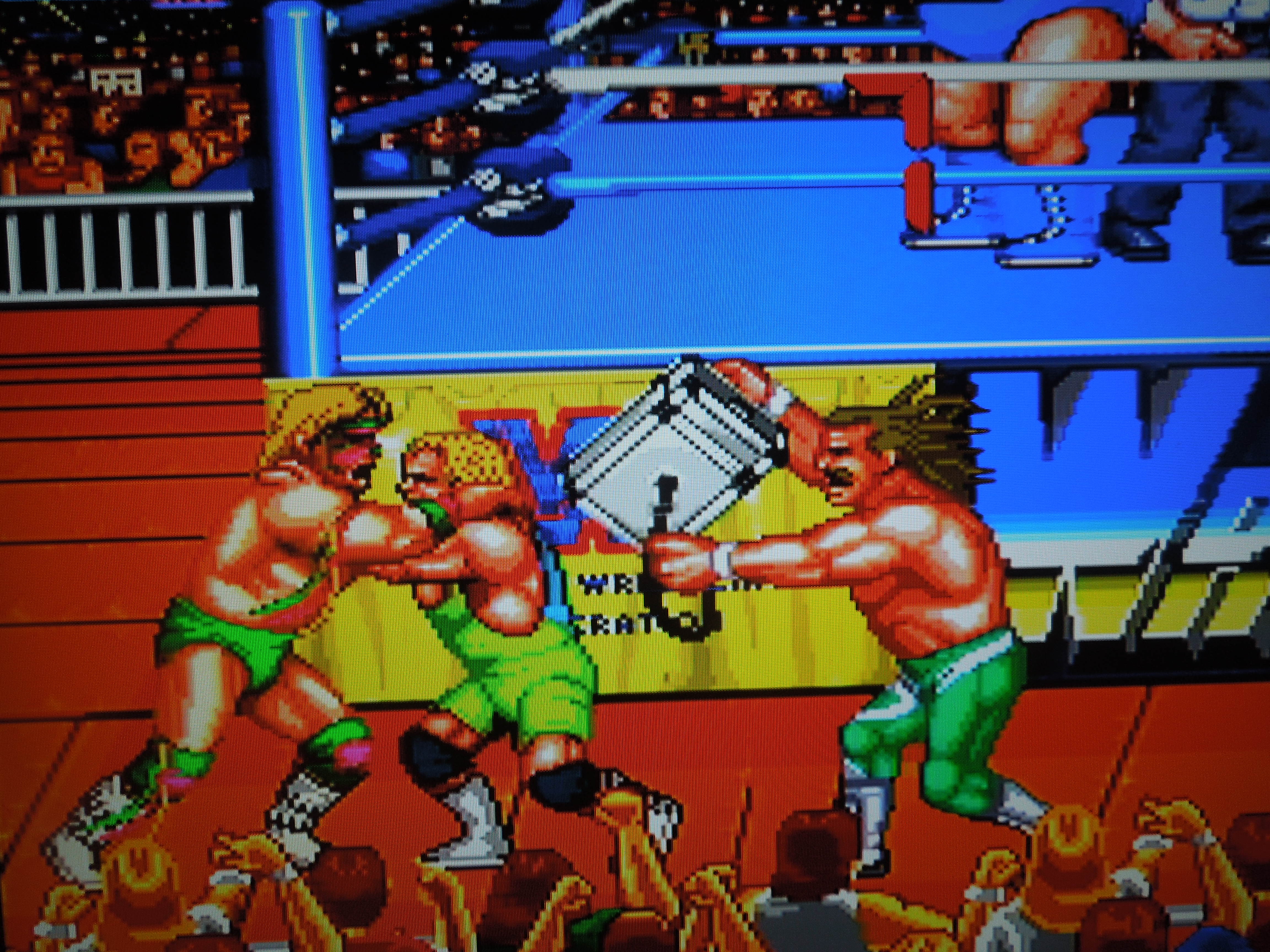
Use foreign objects when fighting outside the ring. Use foreign objects when fighting outside the ring.

Controls:  WrestleFest has simple controls.  Because my supergun uses Neo Geo control sticks, that is how I will describe the controls.  A tags your partner in Tag Mode (go to the highest point near the turnbuckle).  A punches when standing.  Tapping A in a grapple wins the grapple and executes a pre-determined wrestling move, like a body slam.  The move you perform as you win grapples changes throughout the match – at first you’ll execute simple moves, like snap-mares, but after you weaken your opponent, you’ll execute stronger pre-determined moves, like pile-drivers.  B kicks.  Tapping B in a grapple whips (sends him running) the opponent across the screen, where they will bounce off the ropes and run back at you (or hit the steel cage bars in that particular match).  When an opponent is running at you following a whip, hitting A or B executes a wrestling move, like a drop kick or back body drop.  Pressing A + B makes your wrestler run, and following it up with A or B executes a wrestling move, like a flying clothesline or running knee smash.  When an opponent is down, pressing A around their mid section kicks them, pressing A+B puts them in a submission hold, like a Boston Crab, pressing A by their head picks them up, and pressing B covers them for a pin.  You win a match when your opponent is pinned for a 3 count or gives up from a submission hold.  Your character has an energy bar that depletes during the match as you take damage, and pressing Start (if you have repeatedly pressed the ‘insert coin’ button on your supergun or arcade cabinet and have extra credits) refills your energy bar.

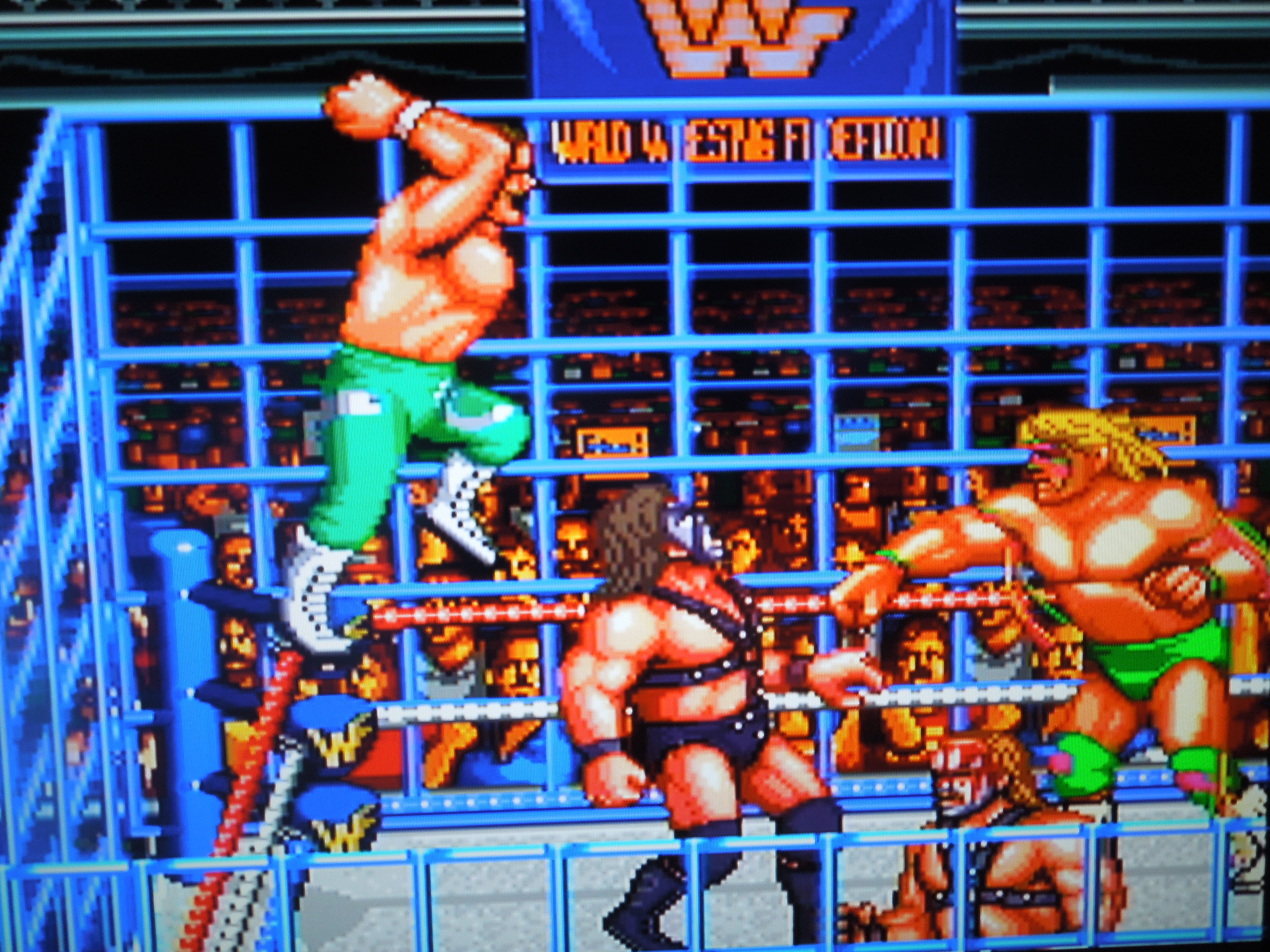
Steel Cage Matches! Steel Cage Matches!

Finishing Moves:  Each wrestler has a finishing move that is easy to pull off.  All you have to do is wear down your opponent first.  Then simply keep tapping A when in a grapple to pull off most wrestlers finishing moves (ex. The Perfect-Plex with Mr. Perfect or DDT with Jake ‘The Snake’ Roberts).  Other finishing moves are executed when your opponent is lying prone on the mat after you’ve beaten the heck out of him (ex. Hulk Hogan’s Atomic Leg Drop, Earthquake’s Earthquake Splash).  The Boss Man’s finishing move is unique in that you have to whip the opponent into the ropes, let him come back to you, then simply press A to execute the Boss Man Slam.

DIP settings:  The arcade board/pcb of WrestleFest has DIP settings (very small, white numbered switches) that can change the game’s settings.  You can find a free viewable copy of the manual online to see what switches do what.  Basically some things you may want to change would be the difficulty (four levels of difficulty), or the total number of players the game allows for (if your arcade cabinet or supergun is designed for 3 or 4 players, for example, you’ll want to make sure that DIP switch is set to 3 or 4 players).

Rings, Cages, Turnbuckle Attacks, and Fighting Outside the Ring:  You’ll play in different colored rings as you progress through Tag Mode, and the Steel Cage is particularly awesome.  You can do incredible damage to your opponent by whipping them into the cage.  You can also climb the top two turnbuckles in any match, and come flying off with an atomic elbow or big splash.  Also, in regular matches, you can throw your opponent outside the ring, where you can whip them into the steel rail, or pick up the steel steps or a metal box and smash them with it (just make sure you get back in the ring by the 20 count or you’ll lose the match – the computer can also get counted out).

The Legion of Doom awaits your challenge. The Legion of Doom awaits your challenge.

Music & Sound:  A somewhat catchy tune plays during the matches.  The sound effects work great.  Punches, body slams, and the cheers and boos of the crowd give the game that ‘arcade’ feel.  There are also many voice-overs, including the names of the characters.  An announcer ‘calls’ the match by basically saying what wrestlers are doing what moves.  Sometimes it’s easy to hear what he says, like “Hulk Hogan – Atomic Drop!” but some are harder to understand.

Characters:  The 10 selectable characters are:  The Million Dollar Man: Ted Dibiase, Big Boss Man, Hulk Hogan, Jake “The Snake Roberts,” The Ultimate Warrior, Mr. Perfect, Earthquake, Sergeant Slaughter, Smash, and Crush.  In Tag Mode, you have to pick Smash and Crush together (as they form the tag team ‘Demolition’).  You cannot select the Legion of Doom wrestlers, unfortunately, although they do appear as opponents in both the Tag Mode and Royal Rumble.  Some wrestlers move faster (Mr. Perfect), while some move much slower (Earthquake).  All wrestlers perform signature taunts, but unfortunately, as a human player, you cannot execute a taunt – only the computer can do this after they hit a big move on you.  Each character also has their own unique set of pre-determined grapple moves, submission moves, or running attack moves (although multiple characters often use the same moves, no two characters have the exact same move list).

So, where can I find this game?  You can find the pcb (printed circuit board/arcade board) on eBay.  You’ll need a jamma-ready arcade cabinet (most cabinets are designed for jamma boards like WreslteFest) or a home-made supergun that supports jamma boards in order to play it.  I ordered my supergun on eBay as well.  Unfortunately, WrestleFest has never been released in home console disc or cartridge format, nor is it available for download on popular modern-day gaming services like the Playstation Network.  You can play the rom on a computer emulator.

If the LOD hits the Doom's Day Device, it's lights out. If the LOD hits the Doom’s Day Device, it’s lights out.

Conclusion:  WrestleFest is an example of a game that is better (for it’s sport) than anything that has come out since.  It’s easy to pick up and play – there are no complicated controls to frustrate you.  And two-player co-op?  It’s one of the most fun co-ops in all of gaming.  Being able to select the difficulty on the DIP settings is great – the challenge of the game is to try and beat all the tag teams without having to hit the Start button to regain life (you’ll automatically re-gain some life after winning a tag match, by the way).  The LOD tag team can be quite tough, and some skill and strategy is involved in order to beat them.

The Southern Gentleman’s Opinion and Letter GradeWWF Wrestlefest is the best wrestling video game ever made, period.  Beyond that, it’s an addictive game you’ll come back to again and again.  A++

God Bless! Proverbs 3:6

Simply Perfect. Simply Perfect.

Neo Geo – Sengoku 3

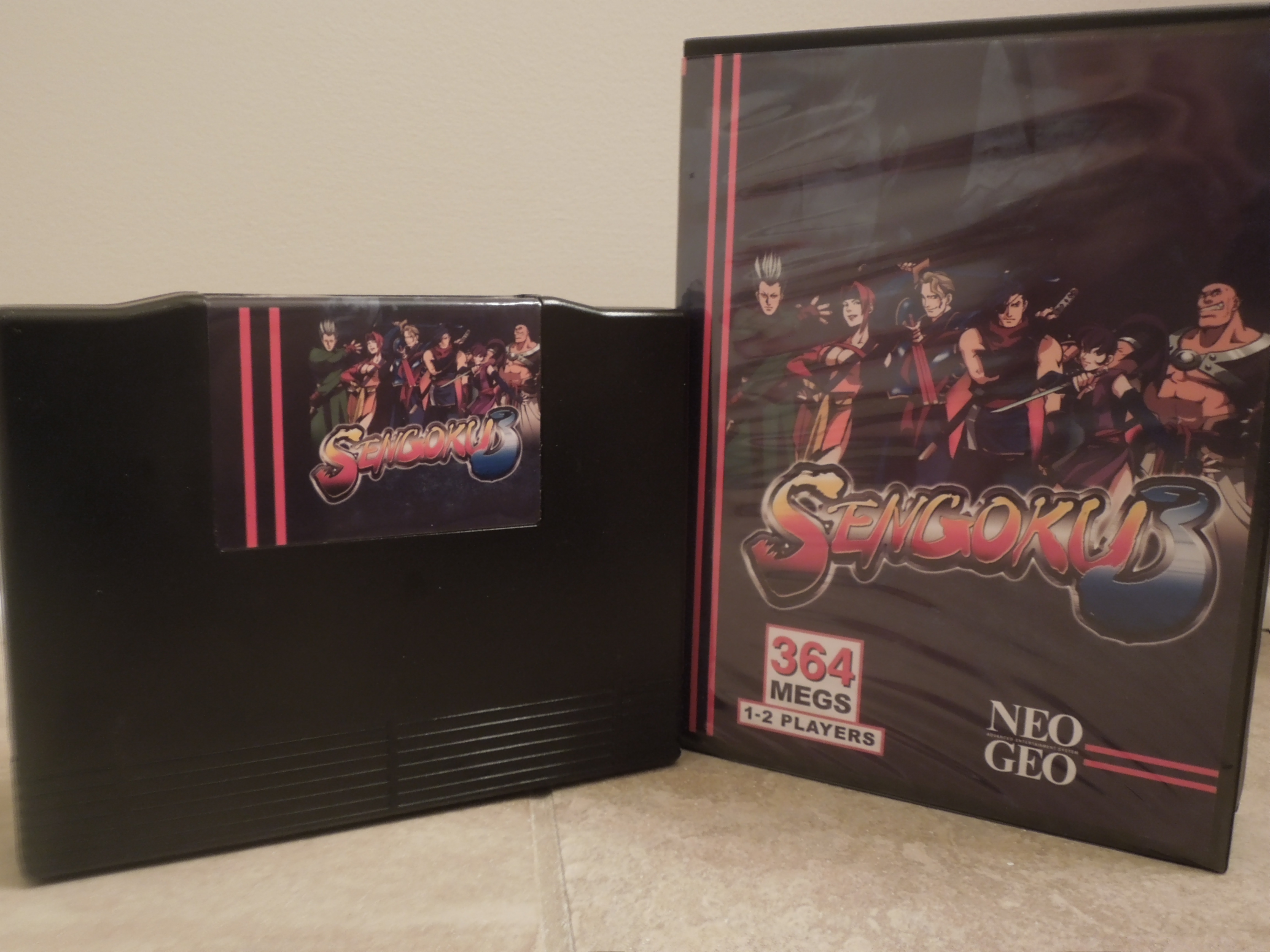
Sengoku 3 for Neo Geo AES. Sengoku 3 for Neo Geo AES.

Note 1:  Like Beat ‘Em Ups?  Check out my reviews of Bare Knuckle III, Crows: The Battle Action, Double Dragon II, Final Fight Guy, Final Fight 2, Mighty Final Fight, Nekketsu Oyako, and Warriors of Fate!

Note 2:  This game was played on a Neo Geo AES home console that has been modified to output in component video (red, green, blue).  It was connected to a 32-inch HD tv.

Quick History:  Sengoku 3 was released for the Neo Geo MVS (arcade cabinet) in 2001.  It also had a very, very limited release for the Neo Geo AES home console in 2001.  It was one of the games produced near the end of the life cycle of the Neo Geo.  It was the 3rd game in the ‘Sengoku’ series, and like its predecessors, it is a Beat ‘Em Up, although its story and gameplay are much different.  The copy that is used for this review is an AES conversion – meaning that an MVS (arcade cabinet) cartridge of Sengoku 3 was professionally converted into an AES home console cartridge.

Neo Geo Memory Card: If you lose all of you lives and use all 4 of your given credits, you can save the game.  If you load the save again at that time or later, you’ll start on the stage you were on when you died.

Sengoku 3 had a limited AES release. Today, you can find MVS arcade cartridges that have been converted into AES home console cartridges. Sengoku 3 had a limited AES release. Today, you can find MVS arcade cartridges that have been converted into AES home console cartridges.

Story:  “It is a prophecy passed down through the ages.  The Timeless Soul shall revive and descend from the heavens with the red moon.  Thereafter, flames of conflict will engulf the Earth.  The prophecy ends thus: The Ninjas of Peace shall rise with the coming of the Timeless Soul.  And their mission to purify the tortured entity shall be fulfilled.”  That’s an exact transcript of the story in the opening scenes…So, yeah, basically, some Evil Samurai Emperor has returned to Earth, and you and your fellow ninjas must decimate his undead army and finally destroy him as well.

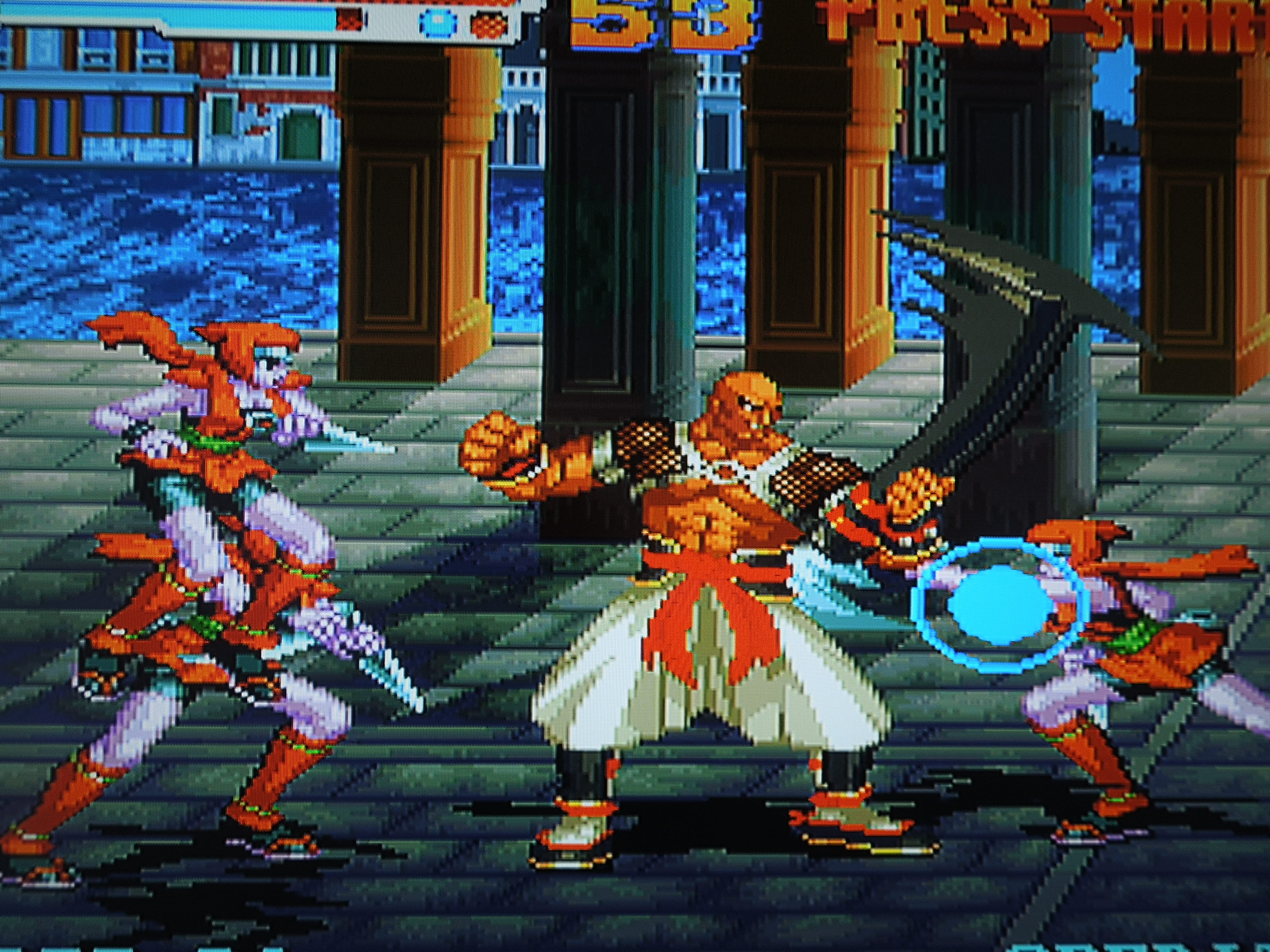
Characters:  The game is for up to 2 players, and you select from 4 Ninjas to start the game:  Kegatsura, Falcon, Kurenai, and Kongoh.  After you beat the game’s first 3 stages, two additional characters become selectable:  Okuni and Byakki.  These two characters had evidently been accused of betraying the Ninjas of Peace, but after you beat them in battle, they proclaim their innocence and join you on your quest to kill the Evil Samurai Emperor.  All characters carry some type of weapon at all times, like a sword or a huge iron pipe.  Some characters are quicker and weaker, while some are stronger and slower or more balanced.  Additionally, some characters have a further reach with their weapons than others.

All of your selectable characters carry a weapon. All of your selectable characters carry a weapon.

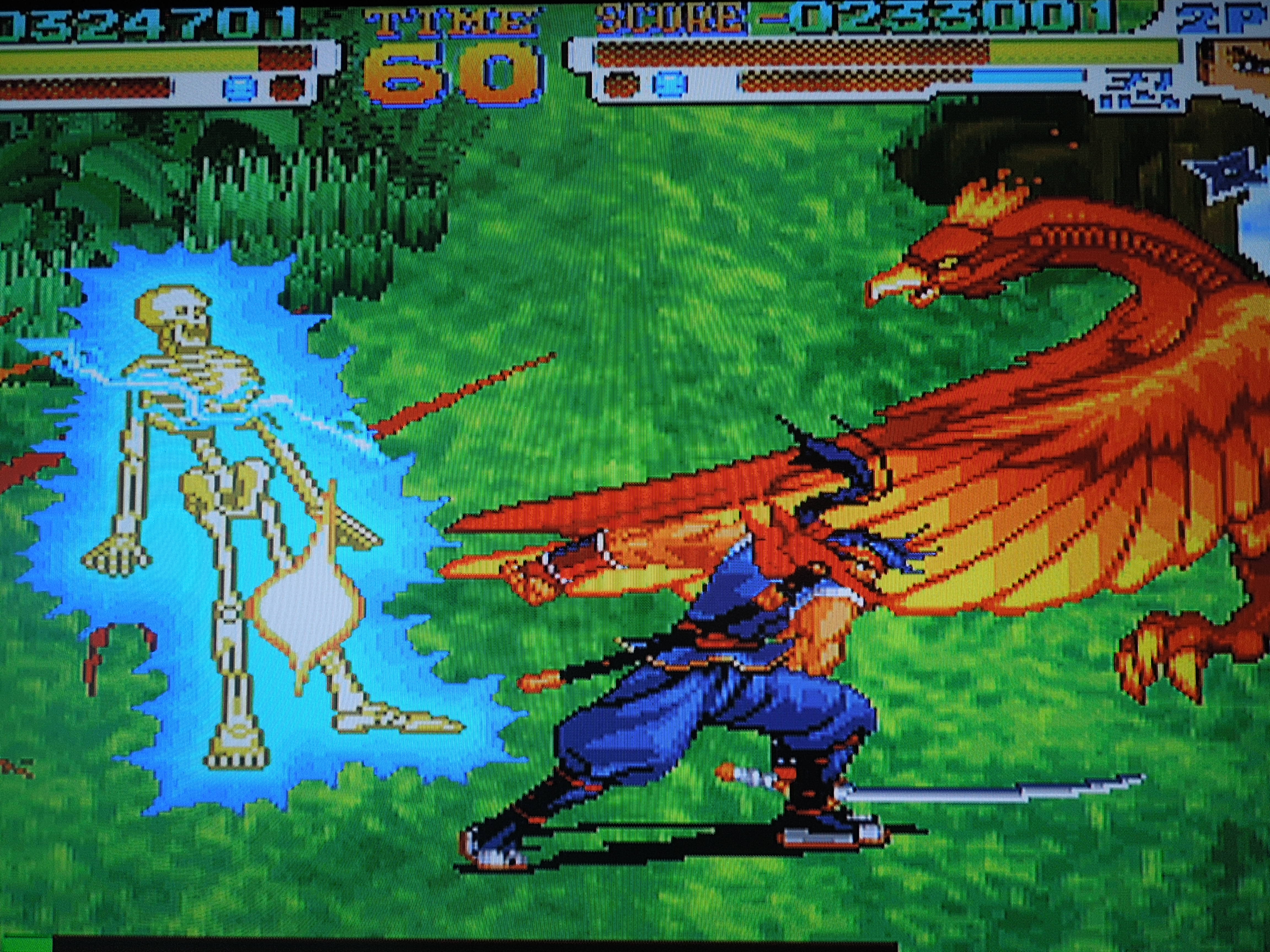
Control:  There’s a handy ‘How to Play’ explanation in the Options menu of the game, but here are the controls.  A swings your weapon.  B punches with your fist.  A great thing about Sengoku 3 is the combo system – your character will immediately start chaining together combo hits as you press A and B, and it’s fun to play around and see how many hits in your combo chain you can get.  Getting in close to an enemy will cause you to automatically grab him or her, and pressing A or B will execute a throw.  Down + B will cause you to pick up items you find, like food or projectile weapons.  C jumps.  Pressing A or B in the air executes a weapon attack or jump kick.  D throws a projectile like a bomb, plate, or ninja star (when you pick them up – you carry a limited amount).  Double tapping forward or backward will make your character run forward or evade backwards.  While running, pressing A or B will execute a dash attack.  You have a ‘special’ bar that builds as you kill enemies.  When it is full, you can do Specials.  Down, Down A does Special 1.  Down, Down, B does Special 2.  Down, Up, A + B executes your Super Attack.  A + B + C executes a special ‘escape attack.’  Each character has their own unique Specials and Super Attack.

Screen-filling Super Attacks look incredible. Screen-filling Super Attacks look incredible.

Gameplay:  In Sengoku 3, you’ll play through 6 levels of Beat ‘Em Up action: China, Japan, Italy, Brazil, U.S., and Kyoto.  At the beginning of the game, you can choose which stage (China, Japan, Italy) you want to play first, second, and third.  As you battle your way through the game’s stages, you’ll notice that some stages have alternate paths you can take, some of which you’ll have to ‘discover’ by knocking down a hidden wall or barrier.  Each stage ends with a boss.  You have 4 credits to complete the game, although you can change the number of lives you get per credit (1-8) as well as the difficulty of the game (levels 1-8) in the Options menu.

Some of the game's 6 levels have branching paths. Some of the game’s 6 levels have branching paths.

Items:  As you play through the game, you’ll break open objects to reveal food or treasure items.  Different food items replenish different amounts of your health, and different treasures award different amounts of points.  You have a high score, but gaining points doesn’t award you any extra lives.  It’s really nice that you have to press Down + B to pick up items, as too often in these types of games you have to simply press the ‘attack’ button to pick up items, and your character would bend down to grab a hamburger when you meant to punch an enemy – that won’t happen in Sengoku 3, thankfully.

Music & Sound: The music in Sengoku 3 is quite good.  There are different themes during each stage of the game – particularly memorable and ominous is the theme that begins to play as you get ready to fight the final boss, the Samurai Emperor.  The sound effects are great.  The slash of your weapons on enemies, the clang of colliding weapons, and the blasts from your Specials all sound fantastic.

Sengoku 3 has a couple of truly memorable bosses. Sengoku 3 has a couple of truly memorable bosses.

So, where can I find this game?  You can find MVS (arcade cabinet) cartridges of Sengoku 3 without too much trouble on sites like ebay, if you have an arcade cabinet to play it on, of course.  However, if you want to play an AES cartridge, you’ll have to do some real hunting to find one of the few that was originally released for the AES.  There are Neo Geo websites that sell conversion cartridges like the one I used for this review.  You can also download the rom for play on a computer emulator.

The Samurai Emperor is one of the all time toughest final bosses in any video game. The Samurai Emperor is one of the all time toughest final bosses in any video game.

Conclusion:  This is one excellent Beat ‘Em Up.  It has one of the best ‘combo’ systems I’ve ever seen in a game from this genre.  It is very, very, simple to pick up and play Sengoku 3.  The characters are big and vibrant, and the Specials look absolutely stunning.  Having 8 levels of difficulty is a great addition as well, although I should mention this – the game’s final boss, the Samurai Emperor is TOUGH (some would say cheap, although you can figure out his patterns).  You’ll feel pretty good about dispatching the game’s other bosses, but the Emperor uses a special move almost non-stop that can be hard to avoid.  Remember, you only get 4 credits, and even if you’ve given yourself the maximum number of lives per credit (8), beating the game can be challenging – make sure you have as many lives as possible before you get to Level 6.  The challenge is good though, as it requires you to hone your ‘combo’ skills in the game.  Playing this game alone or in the excellent 2 player co-op is tremendous fun.

The Southern Gentleman’s Opinion and Letter Grade:  The best Beat ‘Em Up on the Neo Geo AES, and probably in the top 10 Beat ‘Em Ups ever.  A

God Bless! Proverbs 3:6

SNES – Tecmo Super Bowl III : NCAA 2011

Tecmo Super Bowl III: NCAA 2011 for the Super Nintendo Tecmo Super Bowl III: NCAA 2011 for the Super Nintendo
Finally, a college Tecmo Bowl on a SNES cartridge! Finally, a college Tecmo Bowl on a SNES cartridge!

Note 1:  Like football games?  Check out my reviews of Tecmo Bowl Japan, Tecmo Bowl Arcade, SEC Tecmo Bowl, and Football Frenzy!

Note 2:  This game was played on an original model SNES console with S-Video cables.  It was connected to a 32-inch HD tv.

Quick HistoryTecmo Super Bowl III: NCAA 2011 is a fan-modified version of the Super Nintendo game, Tecmo Super Bowl III: Final Edition that was originally released in 1995.  That game was an NFL football game, and it included all 30 teams that were in the NFL at that time; it also included the names of all NFL players, as well as the correct team colors and logos.  The modifiers of TSB III: NCAA 2011 amazingly altered almost everything – changing the 30 NFL teams to 30 of the 125 teams in Division 1 (FBS) college football.  TSB III: NCAA 2011 also includes the player names, correct college colors, and logos from each of the 30 teams that were selected for inclusion.  When you select your team, the modders even included the name of the conference and final 2010 BCS ‘ranking’ that your school finished with.  So, for example, Auburn finished 2010 as no.1; TCU finished as no. 2 – teams that weren’t ranked in the top 25 at the end of the 2010 season have an ‘NR’ beside them.

Teams:  30 teams are included in TSB III: NCAA 2011.  Remember, this game is based on the 2010 season, and since then, some teams have changed conferences (ex. Texas A &M, Nebraska) and some conferences have even changed their names (ex. Pac-10 and Big East).  Also note that some teams were placed into conferences in which they have never belonged in actual college football (ex. Notre Dame, TCU). Here is a complete list of teams:

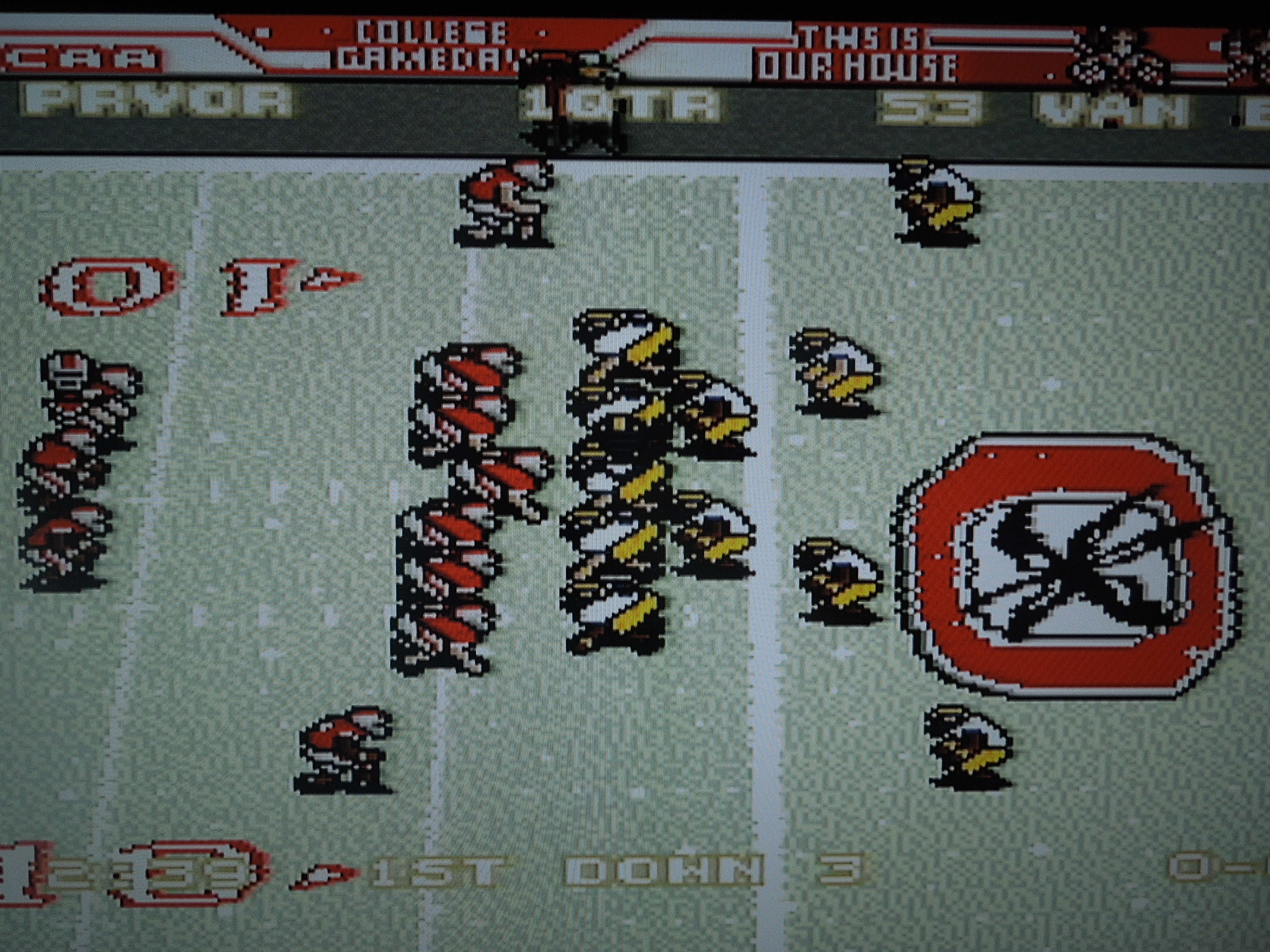
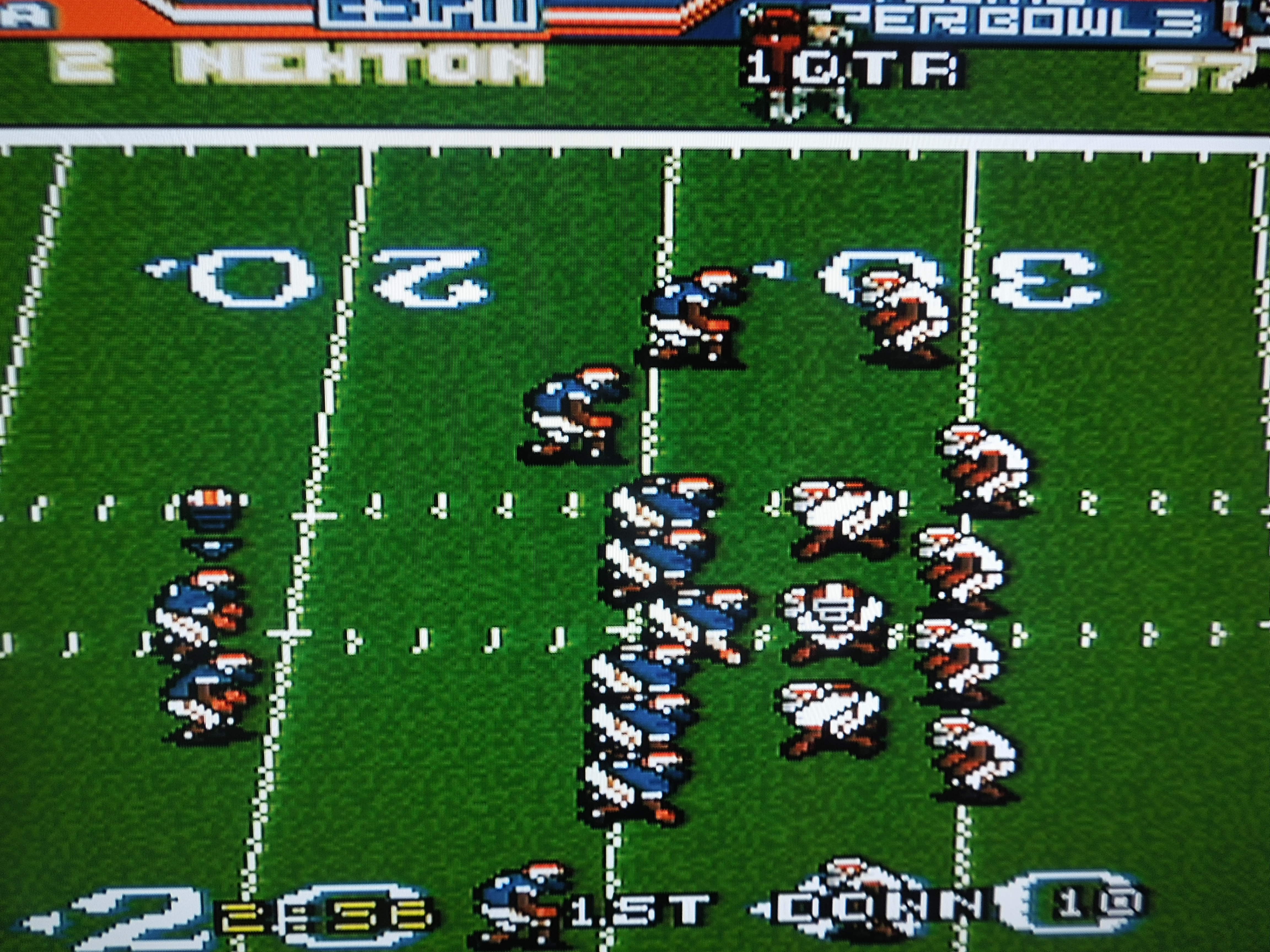
30 college teams are included in the game. 30 college teams are included in the game.

ACC:  Florida State, Miami, North Carolina, Georgia Tech, Virginia Tech

Big 12:  Texas A & M, Texas, Oklahoma, Nebraska, Missouri

Big 10:  Michigan State, Michigan, Iowa, Wisconsin, Ohio State

Big East:  Pittsburgh, Connecticut, West Virginia, TCU, Notre Dame

Pac-10:  Stanford, Oregon, Southern Cal, Nevada, Boise State

SEC:  Auburn, Alabama, Florida, LSU, Arkansas

*There are 3 ‘Divisions’ in the game, made up of 10 teams each.  Here is a list:

Orange Division:  ACC and Big 10 schools

Fiesta Division:  Pac-10 and Big East schools

Sugar Division:  SEC and Big 12 schools.

Gameplay:  TSB III: NCAA 2011 has several options for gameplay that are selectable from the main menu:

1.  Scrimmage:  This allows you to play a quick match against the computer, or against another human player.

2.  Road to the BCS: This season mode allows you to play an 11-game regular season.  During your season, you will play all of the teams in your division (9 schools), with the 4 teams in your specific conference saved for the last 4 games of your season.  You will also play 2 random teams from other divisions.  So, for example, if you select Stanford, you’ll play all teams in the Pac-10 and Big East (Fiesta Division), plus 2 other random schools during your regular season.  At the end of your 11-game season, if you have the best record in your conference, you’ll be selected for the Playoff (you can also get into the 12 team playoff by being a ‘wild card’ – if you have a really good record but didn’t necessarily win your conference, for example).  The game’s battery saves your season progress, by the way, in addition to player stats, team stats, etc.

Buckeyes vs Wolverines? Awesome. Buckeyes vs Wolverines? Awesome.

3.  BCS vs. Great:  Here you can play in the ‘East’ vs. ‘West’ game, with the best All-American players from all 30 schools put onto either team.  It’s like the Senior Bowl in actual college football.

4.  Blue Chip Editor:  Here, you can create your own player and keep track of his statistics as you play the game.

5.  Team Info: Here, you can look at each team’s players, statistics, records, etc.  You have the option to change players around or change your playbook entirely.

6.  Options:  Here, you can change certain elements of the game, like the length of time per quarter, if fumbles will occur or not, and if players can get injured or not.

The Iron Bowl? Heck YES. The Iron Bowl? Heck YES.


Team Differences:  When you select a team, you’ll have a small bar graph that depicts how good your team is on Offense or Defense.  Some teams have full bars for both O and D, while others are low in each category; still other teams may be high in one category but low in the other.  Thus, not all teams are created equal.  Also, some teams may not be particularly high in Offense or Defense, but they may have one particularly fast or hard-hitting play maker.  This difference in teams makes playing the season mode especially fun – some teams you’ll dominate, while others you’ll be in barn-burners with.  There is no one team that is so awful that you can’t win the National Championship with them though, so don’t worry if your school isn’t particularly proficient at Offense or Defense.

You'll play an 11-game regular season. You’ll play an 11-game regular season.

Control for Offense:  At the beginning of each offensive possession, you’ll select from ‘Team Plays’ or ‘Universal Plays.’  Once you have selected between these 2, you’ll be presented with 8 plays – 4 pass plays and 4 run plays.  You have a schematic for each of these plays to show you where receivers will run, where the running back should go, etc.  On the field, A hikes the ball and cycles through your receivers (if you’re passing).  When you’re running with the ball, rapidly tapping A increases your ability to break tackles or makes your player ‘spin’ out of tackles.  B throws the ball when you’re the quarterback.  Before the snap, pressing X pulls up an ‘audible’ menu on-screen, allowing you to change the play on the field.  When running with the ball, Y makes your player dive forward for a yard or two.

Team and Player Stats are saved throughout the season. Team and Player Stats are saved throughout the season.

Control for Defense:  At the beginning of each offensive possession, as the defense, you’ll first select among 4 formations: Goal Line, Normal, Nickel, and Dime.  After that, you’ll see the offense’s 8 plays, and you’ll have to choose which play you think they’ll run.  If you select correctly, you’ll most likely stop their play immediately after the ball is snapped.  On the field, before the snap, A cycles through all the players (you can’t change defensive players once the play has started).  Tapping A increases your ability to run through offensive blockers or bring down ball carriers.  B causes your player to attempt a diving tackle.

Controls for Special Teams:  On kickoffs, you’ll see a bar at the bottom of the screen.  Press A when it’s full, and you’ll kick it all the way to your opponent’s end zone (you can steer the kick by pressing Up or Down).  Kick it when it’s barely full (and in blue), and you’ll attempt an onside kick.  As the receiving team (on kickoffs or punt returns), pressing B while the ball is in the air will cause your player to call for a fair catch.

You have a 16 total plays to choose among on offense. You have a 16 total plays to choose among on offense.
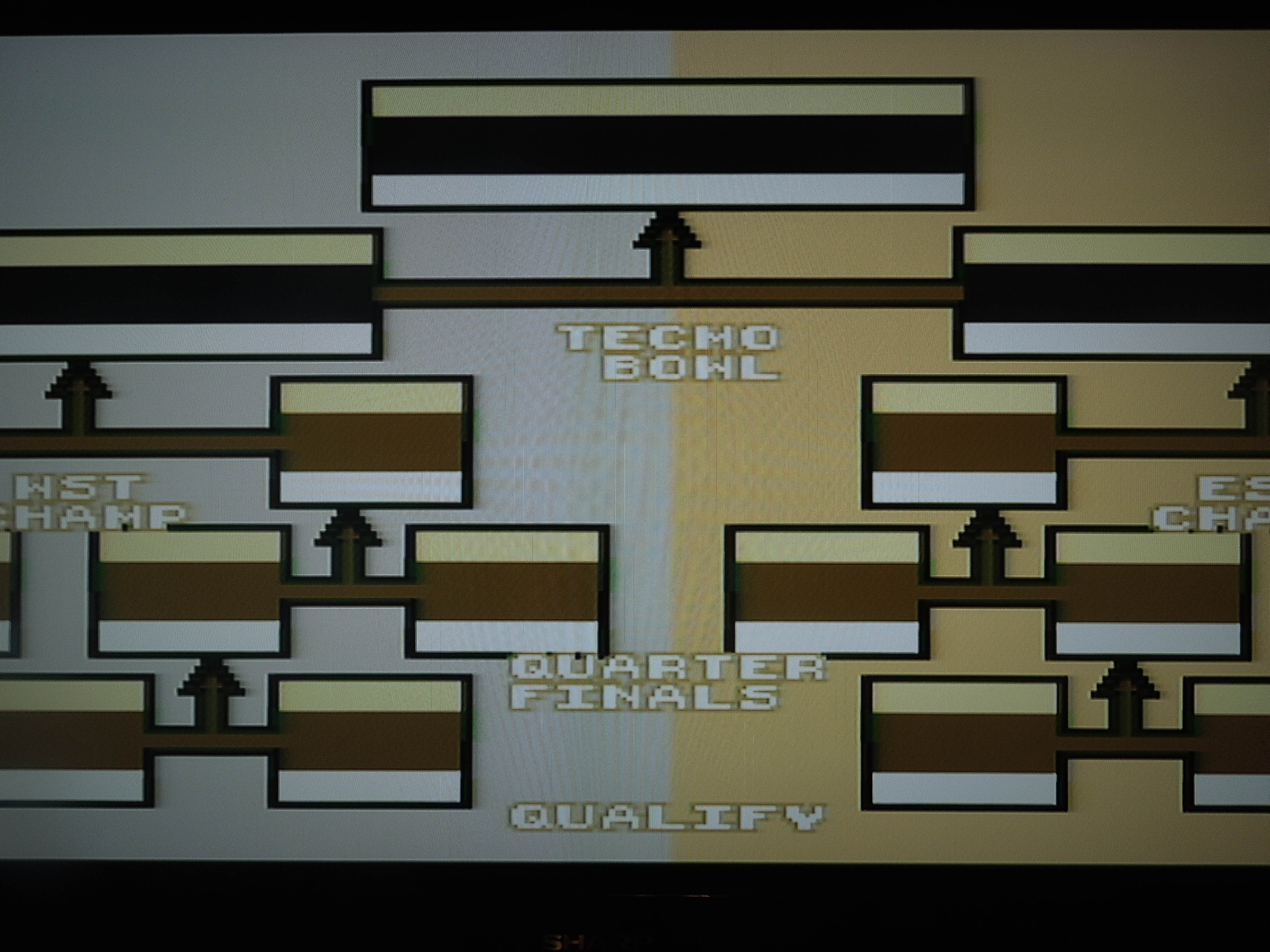
12 of the 30 teams will qualify for the Playoff at the end of the regular season. 12 of the 30 teams will qualify for the Playoff at the end of the regular season.

All the fun of college football:  Fake punts, flea-flickers, 2-point conversions, overtime (sudden death):  all are included in TSB III: NCAA 2011.  There are also in-game cutscenes for big plays, like blocked punts, field goal tries, and touchdown celebrations.

Music & Sound:  The music department is the weak point of the game.  There is a forgettable theme at the beginning of the game, but during the game, no music plays.  Fortunately, there are decent sound effects.  Tackles, whistles, and a cheering crowd all help the experience.  There are also voice-overs for big moments, like ‘Touchdown!’ and ‘Interception!’

So, where can I find this game?  There are many SNES reproduction websites that may be able to make it for you by request, and some that already have it for sale.  Do a google search for TSB III: NCAA 2011.  You can also play the rom on an emulator on your computer.

Conclusion:  This was the game that many people always wanted Tecmo Bowl to be – a college football game, not an NFL game.  I cannot imagine how much hard work the modifiers of this game put into making it what it is.  If you had never heard of Tecmo Bowl, you wouldn’t know this game was a mod.  *Ok, to be fair, a few NFL phrases were left in on a couple menus, like the words ‘Pro Bowl’ – nearly everything else is college related.  Also, for comparison’s sake, the graphics in this game look far superior to those found in the original game, Tecmo Super Bowl III: Final Edition.  The game controls well, and although it may sound a bit complicated to play, it’s really not – it will take you approximately 1 quarter to have everything figured out.  The only bad thing about the game (aside from the lack of music) is that it only has 30 Division 1 (FBS) teams from 2010.  Unfortunately, your school may have been left out.  *I believe the modifiers made a 2012 version (and maybe 2013 too) that took out some schools and added in others, like replacing Auburn with Georgia – you’ll need to search for the rom on the Internet if you’re interested.  TSB III: NCAA 2011 is great because it allows you to play as some of the great teams and players from the 2010 season, like Heisman trophy winners Cam Newton (Auburn) and Mark Ingram (Alabama).  This game is a great homage to the 2010 college football season.

The Southern Gentleman’s Opinion and Letter Grade: If you love college football and Tecmo Bowl, I don’t see how you can do anything other than play this game (and I recommend an actual cartridge on an actual Super Nintendo).  This game, in one man’s opinion, is better than any modern-day NCAA football game by great lengths.  It is a dream come true for those who grew up wishing Tecmo Super Bowl would include college teams instead of NFL ones.  A

God Bless! Proverbs 3:6

Cut scenes play during big moments. Cut scenes play during big moments.

Neo Geo – Super Dodge Ball

Super Dodge Ball for the Neo Geo AES Super Dodge Ball for the Neo Geo AES
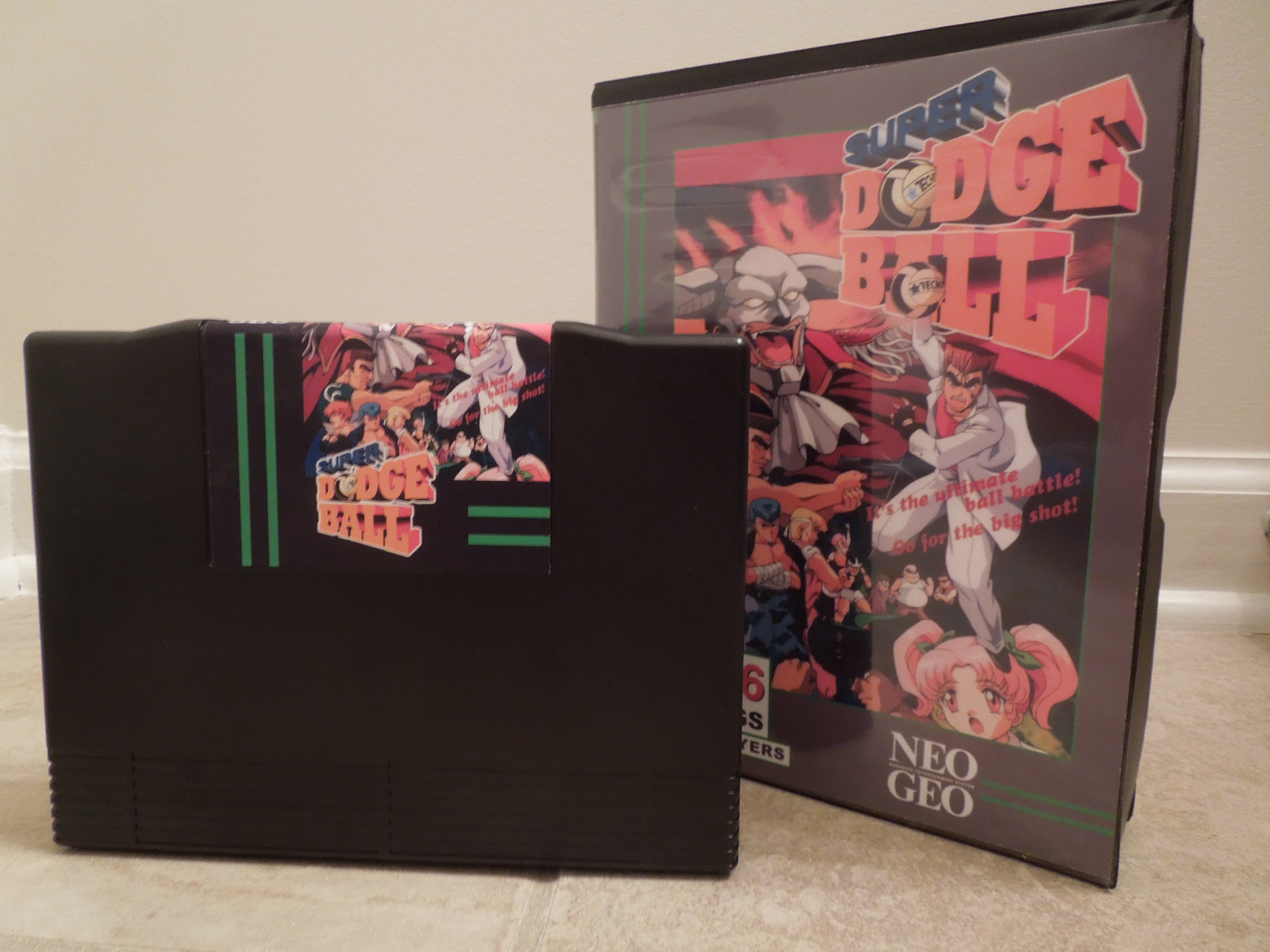
This AES cartridge was converted from an arcade MVS cartridge. This AES cartridge was converted from an arcade MVS cartridge.

Note 1:  Like dodge ball games?  Check out my review of Super Dodge Ball for the PC Engine!

Note 2:  This game was played on a Neo Geo AES home console that has been modified to output in component video (red, green, blue).  It was connected to a 32-inch HD tv.

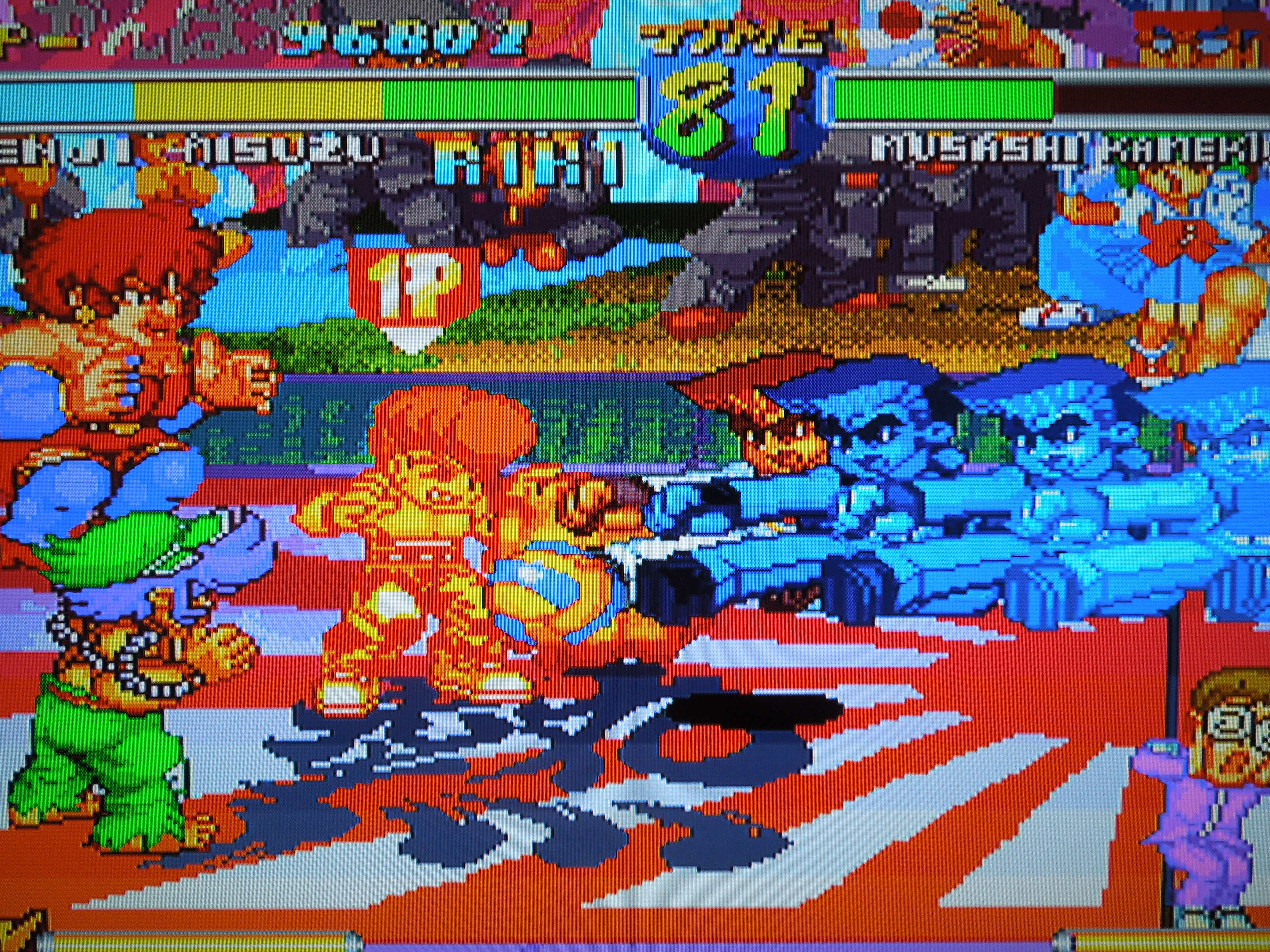
Quick History:  Super Dodge Ball was released for the Neo Geo MVS (arcade cabinet) in 1996.  *This game is not to be confused with the original arcade Super Dodge Ball released for arcades in 1987, nor that version’s PC Engine and NES ports.  The game stars Japan’s Kunio character, and thus it is another of many games released in the Kunio-kun series.  Super Dodge Ball did not receive a release for the Neo Geo AES home console; however, today, modders have been able to take MVS arcade cartridges, remove their boards, and place them into AES home console cartridges – this works because the home versions of games are identical to their arcade counterparts – the only difference was that arcade cartridges were larger than home console ones.  Many games that were released for the Neo Geo MVS never received an AES home cartridge, so this ‘conversion’ makes it possible, for the first time, to play these games on your Neo Geo AES.  The copy of Super Dodge Ball used for this review was originally an MVS arcade cartridge, but was professionally converted to an AES home console cartridge.  Because this game had never received a home release for the AES (and not many people owned an AES anyway), many people have never heard of or seen this game.

Story:  SDB’s story is one of the all time greats in video game history.  D. Maou, the game’s antagonist, used to be a great professional Dodge Ball player, until one of his ‘special’ shots accidentally killed his wife, who was in attendance at the match that day.  Since then, he has vowed to wipe Dodge Ball off the face of the Earth…and what better way to do that than…holding a Dodge Ball tournament?!  Classic.

D. Maou, the game's antagonist, hates the game of dodge ball. D. Maou, the game’s antagonist, hates the game of dodge ball.

Rules:  In Super Dodge Ball, you’ll play 3 on 3 matches.  The court you play on is rectangular, with a line down the middle that your team is restricted to.  You cannot cross the line, nor can your opponent cross it.  The match begins when the referee does a ‘toss up’ of the dodge ball along the center line – both you and your opponent can jump to grab it for possession.  The objective is to eliminate the 3 members of the opposing team.  Each member of both your team and your opponent’s team has their own health bar.  Once a player’s health bar is gone, they’re out.  However, if a player is eliminated, he or she then stands on the outside of the court behind your opponents, and you can still pass them the ball, and he or she can still attack if they have the ball – this adds a bit of strategy to the game.  Each match has a time limit, and if the clock runs out before one team has eliminated all of the other team’s players, then the team with the most surviving characters (or longest health bar if both have the same number of surviving characters) wins.  Also, no team can hold the ball for longer than 5 seconds – if you attempt to, the ball will explode in your hands, and the referee will have to throw it in to your opponent.

Super Dodge Ball has amazing graphical effects. Super Dodge Ball has amazing graphical effects.

Control:  Once you select your character, a brief ‘explanation’ screen (skip it by pressing Start) will play – here you’ll get the basics.  A throws the dodge ball, or catches it when it’s thrown at you (you can catch every shot in the game, but the special attacks and Super Attack can be tougher to catch).  Tapping A also makes your character get up faster when knocked down – also tap A rapidly to win possession of the ball if you and your opponent grab it at the same time.  B dodges when a ball is thrown at you, or passes to your teammates when you’re on offense.  C jumps.  D feints (like a pump-fake by a quarterback in football) on offense and taunts your opponent when you’re on defense.  Holding A + B ‘powers’ up your character for a Super Attack.  There are also more advanced controls that are not listed on the ‘explanation’ screen.  If you want to beat the game on the harder difficulties, you’ll need to master these.  If you’ve ever played fighting games like Street Fighter II or Mortal Kombat, they’re the same type of moves.

There are 7 selectable characters, each with their own unique dodge ball special moves. There are 7 selectable characters, each with their own unique dodge ball special moves.

Down, Forward, A – special attack 1

Forward, Down, Forward, A – special attack 2 on offense, special defensive move when you’re on D (use it when a ball is thrown at you)

Forward, Down, Forward, B – super pass to your teammate (much quicker than regular pass)

Forward, Back, Down, Forward, A – team Super Attack when your power bar is full. 

Gameplay:  In Super Dodge Ball, you choose from among 7 characters (or Captains):  Kunio, Riki, Misuzu, Shinji, Kenji, Sabu, and Miyuki.  Some are quicker but don’t throw the ball as hard, while some throw the ball with extreme velocity but move slowly.  Others are a nice balance of strength and speed.  All have their own unique special shots and Super Attack.  On the character select screen, you can give your character a different color scheme by pressing either A, B, C, or D to select him or her.  You execute all characters’ special moves or Super Attack using the controls listed above, meaning you don’t have to memorize different commands for each character, which is nice.  Depending on who you choose, you’ll have 2 different ‘sidekick’ characters on your team.  The sidekick characters, by the way, can execute only one special move, special attack 2 (see Control above), and they cannot execute a Super Attack.  You’ll play 9 total rounds of dodge ball: one match vs 3 sidekick characters, six matches vs the other Captains and their sidekicks, one match vs a team of 3 Captains, and the final match vs D. Maou and his sidekicks, Daa and Boo.  After each match (except the first and last one), you have the option to add the Captain of the team you just defeated to your own team.  If you choose to do so, then you’ll loose one of your sidekicks.  Choose to take another Captain after the next match, and both your sidekicks will be replaced.  Once you have 3 Captains on your team, you can still add Captains after matches, but the new one will replace one of your existing ones.  You’ll never replace the Captain you started with at the beginning of the game.

Each character has 2 special moves. Each character has 2 special moves.

Sound & Music: The music in Super Dodge Ball is great – the intro music (and explosive graphics) will get you fired up to play the game.  Each arena has its own theme as well – some are better than others, but they’re all good.  The sound effects are some of the best I’ve heard in a sports game.  Each special shot has a great sound effect, and the smack of the ball on an opponent’s face is satisfying.

Options:  Before you begin each game, you can set the Time Limit to your preference: 45, 60, or 99 seconds – working the clock can become part of your strategy for winning a match.  You also can select from 8 difficulty levels (1-8), which is great.  The game is simple to beat on levels 1 or 2, but you’ll need to master the special controls if you want to win at higher levels.

Credits:  The game automatically gives you 4 credits (continues).  If you lose 4 times, it’s Game Over.  However, if you have a Neo Geo memory card, you can save your game after you lose all your credits, and continue where you left off.

2 Player VS:  In a 2 player match, you’ll play a ‘Best of 3 matches’ game, rather than just a 1 match game.  Both players have the option to select the same Captains, also.  After you’ve finished the game, the loser will need to ‘join in’ the game again by pressing Start if you want to continue playing VS.

You can add a defeated team's Captain to your own team. You can add a defeated team’s Captain to your own team.

Strategy:  Learning the Super Attack and special moves will help you excel at the game.  The ball will often bounce back to you after you connect with a shot, so jumping and then throwing it at your opponent again for additional damage works great.  Keep in mind, the computer can also do this.  Using the feint (D) button followed by an actual throw is a great way to fake out the computer.  Passing to and utilizing your eliminated, outside-the-court teammates is a great strategy too, as you can often hit opponents while their backs are turned (again, the computer does this, too).  On the higher difficulty levels, the computer will catch most of your attack throws, so mastering the Special Defensive move (press forward, down, forward, A when the ball is thrown at you) is the best way to attack – this makes your character deflect an opponent’s attack shot right back into his or her face!

So, where can I find this game?  Remember, this game was never officially released for the Neo Geo AES home console, so you’ll want a conversion to play it this way.  You can do a Google search for some Neo Geo sites that sell conversions or take special orders, or you may occasionally see the AES conversion on Ebay.  Also, you could always buy an MVS home-made console (where the maker basically takes parts from the arcade machine and makes a home system), then just buy the original MVS arcade cartridge.  You can also play the game on a computer emulator.

Conclusion:  Man, is this game great!  It looks fantastic – everything is big, bright, and extremely colorful.  It definitely has a Japanese feel to it.  The different arenas you play in each have their own personality, like a disco-tech or a dojo, complete with enthusiastic background characters.  The specials and Super Attacks look amazing, with large explosions and other effects that add to the magnitude of the attacks.  The 8 difficulty settings really help the game’s overall score.  Some Neo Geo games are notorious for being too difficult, but with this one, you can easily beat the game if you want to, or you can practice and try to tackle the game’s toughest setting.  2 player VS is great fun, but you’ll want to let your opponent practice with the special moves first, otherwise you’ll decimate him or her quickly.  This game is one of the reasons the Neo Geo is considered one of the top game consoles of all time.  It’s a shame this game is not more widely known.

The Southern Gentleman’s Opinion and Letter Grade:  Highly Recommended, A+

God Bless! Proverbs 3:6

You'll face D. Maou in the final match. You’ll face D. Maou in the final match.

SNES – BS Legend of Zelda: Ancient Stone Tablets, Chapter 2

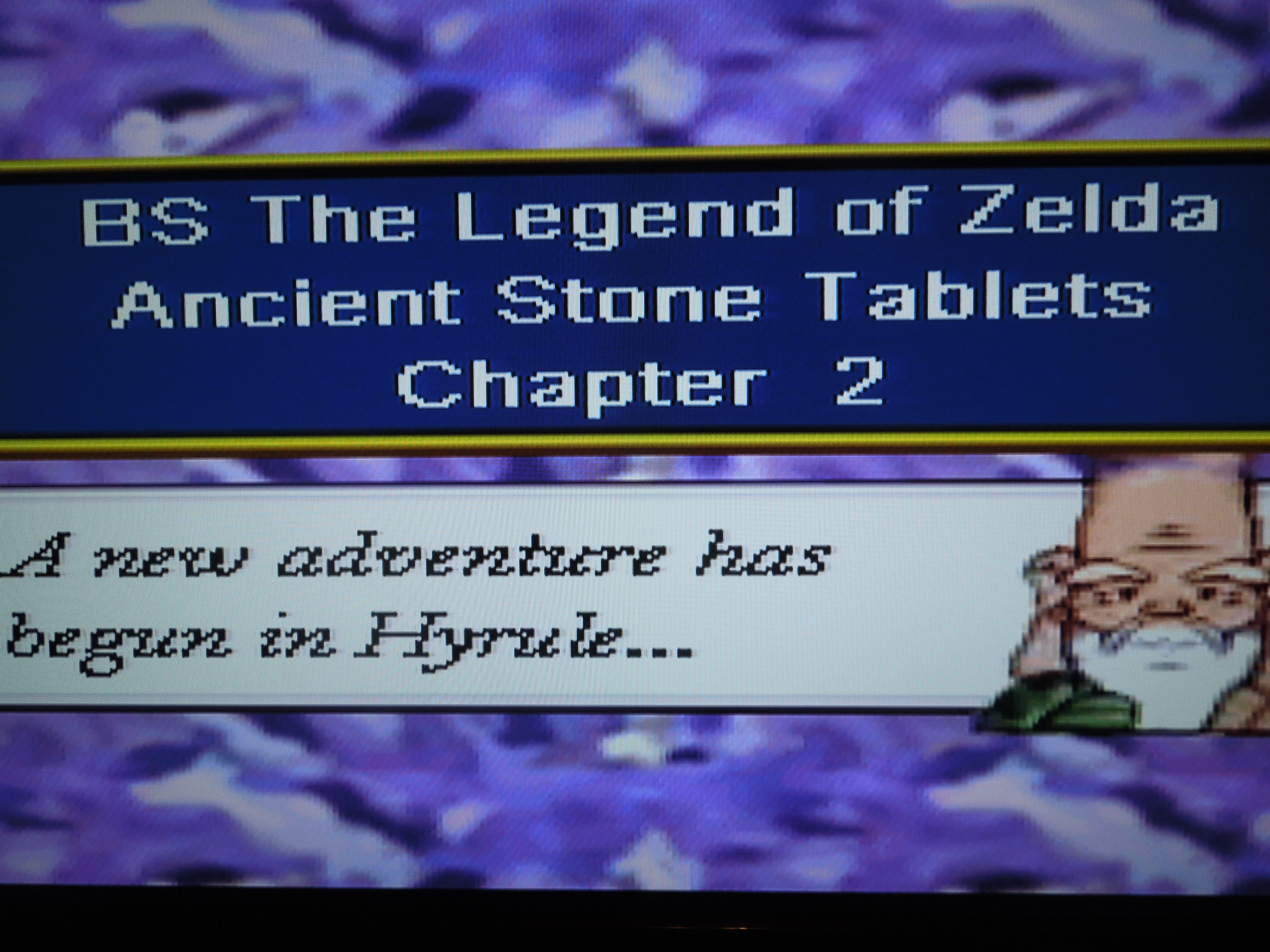
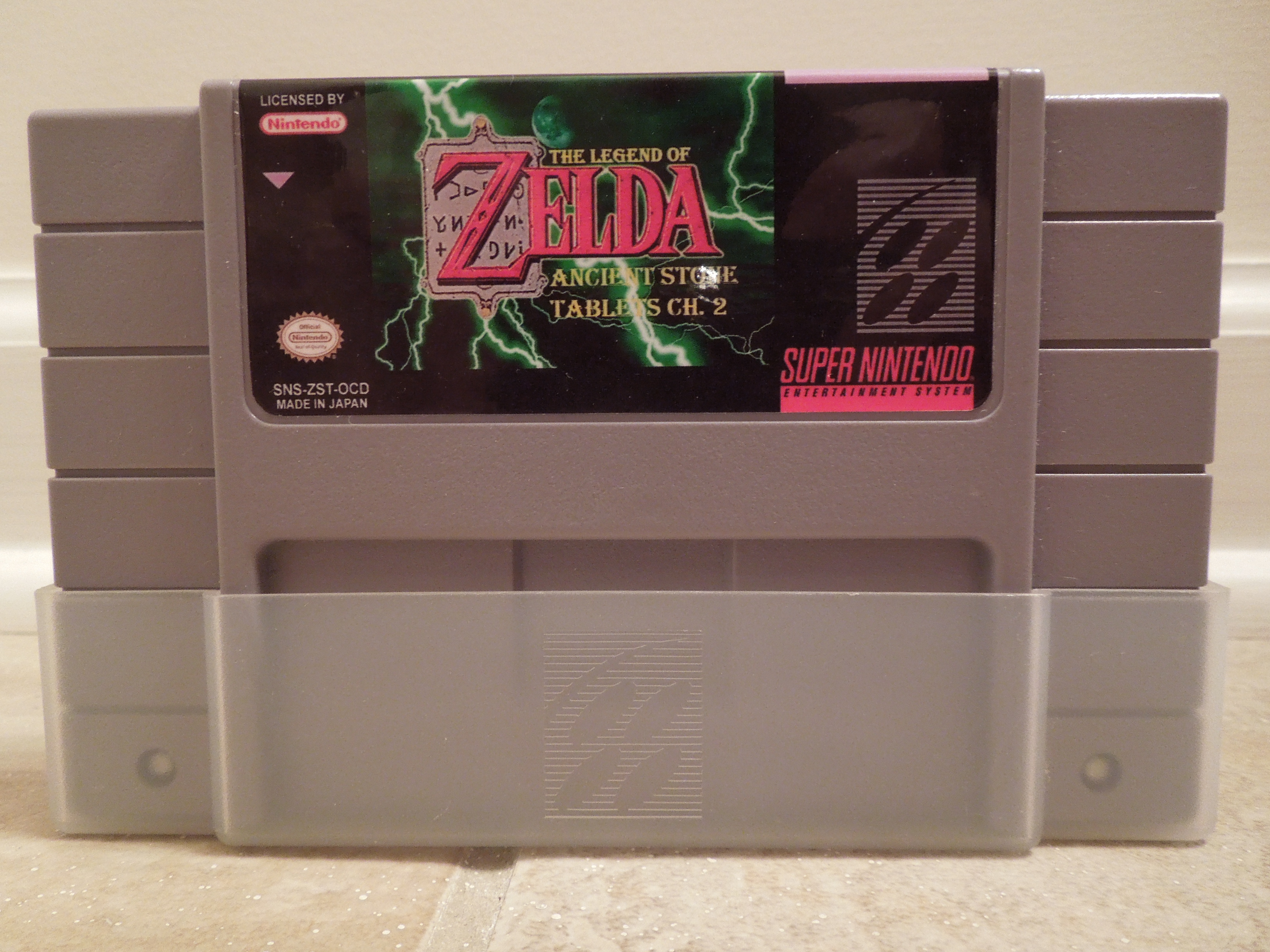
Ancient Stone Tablets, Chapter 2 for SNES Ancient Stone Tablets, Chapter 2 for SNES
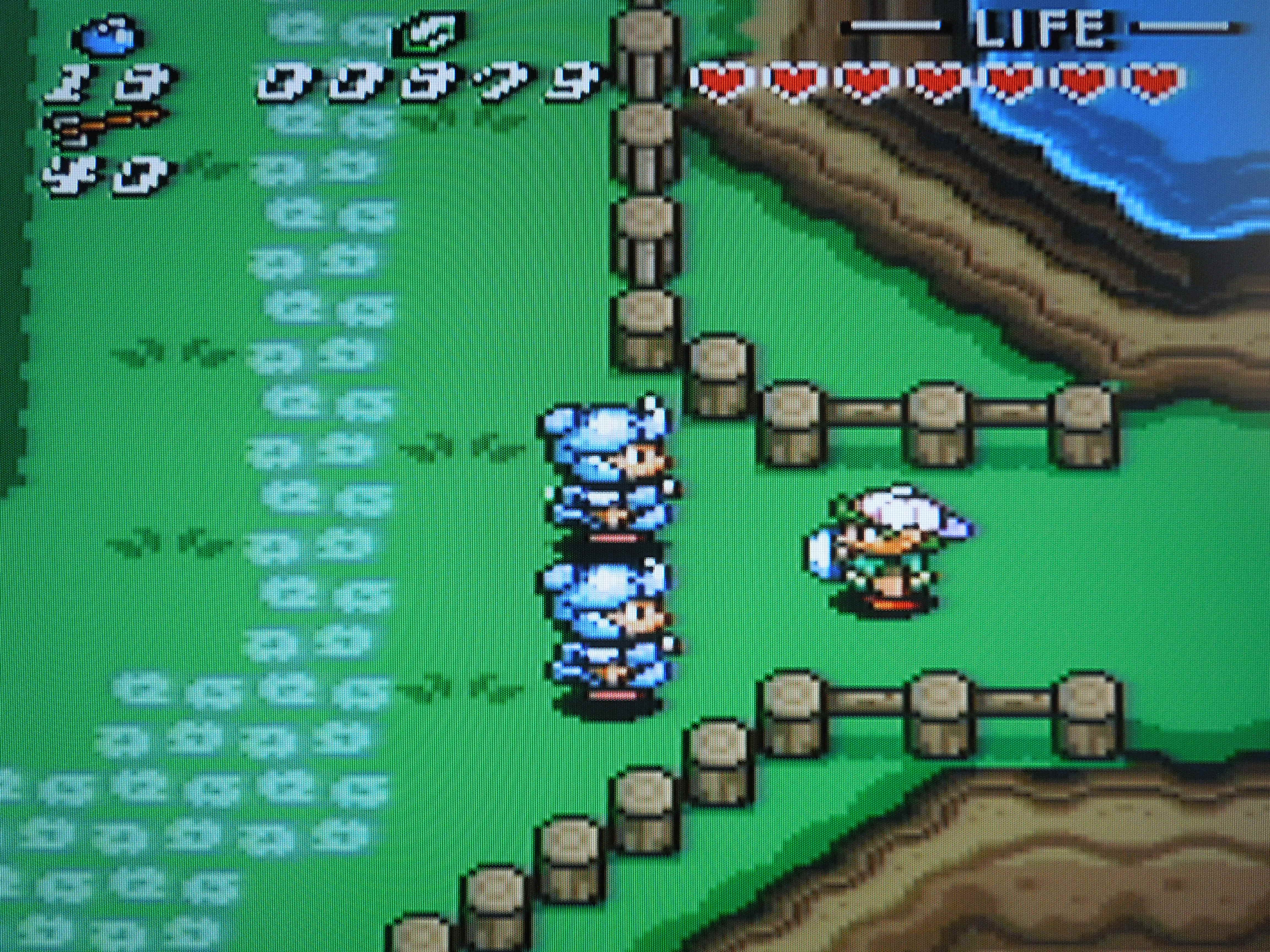
Playing Ancient Stone Tablets, Chapter 2 on an actual SNES console is awesome. Playing Ancient Stone Tablets, Chapter 2 on an actual SNES console is awesome.

Note 1:  Also check out my reviews of BS Legend of Zelda and Ancient Stone Tablets, Chapter 1!

Note 2:  This game was played on an original model Super Nintendo with S-video cables connected to a 32-inch HD tv.

Quick History, Sound & Music, ControlSee my review for BS Legend of Zelda, Chapter 1 for more information. 

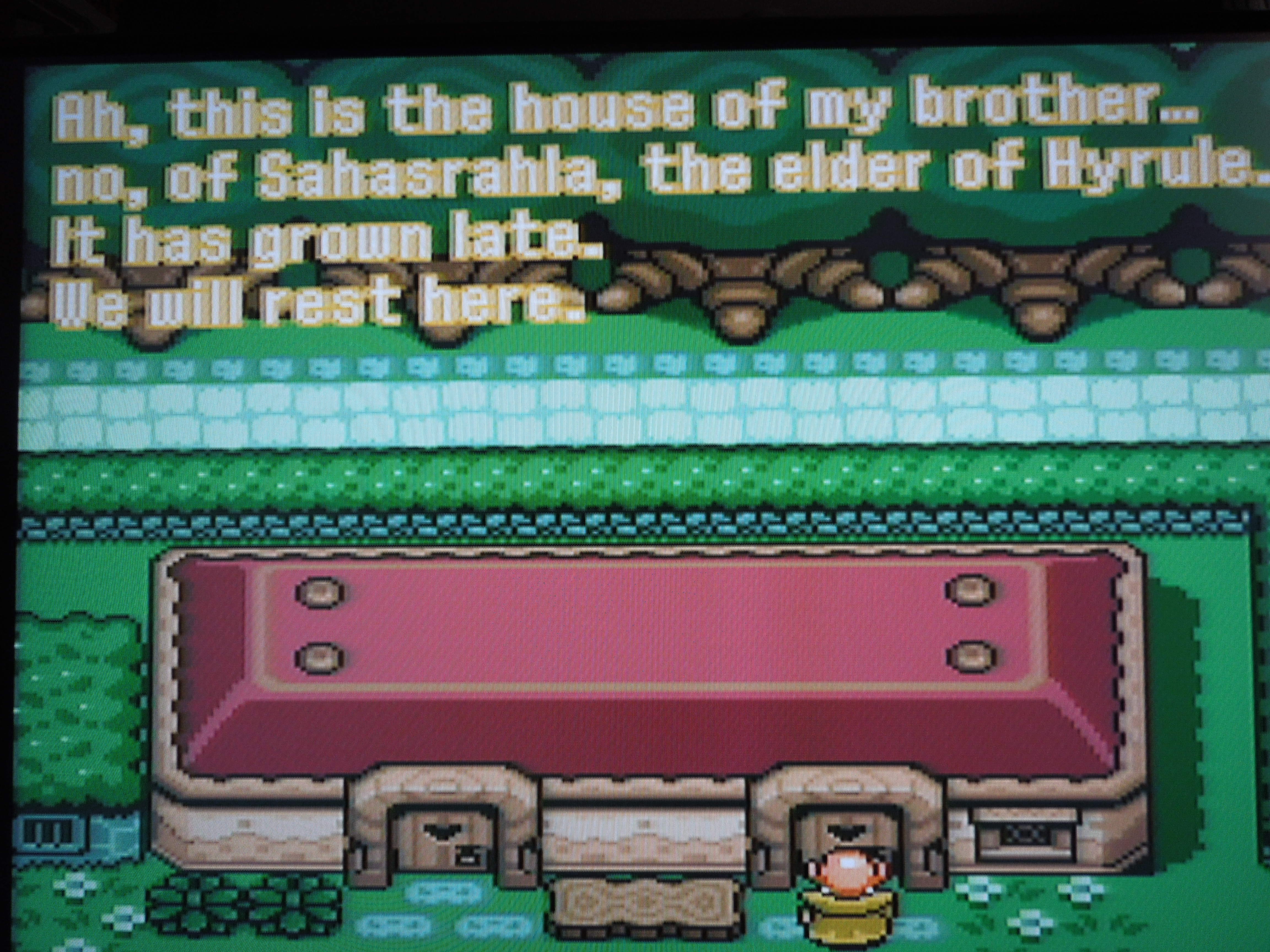
Story:  In Chapter 2, your chosen character, either an unnamed boy or girl, has recently been magically transported to Hyrule, where Aginah the wise man and Princess Zelda have befriended you.  Around that same time, monsters began attacking Hyrule.  In Chapter 1, you discovered 2 ancient stone tablets that are the key to unraveling the mystery of your arrival and the attack of the monsters.  In Chapter 2, you have traveled with Aginah to Kakariko village to continue searching for the next 2 pieces of the ancient stone tablets.

Gameplay:  You have 50 minutes to defeat two dungeons in Chapter 2 – Dungeon 3 and Dungeon 4.  At the end of each dungeon is a boss, whom you defeat to obtain an ancient stone tablet.  In addition to the dungeon, you can also explore the village of Kakariko to find some items, rescue a dwarven blacksmith in the Lost Woods, and explore any part of the Overworld that is open to you.  There is a clock in the top left corner that starts at 2:06 and ends at 2:56.  Certain events happen at certain minutes on the clock, like rain falling or a merchant appearing who will sell you a bottle.

You can quickly gather most of your items from Chapter 1 from thieves. You can quickly gather most of your items from Chapter 1 from thieves.
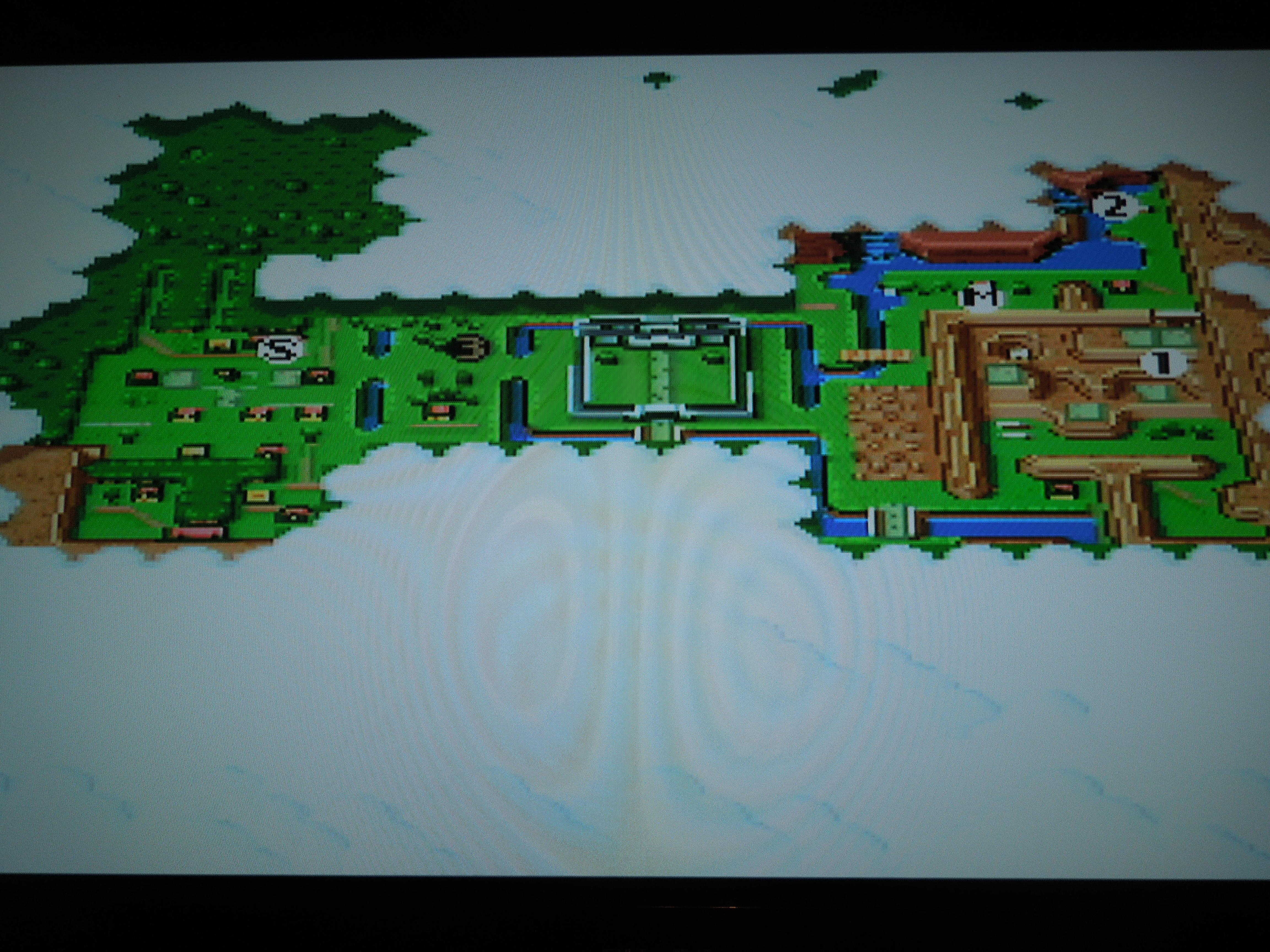
In Chapter 2, you have a larger portion of the Overworld to explore. In Chapter 2, you have a larger portion of the Overworld to explore.

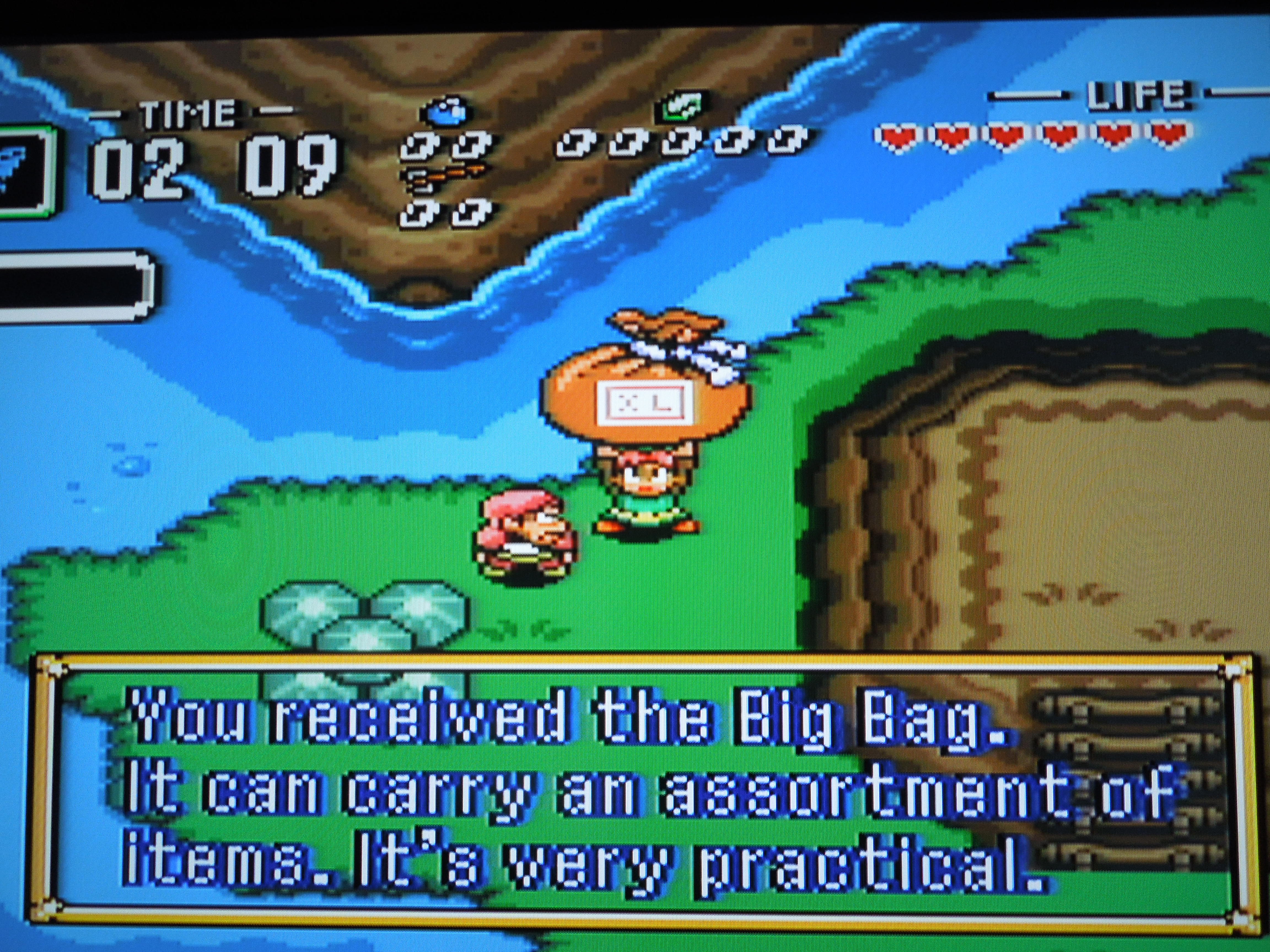
Beginning the game:  Originally, for the Broadcast Satellaview, you could play all 4 chapters of Ancient Stone Tablets across a 4-week period – and you could save your progress after each episode/week.  Therefore, after you beat Chapter 1, having gathered certain items like the boomerang, bow & arrows, and heart containers, you would have those things when you started Chapter 2 the next week.  However, since this game, like Chapter 1, is restricted to its own SNES cartridge, there is no way to ‘continue’ the game from Chapter 1 with all of your items.  Fortunately, there is a great solution for this.  When you begin Chapter 2 in Kakariko village, Aginah gives you a large sack that contains the lamp, net, a bottle, and the flute.  He then tells you to travel to Dungeon 1 and Dungeon 2 before you do anything else (the two dungeons you have to beat in Chapter 1).  When you select and use the flute, a bird will fly you back to these dungeons.  You can’t re-enter the dungeons; instead, a thief stands outside each one and gives you a bag of ‘trash.’  Inside are the items from those dungeons – the Sword, Shield, Pegasus Shoes, Bow & Arrows, 1 Heart Container, and Ancient Stone Tablet piece # 1 from Dungeon 1, and the Boomerang, 1 Heart Container, and Ancient Stone Tablet piece # 2 from Dungeon 2.  Unfortunately, if you have played the Chapter 1 cartridge and had acquired extra heart pieces, the flippers, or large sums of rupees, those items will need to be obtained again in Chapter 2 (optional).  By the way, it takes all of about 30 seconds to fly back to Dungeon 1 and Dungeon 2 to get your items from the thieves, so you don’t have to worry that it will cut into your time for beating Chapter 2.

You'll gain new items in Chapter 2's dungeons. You’ll gain new items in Chapter 2’s dungeons.
There's a great 'bomb toss' mini-game in the Lost Woods. There’s a great ‘bomb toss’ mini-game in the Lost Woods.

Chapter 2’s Objectives:   You have to beat Dungeons 3 and 4 to obtain the third and fourth ancient stone tablets.  You should obtain the hammer, the hookshot, the level 2 shield, the blue mail (level 2 armor), the level 2 sword, 4 heart containers, the 2nd bottle, and the magic powder.  *All of the areas of the game from Chapter 1 (except Dungeons 1 and 2 and the Pot-Smashing mini-game) are open for you to explore and gather items from.

Conclusion:   BS Legend of Zelda: Ancient Stone Tablets, Chapter 2 is a great game.  Comparatively, the dungeons in Chapter 2 are tougher and longer than the ones in Chapter 1, although they’re still not terribly difficult.  In this game, unlike Chapter 1, you may find yourself a little more pressed for time, but it’s still very manageable.  Remember, you only have 50 minutes to beat the game (and you can’t stop the clock at all, not even by pausing the game).  If you do beat the dungeons early, however, there is plenty to do since you can go back and explore the areas from Chapter 1.

The Southern Gentleman’s Opinion and Letter Grade:  Recommended, whether you’ve played Chapter 1 or not – wonderful legitimate Zelda game.  A

God Bless! Proverbs 3:6

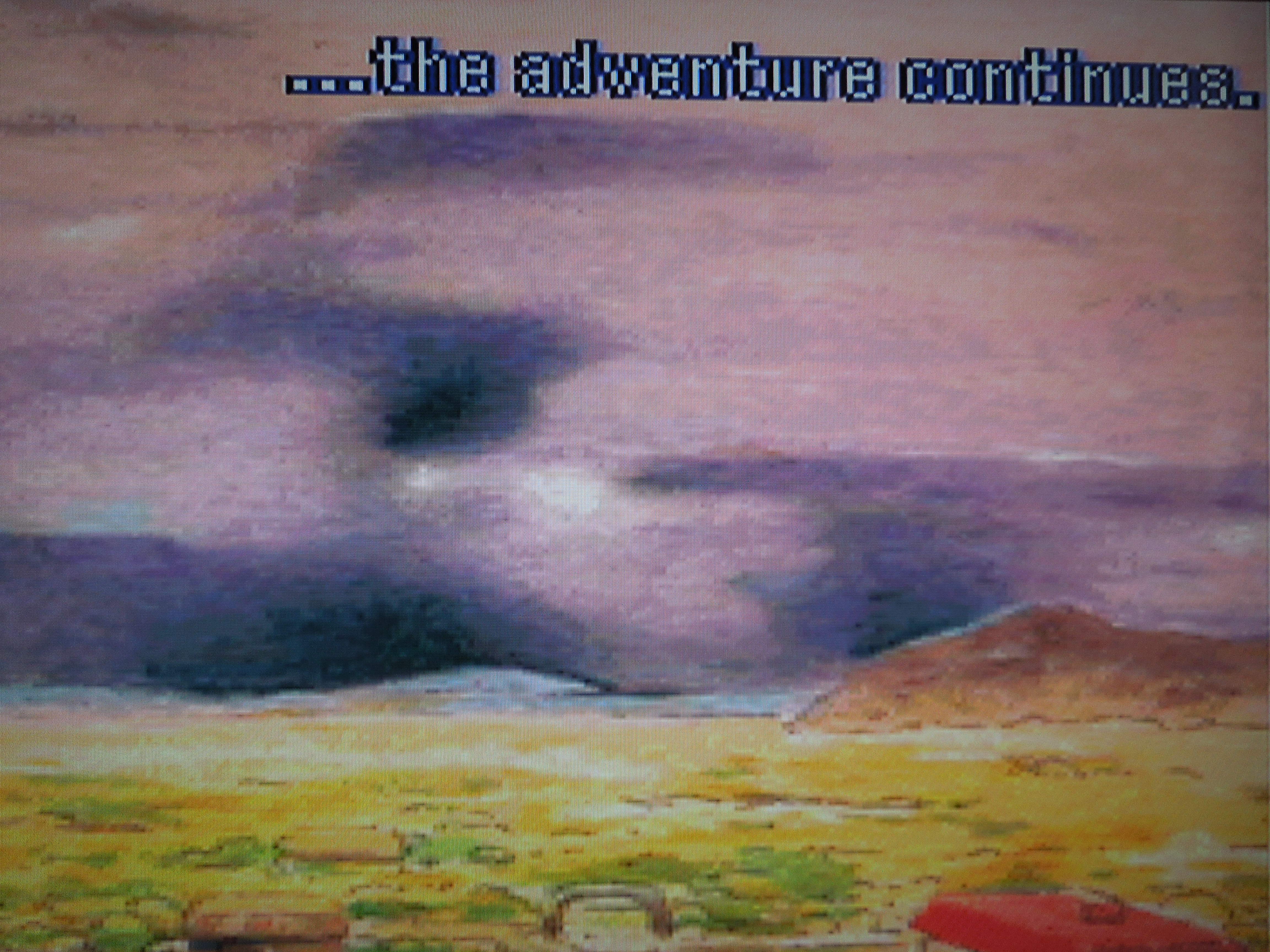
Chapter 2 ends with you and Aginah still determined to solve the mystery of the ancient stone tablets. Chapter 2 ends with you and Aginah still determined to solve the mystery of the ancient stone tablets.

Sega Saturn – Crows: The Battle Action

Crows: The Battle Action for Sega Saturn Crows: The Battle Action for Sega Saturn
Crows is quite obscure; the game received only a small run in Japan. Crows is quite obscure; the game received only a small run in Japan.

Note 1:  Like Beat ‘Em Ups?  Check out my reviews of Dungeons & Dragons, Double Dragon II, Bare Knuckle III, Final Fight Guy, Final Fight 2, Mighty Final Fight, Sengoku 3, Nekketsu Oyako, and Warriors of Fate!

Note 2:  This game was played on a U.S. Sega Saturn with a 4M Action Replay cartridge plugged into the cartridge slot.  This allows Japanese games to play on the console.  The console was connected to a 32-inch HD tv using S-video cables.

Quick History:  Now, this is an obscure game!  Crows: The Battle Action was released in 1997 for the Sega Saturn exclusively in Japan.  Crows is based on the Japanese manga series of the same name.  The game is a Beat ‘Em Up, and is drawn in a super-deformed style, with characters not too dissimilar from the ones in games from the Kunio-kun series.  There is not much information on the Internet about this game, but what I could find suggests that this game saw a very limited release in Japan (around 5,000 copies, possibly).  The game has not been ported to any other consoles, nor made available for download on any modern gaming consoles.

Story:  The game’s story is in Japanese, but here are the nuts and bolts: Two young men, Harumichi and Rindaman, are taking to the hallways and streets to fight school gangs and other rivals to prove their supremacy.  The game is based on several storylines from the manga series.

Gameplay:  You pick from among four different punks, although only two are available to start the game, and the other two join later (a bit after you defeat them in battle).  Their names are Harumichi, Rindaman, Ryushin, and Bitoh.  Each one has a different martial arts fighting style.  Between the two originally-selectable characters, Harumichi is quick, but weak, and Rindaman is slow, but strong.  Once you have selected your character, you’ll fight through 5 Stages – each made up of a few short Rounds.  These range from the streets, to a construction site, to the halls and roof of a high school.  You’ll fight waves of thugs, most which take a couple of knockdowns to beat.  At the end of each level, you’ll fight a boss.  The bosses can be tough until you figure out their patterns.  After every stage, you have the option to change characters.

Sticks and pipes are fair game in Crows. Sticks and pipes are fair game in Crows.
Your special attack is a customizable combo chain. Your special attack is a customizable combo chain.

Control:  This game makes use of all of the Saturn’s buttons, although you can change the layout in the Options menu.  A punches.  B kicks.  C jumps.  X Escapes (slides or dashes quickly in one direction).  Y taunts your enemies.  Z blocks (you’ll guard for approximately 2 seconds).  L uses ‘Combo 1,’ your energy-draining special attack.  R uses ‘Combo 2,’ your other energy-draining special attack.  You can also execute the combos by pressing either A+B or B+C.  You run by double-tapping and holding the direction you’re facing on the control pad.  While running, pressing A or B unleashes a flying tackle (Harumichi) or big boot (Rindaman).  Jumping, then pressing A or B executes a flying kick (Harumichi) or body press (Rindaman).  Additionally, Harumichi can kick opponents while they’re down by tapping A or B while they’re lying prone.  If you get in close to an enemy, you’ll automatically grab them.  Pressing A after grabbing an opponent will execute a headbutt (Harumichi) or knee smash (Rindaman).  Pressing B after grabbing an opponent will throw them – you can knock down approaching enemies by throwing a thug into them.  You can also pick up sticks or pipes – A swings them at enemies, and B throws them at enemies.  Sometimes, if you get knocked down, you’ll have to tap A to make your character get up – if you don’t tap fast enough, you’ll lose a life.

Sound and Music:  The sound is slightly above average.  The whacks and cracks that you’d want in a Beat ‘Em Up are here.  When you press the Taunt button, you’re character says something menacing in Japanese.  The music is suitably menacing throughout the game.

Comic-style cutscenes play in between stages. Comic-style cutscenes play in between stages.

Language Barrier:  No and Yes.  No, if you just want to play a Beat ‘Em Up through 5 stages of action.  Yes, if you want to understand the story, or set up your ‘combo builder.’  After you select your character, you can ‘build’ your combo attack specials, but since they’re all in Japanese, you won’t know what you’re picking – it’s best just to skip this and go with what the game’s default combo specials are.  Your combo chain does get longer as you advance further into the stages of the game, by the way.  The Options are in English, fortunately.  Oddly, some of the 5 Stages have names that are in English, like Stage 1: Tattoo, while others use Japanese words.

Options:  You can change the button layout here, and you can change the difficulty among Easy, Normal, and Hard.  The game is automatically set to give you 5 credits (3 lives per credit), but on the title screen, if you press L and R alternately, you can rack the credits up to 9.  On Hard, this is recommended.

Enemies:  The enemies in this game are often humorous.  Punch a street sweeper who is minding his own business, trying to do his job, and he’ll go on the offensive.  Drunken Japanese businessmen stagger down the street and try to attack you with bottles of booze.  Harass a couple in the park and they’ll run away and come back with the cops.  One boss repeatedly flips you off after knocking you down, adding insult to injury.

Items: Throughout the game, you’ll break open crates and barrels that contain soda cans that increase speed or first aid kits that increase your energy.  There are also other items you can pick up in the game, like beer crates, flower pots, or mailboxes – these you can throw at enemies, although you cannot move once you pick them up, unlike with sticks and pipes. 

Even the cops have it in for you. Even the cops have it in for you.

So, where can I find this game?  You can order it on ebay from Japan, or play it on a computer emulator.

Bosses can be tough until you figure out their patterns. Bosses can be tough until you figure out their patterns.

Conclusion:  Crows: the Battle Action is a decent Beat ‘Em Up.  The art style is great, making this one of the better-looking Beat ‘Em Ups I’ve seen for any system.  As many as 5 or 6 enemies can appear on-screen at once, and this game got it right where it matters – 2 player co-op.  You share the credits in 2 player mode, but the game becomes much easier.  Fortunately, you can’t strike your partner, but you can accidentally hit him with a thrown enemy or thrown stick or pipe.  Your special move, the combo, involves you repeatedly striking an enemy, and sometimes ending with a throw, like a German suplex.  While the special moves look cool, for every strike you connect with in the sequence, you’ll lose a portion of life, and sometimes it’s hard to connect at all.  This game would have been better off with the old classic ‘whirling roundhouse’ or something similar as a special move.   The action in Crows is a bit slow-paced compared to some other Beat ‘Em Ups, but because of the short rounds that make up each of the 5 stages, things move along quick enough.  From beginning to end, the game will take around an hour and 15 minutes to beat.  This Beat ‘Em Up is somewhere in the middle of the genre.  It’s not the best, but it controls well and looks top notch.

The Southern Gentleman’s Opinion and Letter Grade: Solid Beat ‘Em Up for the Sega Saturn, which is short on games for the genre.  Recommended if you really enjoy these kinds of games, and if you want something really obscure.  B

God Bless! Proverbs 3:6

2 player co-op makes the game much easier. 2 player co-op makes the game much easier.

SNES – BS Legend of Zelda: Ancient Stone Tablets, Chapter 1

BS Legend of Zelda: Ancient Stone Tablets, Chapter 1 for SNES BS Legend of Zelda: Ancient Stone Tablets, Chapter 1 for SNES

Note 1:  Check out my review of Ancient Stone Tablets, Chapter 2 and BS Legend of Zelda!

Note 2:  This game was played on an original model SNES console with S-Video cables.  The console was connected to a 32-inch HD tv.

You get magically transported to Hyrule 6 years after the events in the SNES classic, A Link to the Past. You get magically transported to Hyrule 6 years after the events in the SNES classic, A Link to the Past.
Quick History:  BS Legend of Zelda: Ancient Stone Tablets is known as BS Zelda no Densetsu: Inishie no Sekiban in Japan.  It was released in 1997, only in Japan.  It was a download available on the Broadcast Satellaview, an attachment that connected to the Super Famicom (Japanese SNES).  Originally, the game was split into 4 parts (or chapters), and gamers would play a different chapter on Sunday when the download became available (every Sunday, for 4 consecutive weeks).  Your progress was saved at the end of each chapter and carried over to the next week, and the 4 chapters were all a part of one continuous story.  Neither the full game nor individual chapters were ever made available in cartridge form in Japan or the U.S.  The game would have been lost forever had it not been for some ingenious Zelda enthusiasts.  These gamers, from what I can gather, combined a rom of the original downloads with exact replica designs of the layouts of dungeons that had been viewed from old Japanese VCR tapes of gameplay.  They created what is as close to the original game as possible.  To those enthusiasts, I say, ‘Thank you.’  They translated the game, and put in a lot of hard work to make it play properly.  Today, you can play the 4 separate chapters on a computer emulator and save your progress as you go along between chapters.  While some SNES reproduction-makers are now able to put all 4 roms onto a single cartridge, I have each of the games on individual cartridges.  This review is for SNES Legend of Zelda: Ancient Stone Tablets, Chapter 1.

Only a small portion of the Overworld is avaliable to you in Chapter 1. Only a small portion of the Overworld is avaliable to you in Chapter 1.
You have from 1:06 to 1:56 to complete Chapter 1. Timed events, like rain, occur during particular minutes. You have from 1:06 to 1:56 to complete Chapter 1. Timed events, like rain, occur during particular minutes.

Story:  You don’t play as Link in Ancient Stone Tablets, Chapter 1.  Instead, you play as a nameless Boy or Girl character – these were the ‘mascot’ characters for the Broadcast Satellaview.  The Boy wears a baseball cap turned backwards.  The Girl has red hair pulled back in a ponytail.  The story goes that your character walked into a Fortune Teller’s tent and was transported via a beam of light to Hyrule, 6 years after the events of Zelda: A Link to the Past (if you’re familiar with that game).  You are discovered, unconscious, by the wise man Aginah (younger brother of Sahasrala from LTTP) and Princess Zelda.  Around the time you arrive, monsters start attacking Hyrule, and because Link is away on an adventure, Zelda believes you are the new Hero of Light who will protect the realm and discover why the monsters are attacking.

Gameplay:  In Ancient Stone Tablets, Chapter 1, you have 50 minutes to beat 2 dungeons, rescue Princess Zelda, and acquire certain weapons and items.  In the top left hand corner of the screen is a clock – it begins at 1:06, and it (and the game) ends at 1:56.  You cannot stop this clock, even by pausing the game when you pull up the item menu – keep this in mind when you start playing this game.  You awaken in the ‘secret hideout’ of Aginah, and that is where your adventure begins.  The original Broadcast Satellaview download of Chapter 1 had live voice actors (playing the role of Aginah, Zelda, and a Fortune Teller) who would tell you (in Japanese) where to go at certain times in your 50 minute play session, and they gave you hints.  Because that wasn’t possible to re-create, the Zelda enthusiasts who worked on this game translated the script of these voice actors, and it appears as on-screen text at the bottom of the screen during gameplay.  Certain events happen at certain times during gameplay.  For example, faeries appear on screen at 1:10.  It starts raining in the Overworld at 1:23.

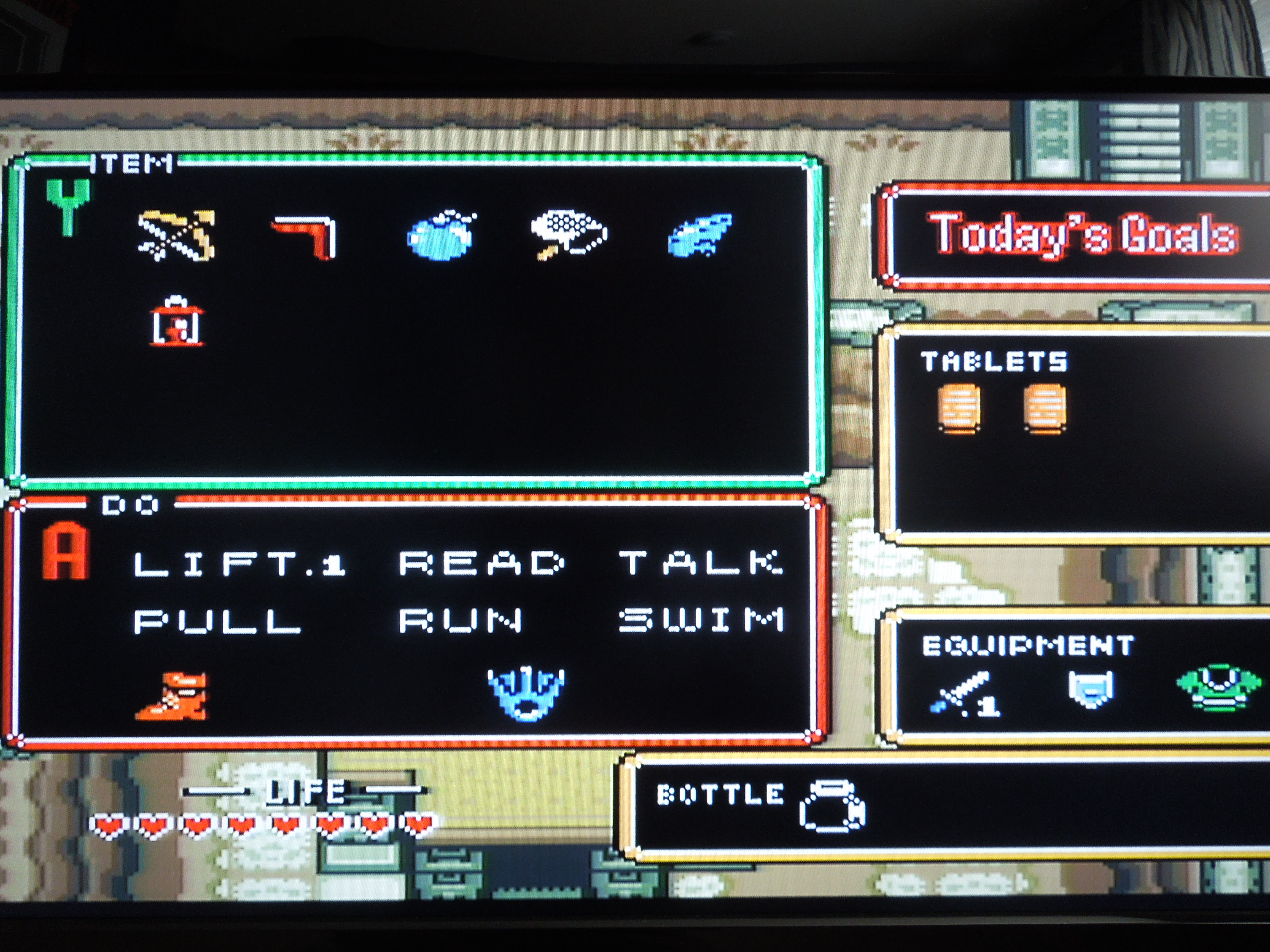
Pressing Start, then pressing R pulls up Chapter 1's goals - here you'll see everything you need to accomplish in your 50 minutes of play. Pressing Start, then pressing R pulls up Chapter 1’s goals – here you’ll see everything you need to accomplish in your 50 minutes of play.
Use the bow & arrows on the first dungeon's boss for a quick win. Use the bow & arrows on the first dungeon’s boss for a quick win.

Control:  If you’ve ever played Zelda: A Link to the Past for the SNES, this game uses the same control scheme.  B swings your sword.  Y uses your alternate item (like your bow & arrow or lamp).  A dashes once you have the Pegasus Shoes.  X opens up the Overworld map or Dungeon map.  Start pulls up your menu in order for you to change your alternate items.  Pressing R while in the menu pulls up the Week’s (Chapter’s) Goals, showing you everything you are expected to acquire or accomplish during your 50 minutes.

You have to find 2 Ancient Stone Tablets in Chapter 1. You have to find 2 Ancient Stone Tablets in Chapter 1.

High Score:  This game, in Japan, was originally intended as a type of high score game, in addition to just an adventure game. You get a certain number of points towards your ‘Score’ (viewable by pressing Start on your menu screen) for opening treasure chests, defeating the 2 bosses in the 2 dungeons, collecting heart pieces, and rescuing Zelda and returning her to the castle, among a few other things.  When the clock reaches 1:56, after the ending plays, you’ll see a high score screen with your total for ‘Week 1’ (Chapter 1).

XL Bag:  At the beginning of the game, Aginah gives you the XL bag, which contains the Net, a Bottle, the Lamp, and the Ocarina.  The Ocarina can be played on the Overworld to transport you between the 2 dungeons and the Magic Shop.  Within the dungeons, the Ocarina will transport you back to the entrance.

Autosave:  The cartridge ‘autosaves’ your game.  If you turn off the power or reset the game in the middle of gameplay, your progress will automatically be saved to the exact minute where you were.

Rent the level 2 sword or the shovel (used to dig up a heart piece) for 100 rupees - both good for only 10 minutes. Rent the level 2 sword or the shovel (used to dig up a heart piece) for 100 rupees – both good for only 10 minutes.

Sound & Music:  I’m not sure if it was part of the original Broadcast Satellaview game, but all of the music in this game comes from the popular and well-known SNES game, Zelda: A Link to the Past.  The music is excellent, as are the sound effects.

Additional Notes:

Wait, so the entire game is only 50 minutes?  I don’t quite understand.  Yes, BS Zelda: Ancient Stone Tablets, Chapter 1 is only 50 minutes, and represents only 25% of the original game.  Originally, you would save your progress at the end of Chapter 1, and it would be carried over into Chapter 2, where a new section of the Overworld map would become open to you, 2 new dungeons would be available for you to explore, and the story would continue.  The same would happen with Chapter 3 and Chapter 4.  This game cartridge, however, is only for Chapter 1.  You are only able to explore a certain portion of the Overworld map (rocks or other obstacles prevent you from going further).  You are only able to explore the first 2 dungeons and collect the first 2 pieces (of 8) of the Ancient Stone Tablets.  You only begin to unravel the mystery of why you’re in Hyrule, what the Tablets mean, and why the monsters are attacking.  In essence, unless you play the other 3 chapters (which are possible to play on SNES cartridges, even without having ‘saved’ progress from Chapter 1 – more on this later), you have to view this game as a microcosm, and its ending is the proverbial cliff-hanger.

Barriers prevent you from exploring any more of the Overworld than Chapter 1 is designed for. Barriers prevent you from exploring any more of the Overworld than Chapter 1 is designed for.

Goals:  In Chapter 1, these are your objectives:  Defeat the 2 dungeons and obtain the first 2 stone tablets.  Gain 4 heart containers (2 from defeating the dungeon’s bosses, 2 from gathering 8 separate heart pieces hidden throughout the game).  Obtain the Sword, Shield, Flippers, Pegasus Shoes, Bow & Arrows, and Boomerang.  Oh, and be sure to rescue Princess Zelda, find the Mole character, and play the Pot-Smashing game (all optional).

So, where can I find this game?  Some SNES reproduction websites can create Legend of Zelda: Ancient Stone Tablets, Chapter 1 for you, and some even have all 4 chapters on a single cartridge.  You can also play the game on a computer emulator.

The game ends with a cliffhanger, and the mystery of the Ancient Stone Tablets just beginning. The game ends with a cliffhanger, and the mystery of the Ancient Stone Tablets just beginning.
Your score is presented at the end of the game. Your score is presented at the end of the game.

Similarities to Zelda: A Link to the Past:  This game is not a re-make of A Link to the Past, as the story clearly sets Ancient Stone Tablets 6 years after the events of that game.  However, because it is set in the same world, locations in both games are essentially found in the same place.  There are additions to the Overworld made in Ancient Stone Tablets.  Other changes were made as well.  Here’s the best one:  The Pegasus Shoes’ function has been altered in Ancient Stone Tablets – you can now dash non-stop in all directions.  You can turn on a dime, and this makes traversing the Overworld and dungeons much faster.

Conclusion:  I’ve watched videos of the original downloaded version of Ancient Stone Tablets from Japan in 1997.  Those who made this game available for play did an amazing job making this game as close to the original as possible.  What is great about this game is that it is an original Zelda game, undiscovered by many Zelda fans.  Ancient Stone Tablets: Chapter 1 is very easy, also.  The 2 dungeons in the game are quite simple, and you shouldn’t have any trouble beating the game without losing a life.  Trying to get a high score in the game adds replayability.  However, because this cartridge represents only 25% of a larger game, you’ll want to continue after you’ve beaten it, but sadly, that’s the end of the game on this SNES cartridge.

The Southern Gentleman’s Opinion and Letter Grade:  A chance to play an obscure Zelda game on a Super Nintendo, even if it is only 50 minutes of gameplay?  Yep, it’s still awesome.  Recommended.  A 

God Bless! Proverbs 3:6

Chapter 1 ends with many questions left unanswered. Chapter 1 ends with many questions left unanswered.

NES – Splatterhouse

Splatterhouse for the Nintendo Entertainment System Splatterhouse for the Nintendo Entertainment System
The Pumpkin King steals your girlfriend, Jennifer, from the graveyard where you have, evidently, just been brought back to life. The Pumpkin King steals your girlfriend, Jennifer, from the graveyard where you have, evidently, just been brought back to life.

Note 1:  Like platforming/action games?  Check out my reviews of Kid Dracula, I’m Kid Dracula, Super Back to the Future, Part II, and Doki Doki Panic!

Note 2:  This game was played on a NES 101 console.  The NES 101 was modified to output in AV (red, yellow, white), and was connected to a 32-inch HD tv.

Quick HistorySplatterhouse: Wanpaku Graffiti was released in Japan in 1989 for the Famicom (Japanese NES).  It is a sequel/re-make/parody of the original arcade game, Splatterhouse.  It uses a super-deformed art style on its characters, and unlike the original horror-themed arcade Splatterhouse, Splatterhouse: Wanpaku Graffiti took a hybrid horror/comedy approach, and often parodies 1980’s horror movies.  Perhaps one reason the game never received a U.S. translation and release was because of the game’s numerous depictions of religious iconography – something Nintendo of America had a strict policy against.  Additionally, the game had many references to American horror movies, and perhaps there was a fear that copyright infringement might have been an issue in the U.S.  Today, however, Splatterhouse: Wanpaku Graffiti has been translated and placed on to reproduction cartridges for play on NES consoles.  With these reproductions, often the title is shortened to simply ‘Splatterhouse.’  This review is for the NES reproduction cartridge, Splatterhouse. 

This just might be the game's toughest boss - a giant rat that you must cut in half. This just might be the game’s toughest boss – a giant rat that you must cut in half.

Story:  You play the game as Rick (who bears a striking resemble to Jason Voorhees from the Friday the 13thmovie franchise).  You start the game, evidently, dead, or at least, buried in a coffin in a graveyard.  Your girlfriend, Jennifer, weeps over your grave until lightning strikes, bursting open your coffin and bringing you back to life.  Jennifer rejoices, but your reunion is short-lived, because the Pumpkin King swoops in and steals Jennifer, and you must rescue her.  The mask you wear is the ‘Terror Mask,’ and it is the source of your power.

7 Stages of 'horror' await in Splatterhouse, most which start with a confusing message, like the one seen here for Stage 4. 7 Stages of ‘horror’ await in Splatterhouse, most which start with a confusing message, like the one seen here for Stage 4.
Nintendo of America never would have allowed these religious symbols in one of their games back in 1989. Nintendo of Japan was not as rigid. Nintendo of America never would have allowed these religious symbols in one of their games back in 1989. Nintendo of Japan was not as rigid.

Gameplay: You battle through 7 stages of Platforming/Beat ‘Em Up action, battling all sorts of evil creatures.  You’ll traverse a graveyard, a sewer, a church, a haunted campsite, a mountain, and a mansion on your quest to destroy the Pumpkin King and rescue Jennifer.  As you fight your way through the levels, Rick can ‘level up’ as he defeats enemies.  You start the game with only 4 energy bars, but after killing a certain number of enemies, you’ll gain a level and your energy bar will get longer.  Level 6 is the maximum number of levels you can reach.

Control:  B swings your axe, which you carry at all times, unless you find a shotgun.  A jumps.  You can jump and swing your axe in mid-air to defeat enemies.  When you find a shotgun, press B to fire, but you only have 10 shots.  Enemies often explode into pieces or splatter against a wall when you chop them with your axe or blast them with the shotgun.  Very satisfying.

Music and Sound:  Slightly above average music.  Each of the 7 stages has a ‘creepy’ theme that helps add to the ‘horror’ atmosphere.  The sound effects work, but are nothing special.

Additional Notes:

80’s Movie Parodies:  Every heard of Friday the 13th, Evil Dead 2, The Exorcist, Jaws, Invasion of the Body Snatchers, or The Fly?  All of these movies have subtle or obvious nods made to them in Splatterhouse.  Also, you’ll spot a Michael Jackson zombie in the first level, and what sounds, almost, like a bit of  his hit song, ‘Thriller.’

Password:  At the beginning of each level, you’ll receive a 4-digit password.  This is great for not having to beat the whole game in one setting, but remember that you’ll start the game on the lowest energy level (Level 1 – four bars of energy) when you start by using the password.  If you play from the beginning all the way through the end of the game, you’ll have an extremely long energy bar by the end because you’ll have killed so many enemies and gained multiple levels.  Therefore, a full playthrough is the most recommended method of beating the game.  You do get continues, by the way – 4 to be precise.  There are checkpoints that you reach within the 7 levels, so you won’t necessarily have to continue from the beginning of a level if you’ve reached a certain point.

There are two hidden stages to find in the game. The women there each give you a pearl that will unlock an extra 'ending' scene when you beat the game. There are two hidden stages to find in the game. The women there each give you a pearl that will unlock an extra ‘ending’ scene when you beat the game.

So, where can I find this game?  You can buy the Famicom cartridge from Japan, and if you have a Famicom-to-NES adapter, you can play it on your NES, or you can google ‘NES reproductions’ and find a website that sells the translated NES reproduction cartridge.  You can download the rom for play on a computer emulator as well.  Conclusion:  Splatterhouse for the NES is quite a fun game.  There weren’t a lot of great horror-themed games for the NES, and the fact that this one parodies 1980’s horror movies is a nice touch.  It’s difficulty is average.  While the game isn’t very long, it may take a little while to defeat some of the game’s 7 bosses – it will take a few tries before you learn their patterns.  The game is somewhat of a novelty, and replay value isn’t terribly high, but you’ll be entertained while you do play, at least.

The Southern Gentleman’s Opinion and Letter Grade:  Not as good as the arcade Splatterhouse, or the PC Engine port, but different enough to warrant a purchase if you’re a fan of the series.  This game is just slightly above average.  B-

God Bless! Proverbs 3:6

Comedy & Horror make for a fine mix on the NES. Comedy & Horror make for a fine mix on the NES.